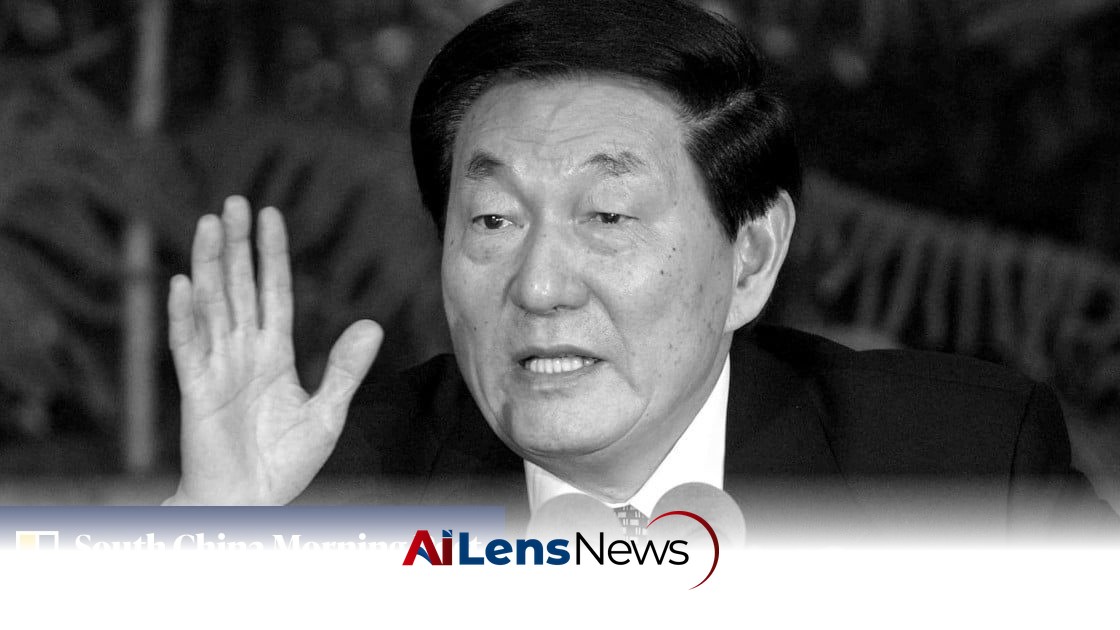



Zhu Rongji, the former Chinese premier who played a pivotal role in the nation's economic transformation, has died at the age of 97.
London, United Kingdom Aug 13, 2026 ALN: Former Chinese premier Zhu Rongji, who helped engineer one of the greatest economic reforms in human history, died of an illness on Wednesday in Beijing. He was 97.
Zhu, who served as China’s premier from 1998 to 2003, is remembered for shaking up the centrally planned economy, overhauling the state-owned enterprise (SOE) sector and tackling corruption. His leadership marked a significant turning point in China's economic trajectory, transitioning the nation from a command economy to a more market-oriented approach, which has had lasting implications for both China and the global economy.
Zhu's tenure as premier was characterized by a commitment to reforming the existing economic structure, which had been largely stagnant and ineffective in promoting growth. His policies aimed to reduce the inefficiencies of state-owned enterprises, which had long been a burden on the economy. By implementing measures that encouraged privatization and competition, Zhu sought to stimulate productivity and innovation within the Chinese economy.
One of Zhu's most notable achievements was his role in negotiating China’s entry into the World Trade Organization (WTO) in 2001. This was a watershed moment for China, as it marked the country’s full integration into the global economy. The accession to the WTO not only facilitated increased trade and investment but also compelled China to adopt international standards in areas such as intellectual property rights, labor, and environmental regulations. Zhu's adept handling of these negotiations showcased his understanding of global economic dynamics and his commitment to advancing China's interests on the world stage.
Under Zhu's leadership, China experienced rapid economic growth, which lifted millions out of poverty and transformed the nation into one of the world's largest economies. The reforms he championed led to an unprecedented increase in foreign direct investment, as international companies sought to capitalize on China's vast market potential. This influx of capital contributed to the development of infrastructure, technology, and human capital, further solidifying China's position as a global economic powerhouse.
Zhu also played a key role in ensuring the smooth handover of Hong Kong in 1997, a significant event in the history of both Hong Kong and China. His diplomatic skills were evident as he navigated the complex political landscape surrounding the transition from British to Chinese sovereignty. Zhu's approach emphasized stability and continuity, which were essential to maintaining Hong Kong's economic vitality and social order during this period of change.
In addition, Zhu's leadership was crucial during the Asian financial crisis of 1997 and 1998. The crisis posed significant challenges to many Asian economies, but Zhu's decisive actions helped stabilize the Chinese economy. By implementing measures that included fiscal stimulus and monetary easing, he was able to mitigate the effects of the crisis and maintain growth, setting an example for other nations grappling with similar economic turmoil.
Throughout his career, Zhu was known for his no-nonsense approach to governance and his determination to root out corruption within the government and state-owned enterprises. He believed that corruption was a significant impediment to economic development and social stability, and he took steps to strengthen regulatory frameworks and enhance transparency. His anti-corruption efforts resonated with the public, who were increasingly frustrated with the pervasive corruption that had emerged during the rapid economic changes in China.
In a statement on Wednesday, Hong Kong Chief Executive John Lee Ka-chiu thanked Zhu for his support to the city, while expressing his deepest condolences on his passing. This sentiment reflects the wide-ranging impact Zhu had not only within mainland China but also in Hong Kong, where his policies and leadership style helped shape the relationship between the two regions.
Zhu's legacy extends beyond his immediate achievements as premier. His influence can be seen in the ongoing economic policies of the Chinese government, which continue to grapple with the challenges of balancing state control with market forces. As China faces new economic challenges, including slowing growth, rising debt levels, and increasing competition from other countries, Zhu's reforms serve as a foundation upon which current leaders can build.
In recent years, discussions surrounding Zhu's economic policies have gained renewed attention as China navigates its position in a rapidly changing global landscape. His emphasis on modernization, openness, and reform remains relevant as the country seeks to address contemporary issues such as technological innovation, environmental sustainability, and social equity.
As the world reflects on Zhu Rongji's contributions to China's economic transformation, it is essential to recognize the complexities and nuances of his legacy. While his policies facilitated remarkable growth and development, they also brought about significant social and economic challenges, including income inequality and environmental degradation. The balance between embracing market forces and maintaining state oversight continues to be a critical issue for China as it moves forward.
In conclusion, Zhu Rongji's passing marks the end of an era in Chinese politics and economics. His vision and leadership were instrumental in shaping modern China, and his impact will be felt for generations to come. As the nation honors his memory, it also faces the ongoing task of navigating the path he helped forge, striving to achieve sustainable and inclusive growth in an increasingly interconnected world.
Born in 1928 in Shanghai, Zhu Rongji was educated at Shanghai Jiao Tong University, where he studied electrical engineering. His academic background laid the groundwork for his analytical approach to economic policy. He joined the Communist Party of China in 1949, shortly after the establishment of the People’s Republic of China, and began his career as a local government official. Over the decades, he rose through the ranks, holding various positions in the central government, including Vice Premier before becoming premier.
Zhu's economic philosophy was influenced by a blend of socialist ideals and pragmatic market-oriented reforms. He believed that while the state should play a role in guiding the economy, it was equally important to allow market forces to operate freely to foster innovation and efficiency. This duality was evident in his policies, which sought to modernize the Chinese economy while maintaining the Communist Party's overarching control.
His tenure coincided with a period of significant global economic change, with the rise of globalization and the integration of emerging markets into the world economy. Zhu's policies positioned China to take advantage of these trends, allowing it to emerge as a major player in global trade and investment. The economic growth during his time in office contributed to a transformation in the global supply chain, with China becoming a central hub for manufacturing and exports.
However, Zhu's reforms were not without their critics. Some argued that the rapid pace of economic change exacerbated social inequalities and led to environmental degradation. The shift from a planned economy to a market economy created disparities in wealth distribution, with coastal regions benefiting more than inland areas. As China continues to grapple with these issues, Zhu's legacy remains a topic of debate among economists and policymakers.
In the years following his premiership, Zhu remained an influential figure in Chinese politics and economics. He often spoke on the importance of reform and modernization, advocating for continued openness to global markets. His insights were sought after by both domestic and international audiences, and he continued to be a respected elder statesman in China.
As the world reflects on Zhu Rongji's contributions to China's economic transformation, it is essential to recognize the complexities and nuances of his legacy. While his policies facilitated remarkable growth and development, they also brought about significant social and economic challenges, including income inequality and environmental degradation. The balance between embracing market forces and maintaining state oversight continues to be a critical issue for China as it moves forward.
In conclusion, Zhu Rongji's passing marks the end of an era in Chinese politics and economics. His vision and leadership were instrumental in shaping modern China, and his impact will be felt for generations to come. As the nation honors his memory, it also faces the ongoing task of navigating the path he helped forge, striving to achieve sustainable and inclusive growth in an increasingly interconnected world.
To learn more about the latest developments in Politics, stay updated with our exclusive reports and analyses on AILensNews.

