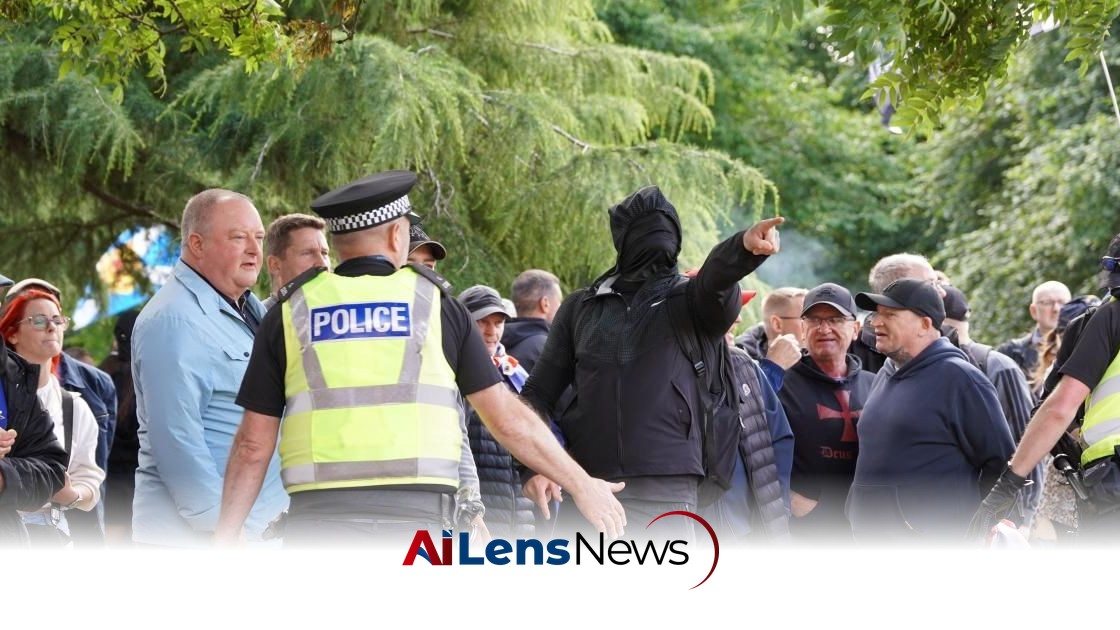


A far-right demonstration at Glasgow Green turned violent, leading to clashes with anti-racism protesters and multiple arrests.
London, United Kingdom Jul 26, 2026 ALN: JUST six weeks after protesters faced off on Buchanan Street, a far-right demonstration erupted into violence at Glasgow Green. The event was organised by the Unite the Clans group, which has gained notoriety for its extreme nationalist views and its opposition to immigration, particularly in Scotland. This group first came to the public's attention when they staged a protest outside the Scottish Parliament in March, which was marked by similar themes of anti-immigration sentiment and nationalistic rhetoric.
The Unite the Clans rally on Saturday was met with fierce criticism from various sectors of society, including political leaders, community organizations, and civil rights groups. Earlier this week, Stand Up to Racism (STUR), a prominent anti-racism organization, identified multiple extremists who were scheduled to speak at the rally. This highlighted concerns about the potential for violence and hate speech at the event, as well as the broader implications for social cohesion in Scotland.
Among the individuals identified was Josh Fernie, who had previously made inflammatory comments on social media. In a post on Twitter/X, he questioned the morality of historical events, saying, "You ever thought it was 'Nazi Germany' standing up to the Jews?" Such statements have raised alarm among anti-fascist groups and human rights advocates, who argue that they incite hatred and violence against marginalized communities.
Another speaker, who goes by the name of StillBuilt, expressed admiration for notorious fascist leaders in a TikTok video, stating, "I would trust Mussolini, and I would trust Adolf Hitler." This open glorification of historical figures associated with extreme violence and oppression has been a focal point of backlash against the rally, as it reflects a troubling trend of far-right extremism gaining traction in various parts of Europe, including the UK.
Additionally, Richard McFarlane, a member of the far-right group Patriotic Alternative, was also slated to speak at the rally. Patriotic Alternative has been described as a white nationalist organization that promotes a vision of a racially homogenous Britain, which has drawn condemnation from various civil society groups. The presence of such speakers at the Unite the Clans rally underscored the fears of many that the event would serve as a platform for hate speech and extremist ideologies.
Arriving at Glasgow Green around 11 am, many individuals were already present, standing on the grass and wearing black balaclavas. They waved flags with slogans such as "stop the boats" and held placards reading "protect our kids" while chanting phrases like "send them home." Such slogans are often associated with anti-immigrant sentiment, reflecting a broader narrative that portrays immigrants as a threat to societal values and safety.
Nearby, banners tied to trees proclaimed messages such as "send all illegal immigrants home" and "anti-racist just means anti-white," illustrating the divisive rhetoric that characterizes many far-right demonstrations. Among the more bizarre displays was what appeared to be an AI-generated Charlie Kirk remembrance flag, a nod to the American conservative commentator known for his controversial views on immigration and race.
Surrounding the Unite the Clans demonstrators were anti-racism protesters, who significantly outnumbered them. These counterprotesters included representatives from unions, various political parties, and concerned members of the public. Their presence highlighted the strong opposition to far-right ideologies in Glasgow and the broader Scottish community.
For the first hour, the atmosphere remained relatively calm, with both sides chanting and a large police presence effectively separating the demonstrators. The anti-racism protesters held placards with messages such as "women against the far right" and "no one is illegal," while chanting "shame" at the Unite the Clans supporters. This exchange of chants and slogans is a common feature of protests, reflecting the deep divisions in public opinion regarding immigration and national identity.
However, as tensions escalated, reports began to surface of violence breaking out. Video footage emerged showing members of the far-right rally throwing bottles at anti-racism protesters and police officers. This marked a significant shift in the dynamics of the protest, as the situation quickly deteriorated into chaos.
Witnesses described a sudden rush of far-right demonstrators sprinting toward the east side of the park, where clashes erupted between them, anti-racism protesters, and police. Officers were forced to use batons and horses to control the crowd, indicating the severity of the situation. As the violence unfolded, it became increasingly clear that maintaining order was proving to be a significant challenge for law enforcement.
In the aftermath of the chaos, police confirmed that 15 individuals had been arrested. The charges included assault, possession of offensive weapons, breach of the peace, obstruction, and resisting arrest. These arrests reflect the serious nature of the violence that erupted during the rally and the ongoing challenges faced by law enforcement in managing such events.
It is worth noting that Saturday's rally was not the first instance of violence related to far-right demonstrations in Glasgow. Previous protests, such as one in June, had also seen confrontations that left participants feeling unsafe. During that event, individuals chanting "protect our women" engaged in intimidating behavior towards journalists and bystanders, raising concerns about the safety of those covering or participating in such protests.
On Saturday, despite a significant police presence, many observers noted that law enforcement appeared to struggle to maintain control as the situation escalated. The rapid shift from a peaceful protest to one marked by violence left many feeling uneasy, as the atmosphere quickly grew tense. Following the outbreak of violence, speakers from Unite the Clans felt compelled to remind their supporters to "protest peacefully," as tensions flared and a large group began to move toward the city center.
The implications of such events extend beyond the immediate violence witnessed at the rally. They reflect a growing polarization within society regarding issues of race, immigration, and national identity. As far-right groups gain visibility and mobilize supporters, anti-racism organizations and community groups are increasingly mobilizing in response, leading to a cycle of confrontation that can escalate into violence.
On a day when Glasgow was welcoming the world to the Commonwealth Games, many hoped that such displays of hatred and division would not tarnish the city's reputation. The events at Glasgow Green serve as a stark reminder of the ongoing challenges faced by communities in combating extremist ideologies and fostering a more inclusive society. As discussions around immigration and national identity continue to evolve, the need for dialogue and understanding becomes ever more critical in bridging the divides that have emerged in contemporary society.
To learn more about the latest developments in Crime & Law, stay updated with our exclusive reports and analyses on AiLensNews.

