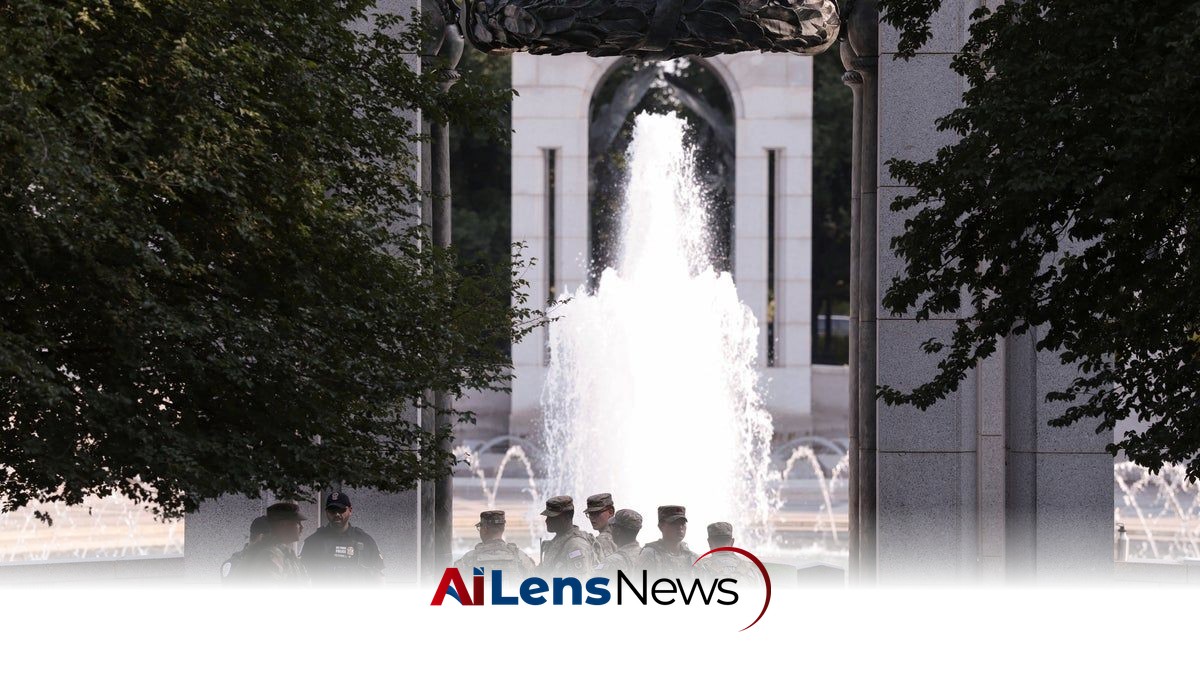


The WWII Memorial in Washington, D.C., was vandalized with soap bubbles and graffiti, prompting a swift response from authorities and public condemnation.
London, United Kingdom Aug 14, 2026 ALN: The World War II Memorial, a significant tribute located on the National Mall in Washington, D.C., was vandalized on a Thursday, resulting in public outrage and an ongoing investigation. The vandalism involved the fountain at the memorial being filled with suds and a message—"Clean hands dirty $"—written in red paint. This incident has sparked a wave of condemnation from various quarters, highlighting the importance of preserving national memorials that honor those who served and sacrificed during the war.
The U.S. government has promptly responded to the vandalism, with assurances that efforts are underway to identify and apprehend the individual responsible for this act. The Interior Department issued a statement indicating that the U.S. Park Police are actively investigating the incident. Their statement emphasized the commitment to holding accountable those who disrespect such significant national sites, stating, "Our US Park Police are on the scene and the investigation is ongoing. The public should know we will find the person responsible for this disgusting act." This reflects a broader governmental stance that seeks to protect national symbols and sites of historical significance.
Following the vandalism, uniformed police and National Guard troops quickly arrived at the scene, cordoning off the area with yellow crime scene tape to prevent public access. This swift action underscores the seriousness with which such acts of vandalism are treated, especially when they occur at a site of profound national importance. Photographs from the scene depicted investigators in plainclothes meticulously measuring the damage, further indicating the thoroughness of the investigation. Additionally, workers were dispatched to remove the graffiti, demonstrating an immediate effort to restore the memorial to its intended state.
The World War II Memorial, dedicated in 2004, is a poignant reminder of the sacrifices made during one of the most significant conflicts in human history. It features 56 granite pillars arranged around an elliptical plaza, symbolizing the 48 states, the District of Columbia, and the territories that contributed to the war effort. The memorial commemorates the 400,000 American lives lost and the 16 million who served in the armed forces during World War II, according to the National Park Service. Its location, just east of the Lincoln Memorial Reflecting Pool, places it in a prominent area of the National Mall, where it draws visitors from around the country and the world.
The Friends of the National World War II Memorial, a nonprofit organization dedicated to the preservation and maintenance of the site, expressed their dismay over the vandalism. They issued a statement emphasizing that while the United States is a country that values expression, debate, and disagreement, a national memorial honoring those who served should never be defaced. Their comments reflect a broader sentiment that such acts of vandalism undermine the respect owed to those who fought and died for the freedoms that allow for such expressions in the first place.
In addition to the Friends of the National World War II Memorial, several veterans’ organizations have voiced their outrage. The Veterans of Foreign Wars (VFW) characterized the vandalism as an “act of profound disrespect,” calling it a “slap in the face” to the veterans who served and the families who endured the sacrifices of war. Their response highlights the emotional weight that memorials carry, serving as sites of remembrance and reflection for those affected by the war. Memorials like the World War II Memorial serve as a physical embodiment of collective memory, where visitors can honor the bravery and sacrifices made by service members.
The U.S. role in World War II remains a matter of national pride, serving as a point of unity even amidst contemporary political polarization. The conflict is often viewed through a lens of heroism and collective sacrifice, although it is not without its contentious debates, such as the decision to drop atomic bombs on Japan to hasten the war's end. Such discussions reflect the complex legacy of the war, but they also underscore the importance of memorials like the World War II Memorial as places for reflection on both the sacrifices made and the lessons learned. As the nation grapples with its historical narrative, memorials become vital spaces for dialogue and remembrance, bridging the past with the present.
The recent vandalism incident has also drawn attention to the challenges of maintaining public monuments. Earlier this year, the Lincoln Memorial Reflecting Pool faced criticism due to a botched repair job that left it with peeling blue sealant and green algae. This incident prompted former President Donald Trump to suggest that the issues were a result of vandalism, although he did not provide evidence to support this claim. Such remarks may reflect a growing concern about the maintenance and protection of national monuments, especially in a climate where acts of vandalism can provoke strong public reactions. The perception of neglect or decay at these sites can lead to a broader discussion about funding, preservation, and the responsibilities of governmental agencies to uphold the dignity of these memorials.
As the investigation into the vandalism of the World War II Memorial continues, it serves as a reminder of the ongoing need to protect and honor the sites that commemorate the sacrifices of those who served in the armed forces. The memorial is not only a tribute to the past but also a symbol of the values that the nation holds dear—courage, sacrifice, and the enduring spirit of unity in the face of adversity. The response from the government and various organizations indicates a collective commitment to ensuring that such acts of disrespect are met with accountability, preserving the sanctity of memorials dedicated to those who gave their lives for their country.
Moreover, the incident has sparked discussions about the role of public art and expression in relation to national symbols. While freedom of expression is a fundamental right in the United States, the boundaries of that expression can become contentious when it intersects with sites of national significance. The vandalism at the World War II Memorial raises questions about the appropriate channels for expressing dissent or criticism, particularly when such expressions may be perceived as offensive or disrespectful to those honored by the memorial. This dialogue is essential in a democracy where diverse opinions coexist, and it underscores the need for respectful discourse, especially regarding issues that resonate deeply with a collective national identity.
In conclusion, the vandalism at the World War II Memorial serves as a stark reminder of the fragility of national symbols and the importance of safeguarding them against acts of disrespect. As the investigation progresses, the commitment to restoring the memorial and holding those responsible accountable will resonate with many who see these sites as sacred ground. The memorial stands not only as a tribute to the past but also as a testament to the enduring values of the nation, urging future generations to remember the sacrifices made for freedom and to engage in meaningful dialogue about the legacy of those who served.
To learn more about the latest developments in Crime & Law, stay updated with our exclusive reports and analyses on AiLensNews.

