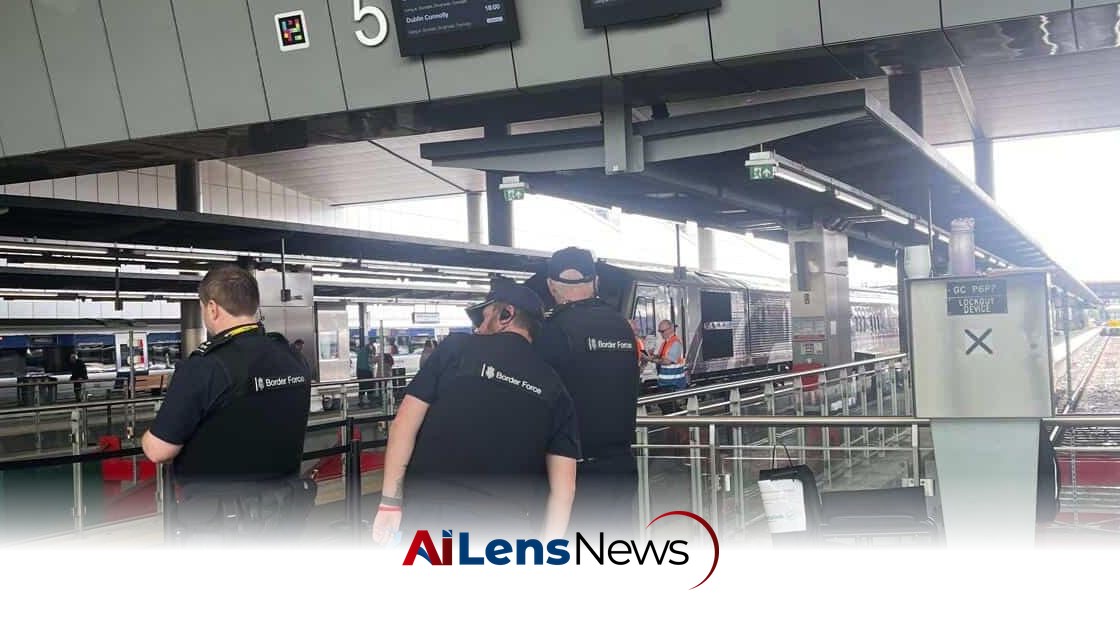


Following a violent incident in Belfast, UK Border Force officers have increased their presence at Grand Central Station to enforce immigration laws and address cross-border travel concerns.
London, United Kingdom Jul 29, 2026 ALN: The recent operations conducted by the UK Border Force at Grand Central Station in Belfast have sparked significant discussion and concern regarding immigration policies and border controls in Northern Ireland. These operations come in the wake of heightened tensions following a violent incident involving Stephen Ogilvie, who sustained serious injuries during a racially motivated attack in north Belfast. This attack not only raised alarm about public safety but also prompted a broader examination of immigration enforcement in the region.
Stephen Ogilvie's attack, which occurred on Kinnaird Avenue, has been described as particularly brutal, leading to a series of race hate riots across Northern Ireland. The alleged perpetrator, Hadi Alodid, who has been charged with attempted murder, reportedly traveled from Dublin to Belfast to seek asylum. This detail has intensified scrutiny on the mechanisms governing cross-border travel between Northern Ireland and the Republic of Ireland, especially in light of the Common Travel Area (CTA) agreement that allows for free movement between the two jurisdictions.
The CTA, established in 1922, facilitates the movement of Irish and British citizens without the need for immigration checks at the land border. This agreement has historically allowed individuals to live, work, and travel freely between the UK and Ireland. However, the recent events have led the UK Home Office to reconsider its approach to border security, particularly in the context of illegal immigration and public safety concerns. The CTA has long been viewed as a cornerstone of the relationship between the UK and Ireland, reflecting the unique historical and political ties between the two nations.
In response to the attack on Ogilvie and the subsequent riots, the Home Office has faced mounting pressure to enhance immigration checks on cross-border transport services. Reports indicate that Border Force officers have been seen operating at Grand Central Station, a major transport hub in Belfast, where they are typically not deployed. This shift in operational focus represents a notable change in how immigration enforcement is conducted in Northern Ireland, raising questions about the balance between security and civil liberties. The presence of Border Force officers in such locations could signal a new phase in the enforcement of immigration laws, one that may lead to increased scrutiny of individuals traveling across the border.
During a recent meeting of the Northern Ireland Affairs Committee, DUP leader Gavin Robinson highlighted a perceived disparity in enforcement capabilities between the UK and Irish authorities. He pointed out that Gardai, the police service in Ireland, have the authority to conduct immigration checks on buses and trains within the Republic, while UK officials face restrictions that require them to collaborate with the Police Service of Northern Ireland (PSNI) to carry out similar operations. This has led to discussions about the adequacy of existing laws and the need for a more coherent approach to border security in the context of the CTA. The differing approaches taken by the two jurisdictions underline the complexities of managing immigration in a region with a shared border yet distinct legal frameworks.
Officials from the Home Office have indicated that their ability to conduct checks is limited and contingent upon risk assessments and safety protocols when working with local law enforcement. This has raised concerns among human rights advocates, who argue that increased immigration checks may lead to racial profiling and discrimination against certain groups. A spokesperson from the Committee for the Administration of Justice has expressed apprehension over the implications of intensified checks, noting that the legislative framework for these operations remains ambiguous. The potential for racial profiling is particularly concerning in a region that has a history of sectarian divisions and discrimination, which could exacerbate existing tensions within communities.
The Home Office has stated its commitment to intensifying efforts to combat illegal immigration in Northern Ireland, citing a need for intelligence-led operations to detect and remove individuals who may be residing in the UK unlawfully. However, a senior figure from the National Crime Agency has indicated that there has not been a significant increase in the abuse of the Common Travel Area compared to other entry points into the UK. This raises further questions about the necessity and effectiveness of the current approach to border enforcement in Northern Ireland. The lack of evidence supporting a surge in illegal immigration through the CTA challenges the rationale behind the increased presence of Border Force officers and may lead to calls for a more evidence-based approach to immigration policy.
Critics of the current immigration enforcement strategy argue that the increased presence of Border Force officers at transport hubs could lead to a climate of fear among communities, particularly among those who may feel targeted due to their ethnicity or nationality. The historical context of immigration enforcement in Northern Ireland, coupled with the sensitive nature of community relations in the region, complicates the issue further. The legacy of the Troubles, a period of intense sectarian conflict, still influences social dynamics today, and any perceived threat to community safety can evoke strong reactions from both sides of the divide.
As the situation unfolds, the implications of these operations extend beyond immediate security concerns. They touch upon the broader themes of national identity, human rights, and the legacy of the Troubles, which still resonate in Northern Irish society. The balance between ensuring public safety and respecting the rights of individuals, particularly in a region with a complex socio-political history, remains a critical challenge for policymakers. The interplay between security measures and civil liberties is a delicate one, and the government must navigate these waters carefully to avoid alienating communities already on edge.
Moreover, the ongoing discussions regarding the legality and efficacy of immigration checks within the context of the CTA highlight the need for a comprehensive review of border policies. Stakeholders from various sectors, including legal experts, human rights organizations, and community leaders, may need to engage in dialogue to address the concerns raised by recent developments. This dialogue is essential to ensure that policies are not only effective in addressing security concerns but also equitable and just, fostering trust between communities and authorities.
In conclusion, the operations conducted by the UK Border Force at Grand Central Station underscore a pivotal moment in the discourse surrounding immigration and border controls in Northern Ireland. As authorities navigate the challenges posed by illegal migration and public safety, it is imperative that they consider the implications of their actions on community relations and individual rights. The evolving landscape of border enforcement in Northern Ireland will require careful scrutiny and a commitment to transparency and fairness in order to foster trust and cooperation among all stakeholders involved. The path forward must prioritize not only the enforcement of immigration laws but also the protection of human rights and the promotion of social cohesion in a region still healing from past divisions.
To learn more about the latest developments in Crime & Law, stay updated with our exclusive reports and analyses on AiLensNews.

