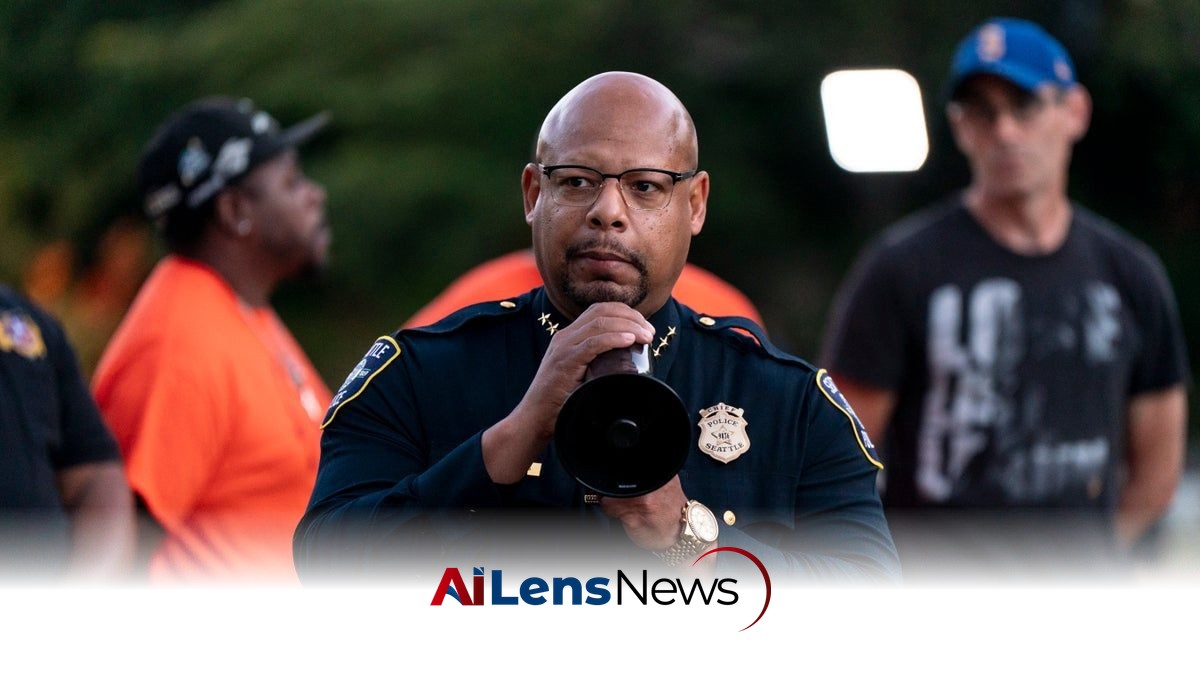


Chief Shon Barnes steps down amid backlash over response to a fatal shooting at a food festival, with Deputy Chief Andre Sayles appointed as interim chief.
London, United Kingdom Jul 31, 2026 ALN: Seattle’s police chief has resigned amid criticism of the city’s response to a fatal shootout at a food festival last weekend, Mayor Katie Wilson announced on Thursday. This resignation has sparked a wave of discussions regarding public safety, police-community relations, and the leadership dynamics within the Seattle Police Department.
The departure of Chief Shon Barnes followed hours of intense speculation about whether he would step down, as some of his supporters claimed he had rebuffed Mayor Wilson’s request for his resignation. This situation reflects the complicated nature of leadership in law enforcement, especially in a city that has experienced significant social and political upheaval regarding policing practices in recent years.
Mayor Wilson confirmed the appointment of Deputy Chief Andre Sayles as interim chief, a law enforcement veteran with more than two decades of experience. Chief Barnes told The Seattle Times on Thursday that whether he remains chief is "up to the mayor," adding that he was off for the day and spending time with family. The leadership transition comes at a critical juncture for the Seattle Police Department, which has faced scrutiny over its handling of various incidents and its overall approach to community policing.
A police department spokesperson told The Associated Press they did not have any information to share about the situation. This lack of communication has been a point of contention, particularly in light of the recent shooting incident that has left the city reeling.
Barnes was out of town at a law enforcement conference when gunfire erupted last weekend at the Bite of Seattle, an annual three-day festival that draws hundreds of food and retail vendors and performers. The festival, which celebrates the culinary diversity of the city, turned tragic when three people, including one suspect, were killed, and four others were wounded. One of the injured was a 2-year-old boy, highlighting the indiscriminate nature of gun violence and its impact on innocent lives.
Dozens of officers were present at the event, and at least one officer witnessed a 15-year-old suspect firing into a crowd and quickly persuaded him to surrender, according to court documents. Police are still searching for at least one other person involved in the incident, indicating that the investigation is ongoing and that there may be further developments in the case.
Both the Seattle Police Department and Mayor Wilson have faced criticism for slow and confusing communication in the aftermath of the shooting. After an initial social media post announcing that there had been a shooting with multiple victims, it took nearly five hours for police to provide any additional information to the public, including whether there was any ongoing threat. This delay in communication has raised concerns about transparency and the effectiveness of the department's crisis management protocols.
In the interim, Mayor Wilson announced that two people had been taken into custody, a statement she later retracted, further complicating the narrative and leading to questions about the accuracy of information being disseminated to the public. Assistant Seattle Police Chief Tyrone Davis finally provided an update around 11 p.m. Sunday night during a news conference that was also attended by the mayor, Governor Bob Ferguson, and U.S. Representative Pramila Jayapal. This late-night briefing underscores the challenges faced by city officials in managing public safety and communication during crises.
Barnes is the second Black police chief in Seattle's history, and his resignation has sparked a debate about race, leadership, and accountability in law enforcement. Several Black community organizations, including the Seattle NAACP and the Urban League of Metropolitan Seattle, rallied to try to save his job Thursday. In an open letter to the mayor's office, they credited him with improving relations between the department and the community, helping reduce gun violence, and strengthening the department's operations. Their support reflects a broader concern that the removal of Barnes could hinder progress made in fostering trust between the police and the communities they serve.
“This is the wrong decision at the wrong time and would disrupt Seattle’s progress in public safety,” the letter said. “The tragic fatal shooting at the Bite of Seattle was heartbreaking for our city, but Chief Barnes should not be made a scapegoat for the complex challenges of public safety.” This sentiment is echoed by many who believe that systemic issues require comprehensive solutions rather than placing blame on individual leaders.
Civil rights lawyer James Bible was with a small group of Black leaders who met with Wilson early Thursday. Bible noted that Wilson didn’t “tip her hand” regarding whether she would fire Barnes but appeared to be considering their argument in favor of keeping him on the job. This meeting highlights the ongoing dialogue between community leaders and elected officials regarding the future of policing in Seattle.
“I’m hopeful that she will take a step back and make a different decision for now and then create criteria for any future decisions,” Bible said, indicating a desire for a more thoughtful and strategic approach to leadership changes in the police department.
Barnes was appointed by Seattle's previous mayor, Bruce Harrell, in December 2024 after serving as chief of the Madison, Wisconsin, police department. His appointment was seen as a step towards diversifying the leadership of the Seattle Police Department and addressing the historical inequities present in policing. When Wilson — a democratic socialist who once supported defunding police — won the mayor's race last year, she kept Barnes on as chief. This decision was interpreted as a signal to the city's business establishment and community groups that she did not intend to take a radically different approach to public safety, balancing progressive ideals with the realities of governance.
Wilson came into office with no prior elected or management experience, but with a reputation as someone who thought deeply about social and policy issues. A lingering question was how decisively she would act as mayor, especially when faced with crises that demand immediate and effective leadership.
“She looks weak and vacillating,” Seattle political consultant Sandeep Kaushik said Thursday. “There’s almost 24 hours now where it’s not clear whether the police chief is still the police chief.” This perception of indecisiveness can have far-reaching implications for the mayor's credibility and her ability to govern effectively, especially in a city grappling with issues of public safety and community trust.
Barnes has faced some criticism for spending time in Chicago, where his family lives. Sgt. Patrick Michaud, a department spokesperson, said Thursday that Barnes has made four trips to Chicago this year and spent a total of about 18 days traveling there. While personal time is essential for any leader, the frequency of these trips has raised questions about his commitment to the department and its challenges. Barnes also has traveled to several police executive and recruitment conferences, which are crucial for professional development but can also be perceived as a distraction from local responsibilities.
Barnes was named as the chief of police in Seattle five days after he was thrust into the national spotlight because of a shooting at a religious school in Wisconsin that killed a teacher and student. At the time, Harrell said Barnes had demonstrated “impressive leadership capabilities” during an investigation into the shooting, a testament to his skills and experience in crisis management. However, the recent events at the Bite of Seattle have tested those capabilities in a different context, raising questions about the effectiveness of the department's response to gun violence.
The tension between the mayor and police chief comes as Seattle heads into another big festival weekend. Seafair Weekend Festival 2026 — a boating event, air show, and festival — starts Friday. This timing adds urgency to the need for effective leadership and communication from the police department, as the community looks to ensure safety and security during large public gatherings. The outcome of this situation will not only impact the immediate response to the festival but also set the tone for future interactions between law enforcement and the community in Seattle.
As Seattle grapples with these challenges, the implications of Chief Barnes' resignation extend beyond the individual leader, touching on broader themes of public safety, community trust, and the evolving role of law enforcement in society. The city stands at a crossroads, with the potential for significant change in policing practices and community engagement, depending on the decisions made in the coming days and weeks.
To learn more about the latest developments in Crime & Law, stay updated with our exclusive reports and analyses on AiLensNews.

