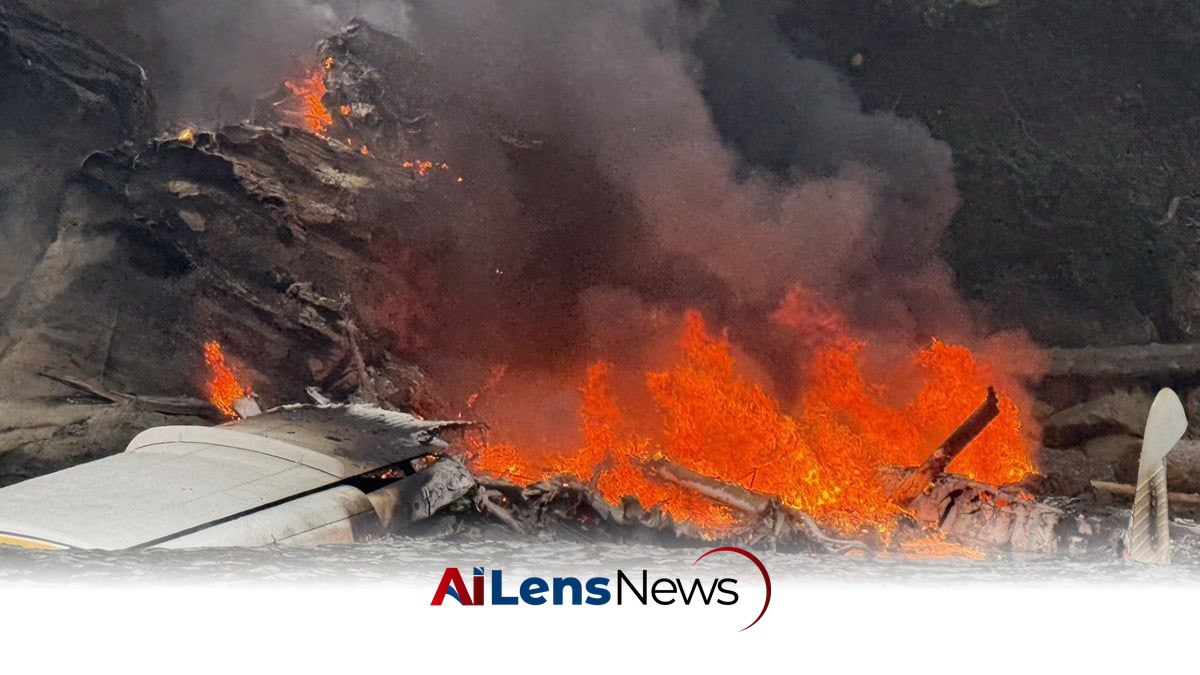


A seaplane carrying 11 people crashed into an island north of Seattle, prompting a swift rescue operation that successfully evacuated everyone aboard.
London, United Kingdom Jul 24, 2026 ALN: A seaplane carrying 11 people crashed and caught fire on the rocky coast of a vacation island north of Seattle, but a swift rescue by boat and air got everyone safely to hospitals. This incident has raised questions about aviation safety and the specific challenges faced by seaplane operations, particularly in the scenic yet rugged landscapes of the Pacific Northwest.
The San Juan County Sheriff’s Office reported that one individual was in critical condition following the crash, while others suffered from head injuries, broken bones, and cuts. As of Friday, at least five of the passengers had been discharged from hospitals, indicating that while the incident was serious, it could have been far worse. The cause of the crash was not immediately known, and investigations are currently underway.
The crash occurred less than three weeks after a separate incident involving another seaplane in New York City’s East River, which also resulted in a rough landing but with only minor injuries reported. These two incidents have prompted discussions about the safety protocols and operational standards for seaplanes, particularly as they become an increasingly popular mode of transportation in tourist-heavy areas.
Eyewitness accounts and videos shared on social media depict the seaplane as it banked to one side while flying low over the water, close to several boats and the shoreline. The aircraft made a hard landing, initially touching down on just one float before briefly becoming airborne again, ultimately crashing onto the land. The recording captures a gasp from the individual filming as a crunching sound is heard, signifying the plane's impact just out of sight.
The seaplane was carrying a pilot and 10 passengers when it crashed at approximately 5:20 p.m. on Thursday in the San Juan Islands, a rugged archipelago situated between Washington State and Vancouver, British Columbia. This area is renowned for its natural beauty and is a popular summer vacation destination, attracting tourists for activities such as whale watching, hiking, and exploring its numerous islands.
First responders, along with witnesses, quickly rushed to the scene. Those nearby utilized boats to assist in evacuating passengers from the downed aircraft. Video footage shows passengers exiting the plane as black smoke billows upward, soon followed by bright orange flames engulfing the fuselage, which ultimately came to rest partially submerged against a large rock.
In response to the incident, the U.S. Coast Guard issued an Urgent Marine Information Broadcast to mariners in the area, prompting numerous Good Samaritan vessels to respond and lend assistance. This rapid response highlights the community's readiness to help during emergencies, especially in areas where access can be challenging due to the geographical layout.
Sucia Island, where the crash occurred, is an uninhabited state park located north of the main San Juan Islands. It features a complex landscape of coves, beaches, and rocky points, making it a unique destination for outdoor enthusiasts. The plane went down near Shallow Bay, which cuts a wide crescent into the island close to a campground. At the time of the crash, several large pleasure boats were anchored in the bay, which may have contributed to the quick rescue efforts.
As of now, the identities of the passengers have not been released. However, Amy Drury, a spokesperson for the hospitals involved, confirmed that at least five of the passengers had already been discharged, suggesting that the injuries sustained, while serious, were not life-threatening for the majority.
It is noteworthy that the same type of seaplane, a DHC-3 Otter manufactured by de Havilland Aircraft of Canada, was involved in a tragic accident near Seattle in 2022, which claimed the lives of 10 individuals. Following that incident, federal regulators mandated inspections of seaplanes, leading to the discovery of a critical failure in a flight control component. This previous crash has cast a shadow over the safety record of seaplane operations in the region.
The seaplane that crashed on Thursday was operated by Kenmore Air, a tourism airline based near Seattle, distinct from the operator involved in the 2022 incident. Kenmore Air is recognized as the largest operator of DHC-3 Otter planes in Puget Sound. The company stated that its aircraft had passed all necessary inspections, reinforcing their commitment to safety in their operations.
David Gudgel, the CEO of Kenmore Air, expressed relief that all aboard had been accounted for and emphasized that the company would not speculate on the cause of the crash until more information was available. In light of the incident, Kenmore Air canceled all scheduled flights for Friday, prioritizing the safety of their passengers and crew. The airline is cooperating fully with investigators to determine the cause of the crash.
In response to the incident, the Federal Aviation Administration (FAA) has announced that it will conduct an investigation. Additionally, the National Transportation Safety Board (NTSB) is sending a team to the crash site to gather evidence and analyze the circumstances surrounding the accident. A spokesperson for the NTSB indicated that they are still in the process of collecting information, and as such, no media briefings were planned immediately.
The aircraft took off from Lake Union in Seattle, approximately 80 miles (130 kilometers) south of Sucia Island, and was en route to Roche Harbor Seaplane Base on San Juan Island, according to statements from both the airline and the FAA. This route is a popular one for tourists seeking to explore the natural beauty of the San Juan Islands, and it underscores the importance of ensuring the safety of seaplane operations in this region.
The implications of this incident extend beyond the immediate concern for the passengers and crew involved. It raises broader questions about the safety of seaplane travel, particularly in areas with challenging terrain and weather conditions. As investigations continue, it will be crucial to examine the operational practices of seaplane companies, regulatory oversight, and the measures in place to ensure passenger safety in this increasingly popular mode of transportation.
To learn more about the latest developments in Crime & Law, stay updated with our exclusive reports and analyses on AiLensNews.

