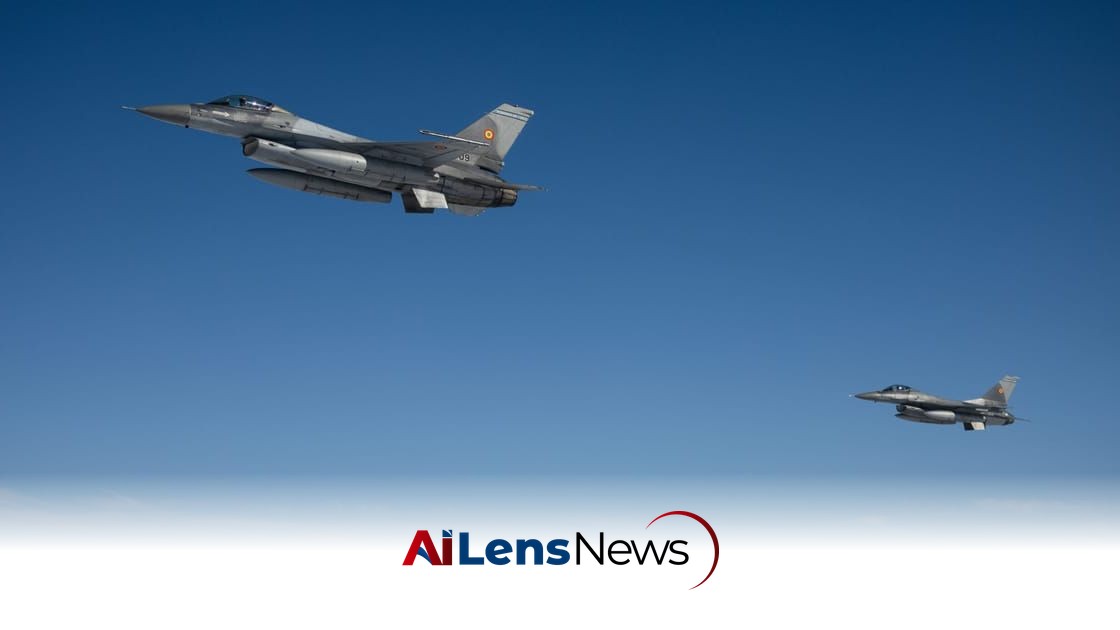



Romanian fighter jets shot down two drones violating the country's airspace near the Ukrainian border over the weekend, signaling a pattern of incursions.
London, United Kingdom Jul 25, 2026 ALN: Romania's recent interception of drones violating its airspace marks a significant moment in the ongoing tensions in Eastern Europe, particularly in the context of the conflict between Russia and Ukraine. The two incidents occurred within a span of just 48 hours, highlighting a potential pattern of drone incursions that could pose a serious threat to national security.
On Friday and Saturday, Romanian fighter jets, specifically F-16s, were deployed to respond to these unauthorized aerial intrusions. The Romanian defense ministry reported that the first drone was intercepted on Friday, while another was detected and shot down on Saturday morning near the Ukrainian border. This area has been a focal point of military activity, given its proximity to the ongoing conflict in Ukraine, where Russian forces have been actively employing drones in their military operations.
Foreign Minister Oana Toiu confirmed that the drone shot down on Friday was identified as a Shahed-type drone. This type of drone has gained notoriety for being utilized by Russian forces during their nightly bombardments of Ukrainian cities, often targeting civilian infrastructure. The use of such drones has raised alarms not only in Ukraine but also among its neighboring countries, including Romania, which shares a border with Ukraine.
Toiu's remarks underscore the seriousness with which Romania is treating these incursions. "Two incursions in 48 hours are not an accident; they are a pattern, and our answer to that pattern is consistency: detection, interception, protection of our citizens, full transparency with our allies," she stated. This statement reflects Romania's commitment to maintaining its airspace integrity and ensuring the safety of its citizens amidst escalating regional tensions.
The implications of these drone incursions are multifaceted. For one, they signal a potential shift in the tactics employed by Russian forces, who may be testing the response capabilities of neighboring countries as they continue their operations in Ukraine. The use of drones allows for a form of asymmetric warfare that can be challenging to counter, particularly when they are deployed near borders where surveillance may be less robust.
Moreover, these incidents raise questions about the effectiveness of air defense systems in the region. Romania, as a member of NATO, has access to various defense resources and collaborative support from its allies. The swift response of the Romanian military in intercepting these drones demonstrates both readiness and capability, but it also highlights the need for continued vigilance and possibly enhanced defense measures in light of ongoing threats.
International reactions to these events have been swift. European Council President António Costa praised Romania's decisive actions in a social media post, emphasizing the importance of solidarity among European nations in the face of security challenges. This response from the European leadership reflects a broader concern regarding the stability of the region and the potential for conflict to spill over into neighboring countries.
Romania's geographical positioning makes it a critical player in the security dynamics of Eastern Europe. It borders Ukraine to the north and has been a vocal supporter of Ukrainian sovereignty in the face of Russian aggression. The Romanian government has taken steps to bolster its military readiness, including increasing defense spending and participating in joint military exercises with NATO allies.
In addition to military preparedness, Romania's government has been actively engaging in diplomatic efforts to strengthen alliances and partnerships in the region. The recent drone interceptions could serve as a catalyst for further discussions among NATO members about collective security measures and the need for enhanced surveillance and reconnaissance capabilities in Eastern Europe.
Furthermore, the incidents may prompt Romania to reassess its air defense strategies. As drone technology continues to evolve, countries must adapt their defense systems to address new threats. This could involve investing in advanced radar systems, improving interception technologies, and enhancing training for military personnel to respond effectively to drone incursions.
In conclusion, the interception of drones violating Romanian airspace underscores the escalating tensions in Eastern Europe and the ongoing threat posed by Russian military operations. Romania's proactive approach in responding to these incursions reflects its commitment to national security and regional stability. As the situation develops, it will be crucial for Romania and its allies to remain vigilant and prepared to address the challenges posed by emerging military technologies and tactics.
The backdrop of these events is the ongoing conflict in Ukraine, which has seen a significant escalation since Russia's annexation of Crimea in 2014 and the subsequent military actions in Eastern Ukraine. The introduction of drones into the battlefield has changed the dynamics of warfare, allowing for remote attacks and surveillance capabilities that were not as prevalent in previous conflicts. As such, the reliance on drone technology by Russian forces has raised alarms not only in Ukraine but also in NATO member states that share borders with Russia or are within its sphere of influence.
Romania's strategic response to these drone incursions is indicative of a broader trend among NATO countries to reevaluate their defense strategies in light of new threats. The alliance has been increasing its presence in Eastern Europe, conducting military exercises and establishing a more robust forward presence to deter potential aggressions. The situation emphasizes the importance of NATO's collective defense principle, which states that an attack on one member is an attack on all, reinforcing the need for solidarity among member states.
Moreover, the drone incidents may influence Romania's defense procurement policies. The necessity for advanced aerial surveillance and interception technologies could lead to increased military spending and partnerships with defense contractors. Romania may seek to enhance its capabilities through joint ventures or by acquiring advanced systems from allies, ensuring that it can effectively counter any future incursions.
In the broader context of European security, these incidents serve as a reminder of the fragility of peace in the region. The potential for escalation remains high, and the international community is closely monitoring developments. The European Union and NATO may need to consider additional measures to enhance security cooperation and information sharing among member states, particularly those in Eastern Europe that are most vulnerable to threats from Russia.
As the geopolitical landscape continues to evolve, Romania's actions in intercepting drones demonstrate a commitment to safeguarding its national interests while contributing to regional stability. The effectiveness of its response will likely influence future defense policies and international collaborations aimed at addressing the challenges posed by emerging military technologies.
In summary, the recent drone interceptions by Romania highlight not only the immediate security challenges faced by the country but also the broader implications for regional stability and NATO's collective defense posture. As tensions persist in Eastern Europe, the need for vigilance, preparedness, and cooperation among allies will remain paramount in addressing the evolving nature of modern warfare.
To learn more about the latest developments in Crime & Law, stay updated with our exclusive reports and analyses on AILensNews.

