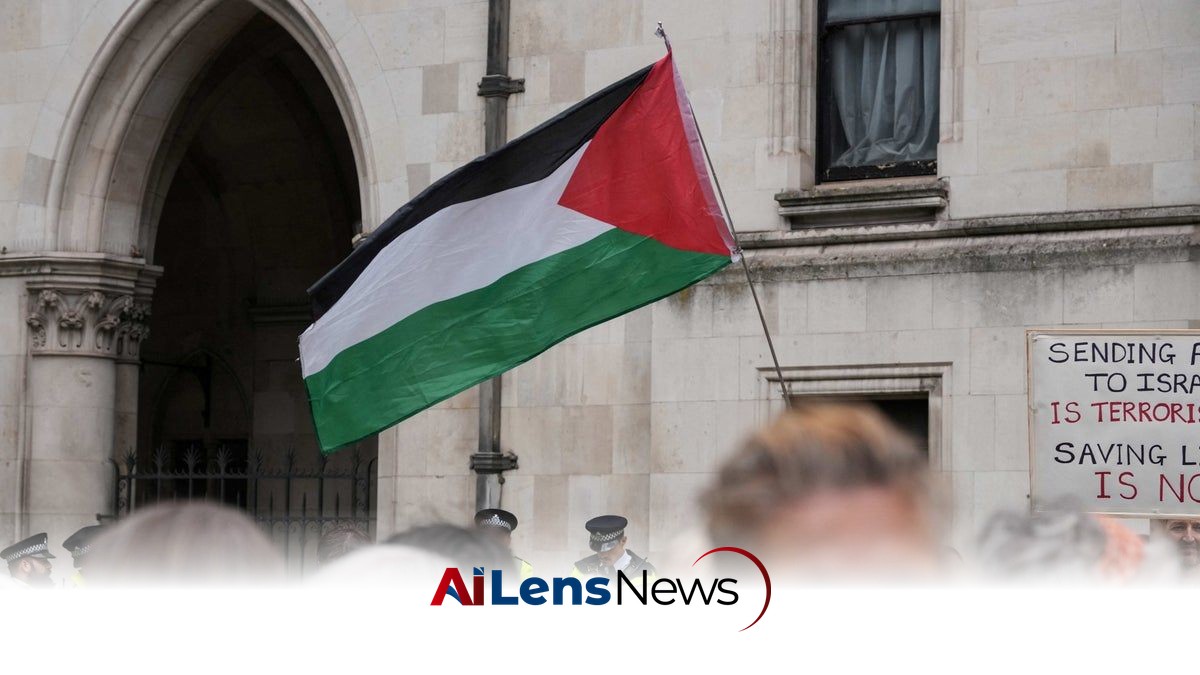



Palestine Action can appeal its terror ban at the Supreme Court, following a ruling that sets the stage for a significant legal battle this autumn.
London, United Kingdom Jul 31, 2026 ALN: The recent decision by the Supreme Court to allow Palestine Action to appeal their designation as a terrorist organization marks a significant moment in the ongoing debate around protest rights, national security, and the definition of terrorism in the United Kingdom. This case has garnered considerable attention not only for its legal implications but also for its potential impact on the broader discourse surrounding activism related to the Palestinian cause.
Palestine Action, a direct action group advocating for Palestinian rights, has been at the center of controversy since its inception. The group gained notoriety for its high-profile protests, including breaking into military facilities and vandalizing aircraft to draw attention to the UK's arms trade with Israel. Their actions, which they frame as necessary civil disobedience in response to the humanitarian crisis in Gaza, have sparked a national conversation about the limits of protest and the government's response to dissent.
The ban on Palestine Action, which came into effect on July 5, 2022, categorizes membership or support for the group as a criminal offense, punishable by up to 14 years in prison. This drastic measure was implemented by then-Home Secretary Yvette Cooper following a series of direct actions that the government deemed unlawful. The designation has since been upheld by the Court of Appeal, which ruled that the proscription was a lawful measure aimed at protecting national security, asserting that the group's activities constituted a promotion of violence that aligns with terrorism.
Lady Chief Justice Baroness Carr, in her ruling, emphasized that the government's actions represented a "justified and proportionate interference with individual rights." This statement underscores the tension between state security measures and the rights of individuals to express dissent and protest. Critics of the ruling argue that labeling Palestine Action as a terrorist organization sets a dangerous precedent that could be used to stifle legitimate forms of protest and activism.
Huda Ammori, co-founder of Palestine Action, has been vocal in her opposition to the ban, describing the Court of Appeal's decision as one of the most extreme attacks on free speech and the right to protest in modern British history. Her comments reflect a broader concern among activists that the legal framework surrounding terrorism is being misapplied to suppress political dissent. The upcoming Supreme Court appeal will provide a critical platform for these arguments, as the justices will need to consider the balance between national security and civil liberties.
The implications of this case extend beyond Palestine Action itself. The designation has already had a chilling effect on activists and supporters of Palestinian rights, as evidenced by recent protests in London where demonstrators faced warnings from the Metropolitan Police that expressing support for the group could be considered a terrorism offense. The arrests of 77 individuals during a protest outside Westminster Magistrates’ Court illustrate the potential consequences of the ban on public expressions of solidarity with Palestine Action.
Furthermore, the legal discourse surrounding this case raises important questions about the nature of terrorism and how it is defined within the UK legal system. Traditionally, terrorism is understood to involve violent acts intended to intimidate or coerce a population or government. Critics of the proscription argue that the actions of Palestine Action, while disruptive, do not meet the threshold of terrorism as defined by law. This distinction is crucial, as it speaks to the heart of what constitutes legitimate political expression versus unlawful violence.
The High Court previously ruled that the proscription was unlawful, suggesting that only a small fraction of Palestine Action’s activities could be classified as terrorism. This ruling was overturned by the Court of Appeal, which emphasized the government's responsibility to maintain national security. This back-and-forth between the courts illustrates the complexity of the legal landscape surrounding this issue and the differing interpretations of what constitutes a threat to public safety.
The Supreme Court's decision to hear the appeal is significant not only for Palestine Action but also for the future of protest rights in the UK. If the Supreme Court upholds the Court of Appeal's ruling, it could embolden the government to take similar actions against other activist groups, potentially leading to a broader crackdown on dissent. Conversely, if the Supreme Court rules in favor of Palestine Action, it could set a precedent that reinforces the right to protest and challenges the government’s expansive interpretation of terrorism.
The outcome of this case will likely resonate beyond the UK, influencing how other nations approach the intersection of national security and civil liberties. As the global conversation around human rights and the treatment of activists continues to evolve, the implications of the Supreme Court's ruling could have far-reaching effects on international norms regarding freedom of expression and the right to protest.
As the appeal is set to be heard this autumn, the legal and political stakes remain high. Palestine Action's campaign against the proscription is not merely about the group's survival; it represents a crucial battleground for the rights of all activists in the UK. As Ammori has stated, the fight against this ban is emblematic of a broader struggle for free speech and the right to protest, particularly regarding issues that provoke strong governmental responses. The upcoming legal proceedings will undoubtedly be closely watched by legal experts, activists, and the public alike as they unfold.
To understand the broader context of this case, it is essential to consider the historical and political backdrop of the Palestinian struggle. The Israeli-Palestinian conflict has been a longstanding issue, characterized by complex geopolitical dynamics, historical grievances, and a deep-seated humanitarian crisis. Activism surrounding this cause has often been met with resistance, both from state authorities and from segments of the public that view such actions as divisive or inflammatory. Palestine Action's tactics, which include direct action and civil disobedience, are part of a wider spectrum of activism that seeks to challenge the status quo and draw attention to perceived injustices.
The UK government’s approach to terrorism has evolved over the years, particularly in the context of domestic and international security threats. The Terrorism Act of 2000 and subsequent legislation have expanded the government's powers to combat terrorism, often leading to debates about the balance between security and civil liberties. Critics argue that such measures can lead to the criminalization of dissent, particularly when political movements are labeled as terrorist organizations based on their methods or objectives rather than their actual impact on public safety.
The Palestine Action case is emblematic of these tensions, as it raises fundamental questions about the nature of protest and the rights of individuals to express their political beliefs. The legal definitions of terrorism and the thresholds for criminalization are critical components of this debate. As the legal proceedings progress, the implications will likely extend beyond the immediate parties involved, influencing the landscape of activism in the UK and potentially setting precedents for how similar cases are handled in the future.
In summary, the Supreme Court's decision to hear the appeal from Palestine Action is a pivotal moment in the ongoing discourse surrounding national security, civil liberties, and the right to protest. The outcome of this case will not only determine the fate of Palestine Action but could also reshape the legal and political environment for activists throughout the UK. As society grapples with the complexities of protest rights in an increasingly polarized landscape, the implications of this ruling will resonate far beyond the courtroom, influencing public discourse and activism for years to come.
To learn more about the latest developments in Crime & Law, stay updated with our exclusive reports and analyses on AILensNews.

