

More
Checking your session
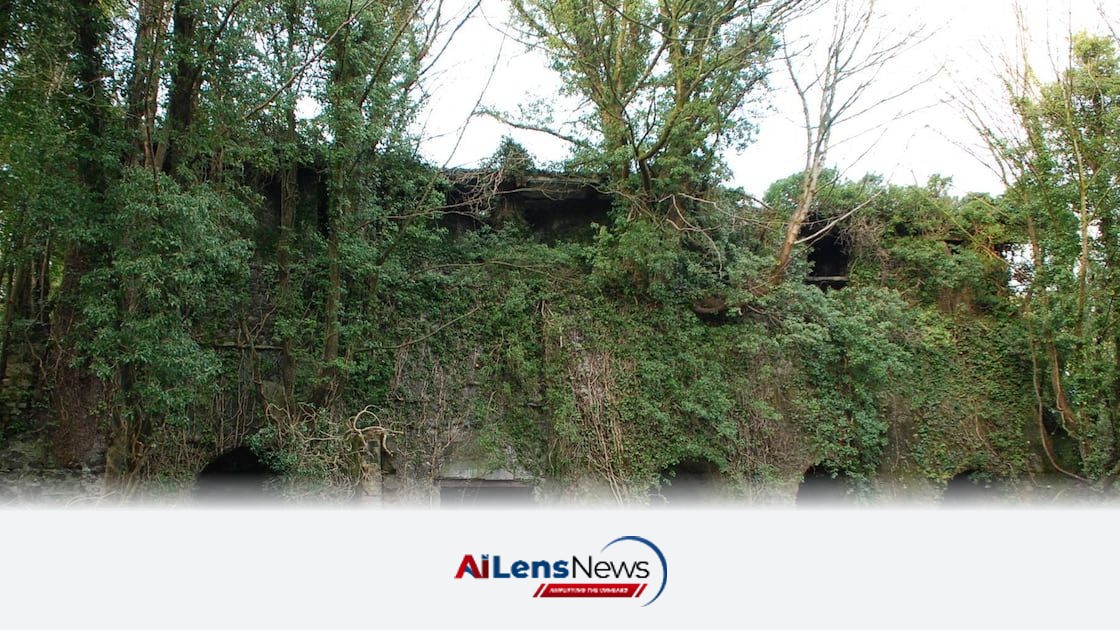



Fewer than three convictions in a decade highlight a significant enforcement gap regarding unauthorized alterations to listed buildings in Northern Ireland.
London, United Kingdom Aug 30, 2026 ALN: Fewer than three people have been convicted in Northern Ireland over the past decade for demolishing or altering listed buildings without approval – despite at least 20 sites being demolished and 40 being altered in the last five years alone.
The figures come following the most recent incident of a listed building being demolished without prior approval at the Antrim Arms Hotel in Ballycastle last month.
An investigation was launched following the discovery, and a spokesperson for Causeway Coast & Glens Borough Council confirmed that as of the end of August, “the matter remains under investigation.”
While the council continues to investigate this specific case, elsewhere, there have been just three prosecutions relating to other buildings across the north in the past ten years.
In a response to a Freedom of Information request from The Irish News, the Department of Justice (DoJ) stated that there had been “fewer than three convictions” in relation to the “demolition or alteration of listed buildings” between 2016 and 2025.
The convictions relate to cases where there was at least one offence under Section 85 of the Planning Act (Northern Ireland) 2011 – the main piece of legislation which protects listed buildings in the north.
“For each of these convictions, the main disposal was a monetary penalty,” they added.
The DoJ clarified that the figures pertain to initial outcomes at court and do not include appeals.
A person found guilty under current legislation can face a prison sentence of up to either six months or two years, depending on the court they are tried in, a fine of up to £100,000, or both.
The Department for Communities (DfC), whose Historic Environment Division (HED) is responsible for listing buildings and advising on planning applications and enforcement taken by councils, stated that they were aware of 22 buildings which had been demolished or partially demolished since 2021.
For the same period, they were also aware of 40 buildings which had been altered or extended without prior written permission.
These figures reflect “only the activity that DfC has been involved with” and do not include other instances where advice has not been sought by councils.
Reflecting on the low number of convictions, John Anderson from the planning committee of Ulster Architectural Heritage (UAH) remarked that it represented a “lack of political will” on the part of councils, DfC, and the Department for Infrastructure (DfI), as the primary department associated with the planning act, to enforce the legislation.
“In general terms, there’s nothing wrong with the legislation. The legislation is adequate the way it is,” he said.
“It would seem that there is no political will to use those powers. It’s a very unusual piece of legislation in that there are absolutely no ifs and buts in it. If you do it without permission, it is a criminal offence.”
Mr. Anderson added that once a listed site is knocked down, “it’s not coming back.”
“Losing these buildings is not like cutting down a tree. You can always grow another tree,” he said.
“This is permanent loss; and every one of the buildings is part of cumulative loss. It’s yet another one of the list of dwindling national assets.”
In response to criticism regarding the “lack of political will” across departments to enforce legislation, a Department for Communities spokesperson stated: “District councils in their role as local planning authorities have responsibility for the enforcement of planning control including in relation to listed buildings under Part 4 of the Planning (NI) Act 2011.”
When asked if DfC had ever brought a prosecution over illegal works to a listed building where a council has failed to do so, the department added: “No. While DfC retains a power, as district councils also hold this power and are the planning authority, they are regarded as the lead enforcement authority responsible for investigating and pursuing enforcement action where it considers this to be justified.”
The DfI has also been contacted for a response.
To learn more about the latest developments in Crime & Law, stay updated with our exclusive reports and analyses on AILensNews.

The Directorate of Revenue Intelligence (DRI) has arrested four individuals and …

A Bangladeshi man has been arrested in Kuwait for allegedly murdering a Gulf nat…

Traders in Doomdooma received extortion notes purportedly from ULFA-I, which the…

Angus Bell shares his traumatic experiences at Loretto boarding school in his ne…