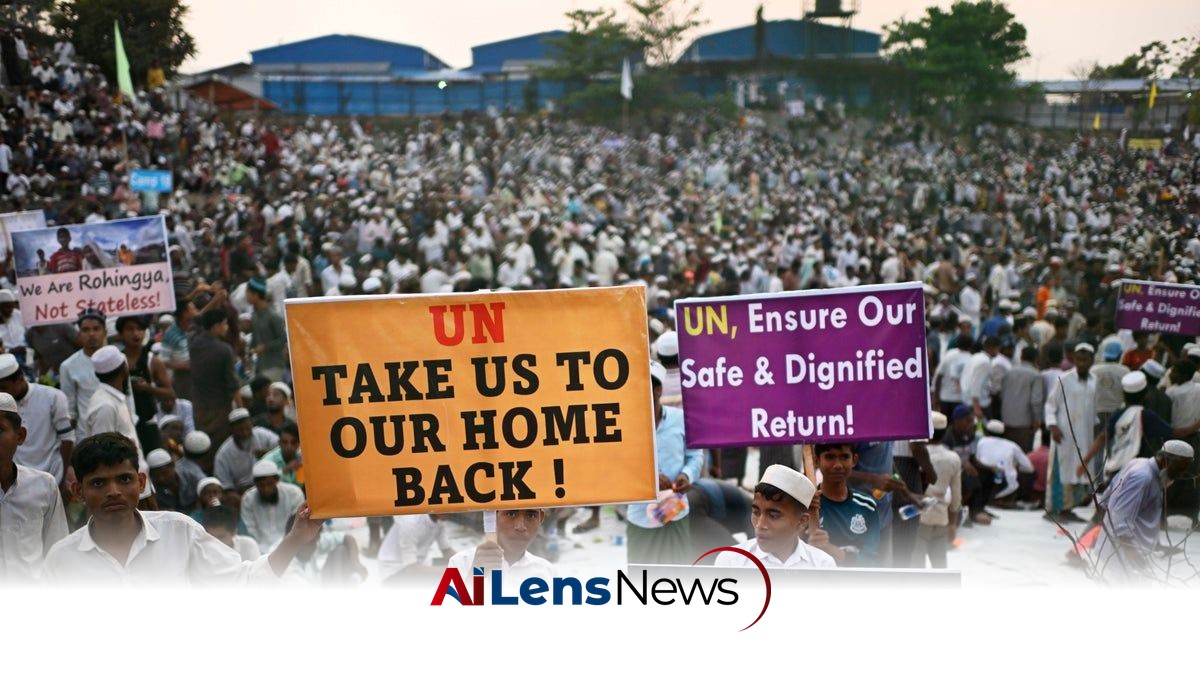


Myanmar's government has verified over 300,000 Rohingya refugees for potential repatriation, as the crisis enters its ninth year amidst ongoing violence.
London, United Kingdom Aug 15, 2026 ALN: Myanmar’s military-backed government announced on Saturday that it has verified that more than 300,000 Rohingya refugees currently residing in camps in Bangladesh are former residents of western Rakhine state. The government stated that it would accept their return once security conditions improve. This announcement comes as the Rohingya refugee crisis enters its ninth year, with hundreds of thousands still living in camps in Bangladesh after fleeing Myanmar in August 2017. This mass exodus was triggered by a military crackdown following attacks by a Rohingya insurgent group on guard posts in Rakhine.
The situation for the Rohingya people, a predominantly Muslim ethnic minority, has been dire for years. The military's actions during the 2017 crackdown were characterized by widespread reports of violence, including killings, rapes, and arson, leading to accusations of ethnic cleansing and genocide from the international community, including the United Nations. The scale and brutality of these actions have drawn global condemnation and prompted various countries and organizations to call for accountability and justice for the Rohingya people.
During this operation, over 700,000 Rohingya fled to Bangladesh, joining hundreds of thousands already there due to previous waves of violence perpetrated by Myanmar’s military. The refugee camps in Bangladesh, particularly in Cox's Bazar, have become one of the largest and most densely populated refugee settlements in the world. Conditions in these camps are often described as overcrowded and inadequate, with limited access to healthcare, education, and sanitation facilities, exacerbating the plight of the refugees.
Myanmar, formerly known as Burma, does not recognize the Rohingya as one of the country’s 135 lawful ethnic minorities, instead referring to them as Bengalis, implying they are illegal immigrants from Bangladesh. This denial of their identity and rights has been a significant factor in the ongoing discrimination and violence against the Rohingya people. The government’s stance has also hindered international efforts to address the humanitarian crisis and facilitate the safe return of refugees.
As of the end of July, Myanmar reported that it had verified 426,545 of the 828,824 refugees listed by Bangladesh, determining that 308,797 of those verified were former residents of Rakhine. The verification process has been contentious, with many refugees expressing skepticism about Myanmar's intentions and the security conditions in Rakhine. The Ministry of Foreign Affairs indicated that 113,507 individuals could not be verified, and 4,241 were found to have been involved in what the government termed terrorist activities, a classification that has raised concerns about the criteria used for verification.
The government stated that it would continue working with Bangladesh to facilitate the return of verified former residents when the security situation in Rakhine stabilizes. However, the timeline for such stabilization remains uncertain, as ongoing conflicts and political instability in Myanmar complicate the situation. Additionally, the international community has urged Myanmar to create a safe and conducive environment for the return of refugees, emphasizing the need for accountability for past atrocities.
Furthermore, Myanmar's government has rejected claims that more than 1 million people were displaced from Rakhine, asserting that over 540,000 crossed into Bangladesh after the violence in 2017, while more than 200,000 remained in northern Rakhine. This downplaying of the refugee crisis has raised concerns among humanitarian organizations and advocates for the Rohingya, who argue that the government is attempting to minimize the scale of the crisis to deflect international scrutiny.
In 2018, Myanmar and Bangladesh agreed to a two-year repatriation process, which was hailed as a potential pathway to resolving the crisis. However, security in Myanmar deteriorated following a military takeover in 2021 that ousted the elected government of Aung San Suu Kyi, leading to widespread armed resistance. Consequently, plans to repatriate the refugees have not materialized as the situation in Rakhine has remained volatile.
The renewed chaos caused by fighting between the Rakhine-based ethnic Arakan Army and the military over control of the region in 2023 has forced more refugees to flee toward Bangladesh and elsewhere to save their lives. The Arakan Army has gained control over much of Rakhine after capturing territory from the military in recent years, further complicating the repatriation process and raising concerns about the safety of any potential returnees.
In recent years, deteriorating conditions in refugee camps, significant cuts to foreign aid, and the lack of safe prospects for returning to Myanmar have led an increasing number of Rohingya refugees to attempt dangerous ocean crossings to Malaysia and Indonesia on rickety boats. These perilous journeys often result in loss of life, as refugees face the dangers of overcrowded vessels, human trafficking, and harsh weather conditions at sea. The desperation among the Rohingya to seek better living conditions underscores the urgent need for a comprehensive solution to the crisis.
Malaysian Prime Minister Anwar Ibrahim announced in late July that Myanmar had agreed to take back 5,000 Rohingya refugees currently in Malaysia as part of a repatriation program. However, an official from Myanmar's foreign ministry, Han Win Aung, clarified that the repatriation program is focused solely on verified Myanmar nationals held in detention centers in Malaysia, rejecting reports that the government would accept Rohingya refugees. This clarification has raised further questions about Myanmar's commitment to addressing the plight of the Rohingya and the feasibility of repatriation efforts.
The ongoing Rohingya crisis poses significant challenges not only for Myanmar and Bangladesh but also for the broader international community. The humanitarian implications are profound, with millions affected by the conflict and displacement. As the situation continues to evolve, the need for a coordinated international response that prioritizes the rights and safety of the Rohingya people remains critical. Advocacy for their rights, combined with pressure on Myanmar to ensure accountability and create a safe environment for repatriation, is essential in addressing this humanitarian disaster.
To learn more about the latest developments in World News & International Affairs, stay updated with our exclusive reports and analyses on AiLensNews.

