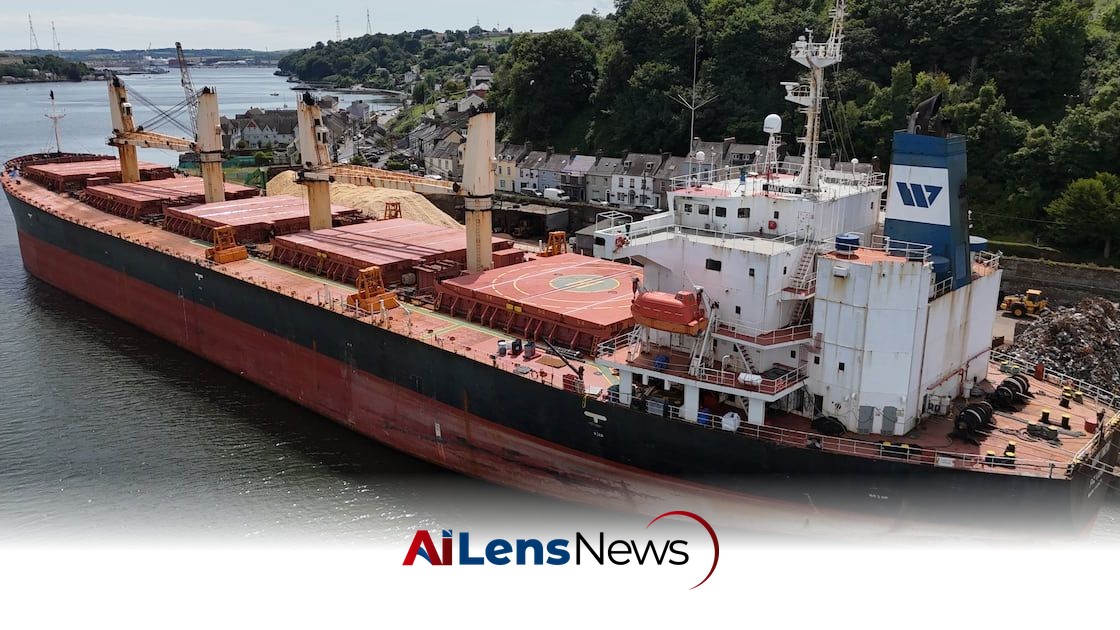


The MV Matthew, a drug-smuggling vessel costing the State €17 million to maintain, has been sold for one dollar after a significant cocaine seizure.
London, United Kingdom Jul 18, 2026 ALN: The MV Matthew, a cargo ship that found itself embroiled in one of the most significant drug smuggling operations in Irish history, has been sold for the nominal sum of one dollar. This sale comes after the Irish State incurred approximately €17 million in costs associated with the ship's maintenance since its seizure. The stark contrast between the ship's previous operational history and its current sale price has raised eyebrows and sparked discussions regarding the management of assets linked to criminal activities.
Seized in September 2023, the MV Matthew was pivotal in a law enforcement operation that led to the largest cocaine seizure in Ireland's history. Authorities confiscated a staggering 2.2 tonnes of cocaine, valued at €157 million, emphasizing the scale and significance of the drug trafficking operation that the vessel was involved in. This operation served not only as a critical intervention against organized crime but also as a testament to the collaborative efforts of various law enforcement agencies.
The operation that culminated in the MV Matthew's seizure was a coordinated effort involving An Garda Síochána, Ireland’s national police service, along with the Army Ranger Wing, a specialized unit of the Irish Defence Forces. The collaboration between these agencies is indicative of the seriousness with which the Irish government approaches drug trafficking and organized crime. During this operation, six crew members aboard the MV Matthew were arrested, alongside two individuals from a smaller vessel known as the Castlemore. The Castlemore, which had connections to the MV Matthew, tragically sank off the coast of Wexford during the operation, complicating the situation further and highlighting the dangers associated with maritime drug smuggling.
Following their arrests, the crew members faced trial at the Central Criminal Court, where they received sentences ranging from 13-and-a-half to 20 years. These convictions reflect the Irish judicial system's commitment to tackling drug trafficking and serve as a warning to other potential offenders. The legal ramifications that followed such a large-scale drug smuggling attempt underscore the serious consequences of engaging in organized crime.
The seizure of the MV Matthew was described by Revenue, Ireland's tax and customs authority, as “without precedent” in the country. This marked a significant disruption to the operations of organized crime gangs involved in drug smuggling, representing a victory for law enforcement and a deterrent to other criminal enterprises operating in the region. The implications of this seizure extend beyond immediate law enforcement successes; it signals a robust stance against drug trafficking and organized crime in Ireland.
However, the process of disposing of the MV Matthew proved to be anything but straightforward. Due to its involvement in a high-profile criminal case, the ship could not be sold or repurposed until December 2024, as it was required for evidential purposes during ongoing legal proceedings. This extended detention period significantly contributed to the mounting costs associated with the ship's maintenance, which reached approximately €17 million. The financial burden on the Irish State raises important questions about the sustainability of such operations and the long-term financial implications of managing seized assets.
A spokesman for Revenue elaborated on the complexities involved in managing the ship, stating, “There were significant regulatory and legal obligations that had to be satisfied to facilitate the removal of the MV Matthew from the Port of Cork.” The spokesman noted that the ship's previous use as a means for international drug smuggling posed unique challenges, as the regulatory and legal requirements for its departure necessitated ongoing engagement with international parties to resolve the multifaceted issues that arose.
Ultimately, after a lengthy and complicated process that included satisfying all registration of title requirements with the Panama Maritime Authority Ships Registry, the MV Matthew was sold to an international shipping company for the nominal fee of one dollar. This company is expected to tow the vessel to Varna, Bulgaria, where it will undergo refitting to be repurposed as a bulk grain carrier on the Black Sea. The decision to sell the ship for such a low price reflects the practical challenges of managing a vessel associated with criminal activities, as well as the significant costs incurred during its detention.
The financial expenses associated with the MV Matthew included essential repairs, maintenance, and storage, all of which contributed to the hefty total of €17 million. Despite these costs, the seizure of the vessel and the drugs it carried represented a landmark achievement in the ongoing fight against organized crime, garnering international attention and recognition for the efforts of Irish law enforcement. The scale of the cocaine seizure and the successful prosecution of those involved highlight the effectiveness of coordinated law enforcement efforts in combatting drug trafficking.
In light of the substantial financial burden placed on the State due to the MV Matthew's maintenance, concerns have been raised regarding the lack of compensation or recovery of costs associated with the seizure. Fianna Fáil TD Séamus McGrath has expressed intentions to discuss the financial implications of maintaining the ship with the Minister for Finance, Paschal Harris. McGrath was informed by Revenue chairman Niall Cody that there is little chance of recouping the money spent on the MV Matthew, which raises pressing questions about the financial accountability of managing seized assets linked to criminal activities.
This situation highlights a broader issue within law enforcement and government agencies regarding the management of seized assets. The costs associated with maintaining such vessels can be substantial, and the challenge of disposing of them in a manner that aligns with legal and regulatory frameworks can further complicate matters. As organized crime continues to evolve and adapt, law enforcement agencies must also consider the financial implications of their operations and the long-term sustainability of their efforts to combat drug trafficking.
Moreover, the challenges faced in managing seized assets like the MV Matthew may prompt a reevaluation of policies surrounding the seizure and management of vessels involved in criminal activities. The financial implications of maintaining such assets could lead to calls for reform in how law enforcement agencies approach the disposal of seized property. This could include seeking alternative arrangements that alleviate the financial burden on the State while still ensuring that justice is served and the integrity of the legal process is maintained.
In conclusion, the sale of the MV Matthew for just one dollar, following its seizure during a historic drug bust, serves as a reminder of the complexities and challenges faced by law enforcement in managing assets tied to criminal enterprises. While the seizure itself represents a significant victory in the fight against organized crime, the financial implications of maintaining such assets raise important questions about the long-term strategies and policies that should be implemented to address these issues in the future. The situation underscores the need for a comprehensive approach to asset management in the context of criminal justice, ensuring that the fight against organized crime is not only effective but also sustainable in the long run.
To learn more about the latest developments in Crime & Law, stay updated with our exclusive reports and analyses on AiLensNews.

