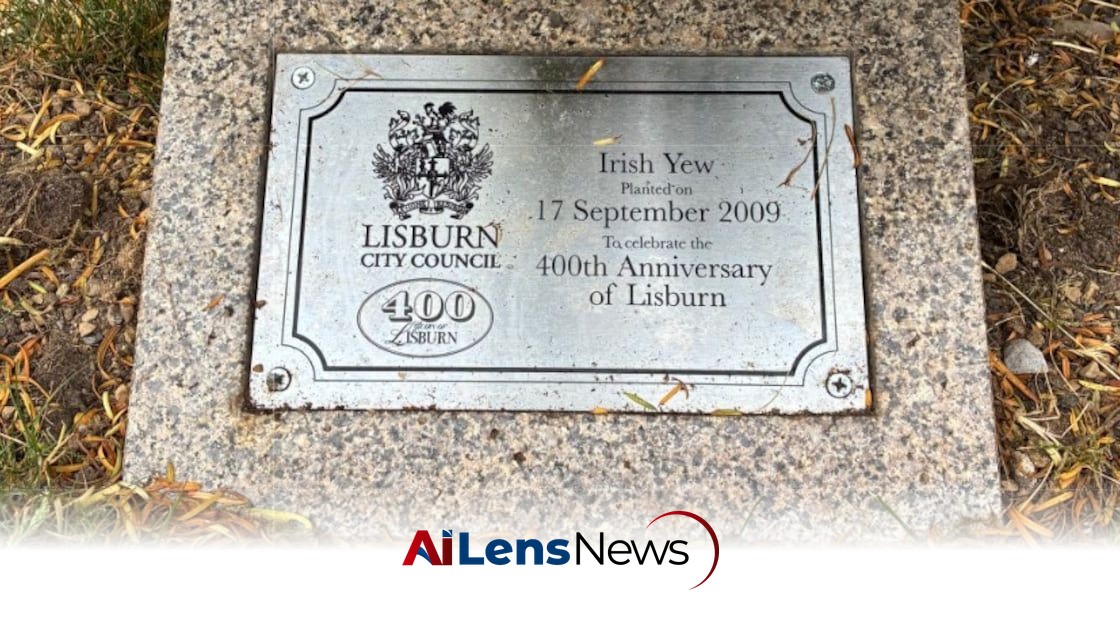


A new plaque has replaced the one honoring Prince Andrew at Lisburn's 400th anniversary tree, following controversy over his connections to Jeffrey Epstein.
London, United Kingdom Jul 15, 2026 ALN: The removal of the plaque commemorating Prince Andrew from the 400th anniversary tree in Lisburn marks a significant shift in the public perception of the former royal and reflects broader societal changes regarding accountability and the legacy of individuals associated with scandal. The Irish yew tree, planted in 2009, was intended to celebrate a milestone in Lisburn’s history, but the association with Prince Andrew has become increasingly controversial due to his connections with Jeffrey Epstein, a convicted sex offender whose crimes have drawn global attention and condemnation.
In recent years, the scrutiny surrounding Prince Andrew intensified following allegations of sexual misconduct and his ties to Epstein, who was accused of trafficking underage girls for sex. These allegations have led to a considerable public outcry and a reevaluation of how institutions and communities honor individuals with troubled legacies. Prince Andrew's royal titles were stripped in early 2022, a move that signaled a significant distancing by the royal family from his actions and associations. This decision came as a response to mounting pressure from the public and media, as well as from within the royal family itself.
The original plaque, which read ‘planted by HRH Prince Andrew, Duke of York’, was removed in December of the previous year, indicating a decisive break from the past. The new plaque, which simply states ‘Irish Yew Planted on 17 September 2009 To celebrate the 400th Anniversary of Lisburn’, serves to redirect the focus away from Prince Andrew and back onto the significance of Lisburn’s anniversary. This change reflects a growing consensus among local political parties and the public that honoring individuals with controversial pasts is no longer acceptable.
The reactions from various political parties within the Lisburn and Castlereagh City Council illustrate a unified stance against maintaining any tribute to Prince Andrew. The Democratic Unionist Party (DUP) expressed support for the removal of the plaque, emphasizing that it was essential for the celebration of Lisburn's 400th anniversary to proceed without the overshadowing presence of a figure embroiled in scandal. Their statement highlighted a commitment to community values and the importance of celebrating local history without association to controversial figures.
Similarly, the Alliance Party underscored the need for a new plaque that honors Lisburn’s history without reference to its controversial planter. Their position reflects a broader societal shift towards reevaluating historical figures and ensuring that public commemorations align with contemporary values of accountability and respect for victims of abuse.
The Ulster Unionist Party (UUP) welcomed the updated plaque, expressing satisfaction that their suggestion to remove the reference to Prince Andrew was accepted. This sentiment was echoed across the council, indicating a collective desire to focus on the positive aspects of Lisburn’s history rather than the negative associations linked to certain individuals.
The Social Democratic and Labour Party (SDLP) took a firm stance early on, calling for the removal of tributes to Prince Andrew as soon as the Epstein scandal emerged. Their comments reflect a growing awareness and sensitivity towards the victims of abuse and the importance of supporting them by distancing public honors from those implicated in such serious allegations.
Sinn Féin councillor Declan Lynch reiterated the party's support for the removal of the plaque, emphasizing that while it is important to commemorate Lisburn’s significant anniversary, it is equally crucial to ensure that such commemorations do not come with problematic associations. This statement reflects a broader commitment to social justice and accountability within political discourse.
The decision to replace the plaque has implications beyond just the local context of Lisburn. It symbolizes a changing landscape of public memorialization, where communities are increasingly unwilling to overlook the past misdeeds of individuals, regardless of their status or titles. This trend can be seen in various contexts globally, from the removal of statues commemorating controversial historical figures to the re-evaluation of public spaces named after individuals whose legacies are now viewed through a critical lens.
As communities around the world grapple with issues of historical memory and accountability, the case of Lisburn serves as a microcosm of a larger movement towards more responsible and reflective public commemorations. The new plaque at the Irish yew tree not only restores focus to the significant anniversary of Lisburn but also serves as a reminder of the ongoing dialogue about who we choose to honor in our public spaces and why. This conversation is particularly relevant in a time when the actions of prominent figures are increasingly scrutinized, and the consequences of their behaviors are being brought to light.
The implications of this shift in perspective are substantial. It raises questions about how communities can honor their histories while also being mindful of the values they wish to promote. The removal of the plaque is not just a local issue; it resonates with similar movements in various parts of the world, where the legacies of individuals are being reevaluated in light of contemporary ethical standards. The trend has sparked debates within communities about the criteria for public honors and the importance of aligning such honors with the principles of justice and respect for all individuals, especially those who have suffered from abuse.
Furthermore, the decision to remove the plaque can be seen as a reflection of the changing dynamics within public policy and civic engagement. Local governments and councils are increasingly aware of the need to listen to their constituents and respond to public sentiment. The consensus among political parties in Lisburn to remove the plaque demonstrates a collective recognition of the importance of community values and the desire to foster an inclusive environment that respects the dignity of all individuals.
In conclusion, the removal of Prince Andrew’s plaque from the Lisburn anniversary tree is emblematic of a broader societal shift towards accountability and the reevaluation of public honors. It reflects a growing consensus that individuals with controversial legacies should not be celebrated in public spaces, and it highlights the importance of honoring community milestones in a way that aligns with contemporary values. This change is likely to resonate beyond Lisburn, influencing how other communities approach similar issues in the future. As the dialogue around public memorialization continues, it is essential for communities to engage in thoughtful discussions about the legacies they choose to commemorate and the values they wish to uphold in their public spaces.
To learn more about the latest developments in Local & Regional, stay updated with our exclusive reports and analyses on AiLensNews.

