

More
Checking your session
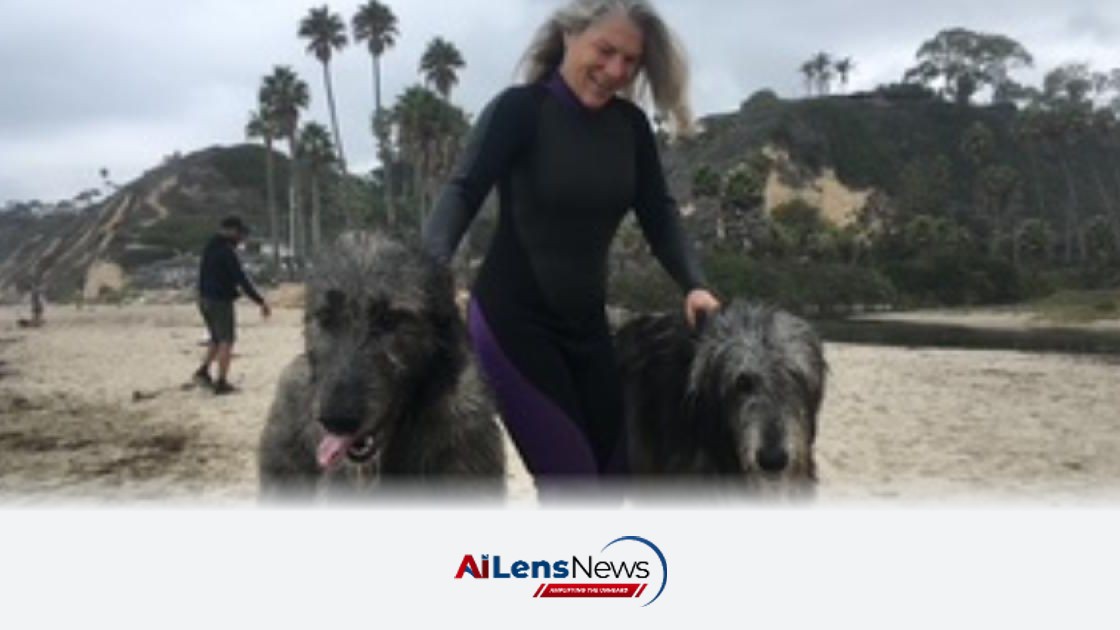



Claire Kellerman, embroiled in a legal dispute over her assistance dog, shares her story amid online backlash and community scrutiny.
London, United Kingdom Aug 28, 2026 ALN: Claire Kellerman, an American woman at the center of a contentious legal battle with two community organizations in the Outer Hebrides, has finally broken her silence. The case, which could potentially lead to the bankruptcy of a local charity, has drawn significant media attention. The legal dispute highlights not only the challenges of navigating disability rights in rural communities but also the broader cultural tensions that can arise when individuals from different backgrounds intersect.
The 62-year-old, who relocated from California to Lewis in 2023, is seeking £10,000 in damages after being denied permission to bring her assistance dog into the Bernera Community Cafe. This legal action has placed the Bernera Community Association and the Bernera Development Trust in a precarious financial position, raising questions about the sustainability of small charities in the face of legal challenges. The case has sparked discussions about the responsibilities of community organizations to accommodate individuals with disabilities and the potential financial repercussions of failing to do so.
Kellerman's legal representation, the Ethnic Minorities Law Centre based in Glasgow, initially filed a court challenge against the Bernera Development Trust. However, they later acknowledged that the action was incorrectly directed, resulting in the trust being awarded legal expenses. Fortunately for Kellerman, she is shielded from these costs under the civil legal aid scheme, which is designed to ensure that individuals can pursue legal action without the burden of exorbitant fees. This aspect of the case underscores the importance of legal aid in facilitating access to justice for marginalized groups.
Following this, her lawyers shifted their focus to the community association that operates the cafe. Since the case became public, Kellerman has faced a barrage of online criticism, with many questioning her disability, the legitimacy of her assistance dog, and the funding of her legal case. The rise of social media has amplified public discourse, often leading to a polarized environment where individuals can face significant backlash for their actions. Kellerman's experience illustrates the challenges that individuals face when they become the subject of public scrutiny, particularly in cases involving disability and accommodation.
Despite her Californian upbringing, Kellerman claims a deep Scottish heritage, stating, "I'm Scottish from at least 493AD and most likely even further back." She asserts that her lineage includes historical figures such as Robert the Bruce and Mary Queen of Scots. While some have labeled her as privileged due to her Hollywood upbringing and her connection to actress Sally Kellerman, she insists that she is not an entitled American but rather a creative and courageous individual. This assertion of identity is crucial for Kellerman, as it frames her narrative within a context of belonging and authenticity, particularly in a community that may view her as an outsider.
Kellerman recounted her experiences of discrimination shortly after moving to Stornoway in October 2023, particularly regarding her assistance dog. She claims that 13 businesses have denied her dog access, prompting her to consider legal action against five of them. This widespread denial of access raises important questions about the understanding and implementation of disability rights within local businesses. Kellerman expressed frustration over the hostility she encountered, stating, "They're just so mean, and then they band together and say I was aggressive. I'm not a wallflower, I'm not quiet, I'm American." Her statements reflect a broader struggle faced by many individuals with disabilities who encounter resistance when seeking accommodations in public spaces.
The crux of the controversy revolves around Kellerman's dog, Lady Tarkina Snow Fire, whom she adopted from the Humane Society in New Mexico. Kellerman has trained Tarkina herself, emphasizing her role as an assistance dog. The distinction between therapy dogs, service dogs, and emotional support animals can often lead to confusion, and Kellerman's case highlights the importance of clear definitions and understanding of these classifications. In a letter to the businesses denying her access, her lawyers stated that Kellerman is a disabled person relying on her assistance dog for support. This legal framing is crucial as it establishes the necessity of the dog in Kellerman's daily life, thereby reinforcing her claims for access under disability rights laws.
Amidst the online discourse, rumors have circulated claiming that Kellerman's dog killed a cat in Stornoway. Kellerman vehemently denies these allegations, asserting that the cat attacked her instead, leaving puncture wounds on her legs. This incident, whether factual or not, has added another layer of complexity to the public's perception of both Kellerman and her assistance dog. The spread of rumors in such cases can significantly impact the reputations of those involved and can lead to further stigmatization of individuals with disabilities who rely on assistance animals.
Kellerman revealed that her lawyers have assured her that legal aid has thoroughly reviewed her case multiple times. She expressed gratitude for the support she received from the Ethnic Minorities Law Centre, stating that they believe she has a strong case against the businesses involved. The role of legal aid in providing support to individuals facing discrimination is invaluable, particularly for those who may not have the financial means to pursue legal action. As the legal battle unfolds, Kellerman remains resolute in her pursuit of justice, determined to address what she perceives as discrimination against her and her assistance dog.
The implications of this case extend beyond Kellerman's personal experiences. The outcome may set a precedent for how disability rights are interpreted and enforced within small communities, particularly in rural areas where resources may be limited. Furthermore, it raises important discussions about the responsibilities of local businesses to provide access and support to individuals with disabilities. As society continues to grapple with issues of inclusion and accessibility, cases like Kellerman's serve as crucial touchpoints for understanding the complexities of these challenges in real-world contexts.
To learn more about the latest developments in Local & Regional, stay updated with our exclusive reports and analyses on AILensNews.

The District Road Safety Committee in Kamrup convened to assess road safety and …

Acting Manpower Minister Jasmin Lau's comments on AI's limited impact on job sub…
A painted bronzeback snake was spotted outside a glass enclosure at Mandai's Rep…

The Assam College Principals’ Council has provided financial assistance to colle…
Eight members of the Khasi Students' Union are summoned by police as part of an …