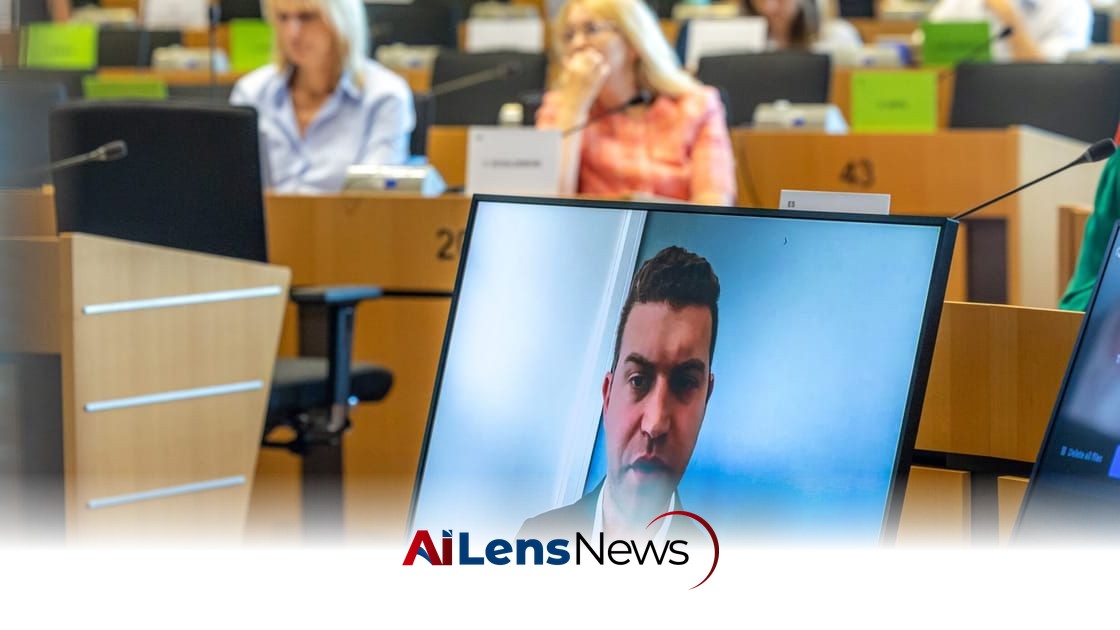


European policymakers expressed frustration after Anthropic sent a junior employee to address critical AI safety concerns, leaving key questions unanswered.
London, United Kingdom Jul 14, 2026 ALN: BRUSSELS — European policymakers criticized AI company Anthropic on Tuesday for failing to send a senior company official to address Brussels' concerns about risks posed by advanced AI capabilities. This incident highlights the growing tensions between technology companies and regulatory bodies as the European Union (EU) grapples with the implications of rapidly advancing artificial intelligence (AI) technologies.
Anthropic appointed Donny Greenberg, a technical employee who joined the company in April, to address the European Parliament via video from New York, rather than its head of public policy, Sarah Heck, as lawmakers had requested. This decision was met with disappointment by EU officials, who had anticipated a more substantive discussion with a senior figure who could address policy implications and regulatory concerns. Greenberg's role as a technical employee raised questions about the depth of understanding he could provide regarding the broader implications of AI technologies.
"I'm a technical person, not a policy person," Greenberg stressed in his opening remarks. This statement underscored the disconnect between the technical aspects of AI development and the policy considerations that are increasingly becoming critical in the context of AI's deployment in society. Lawmakers expressed frustration that the testimony did not adequately address their concerns about the potential risks associated with AI technologies.
The testimony was the first of its kind in Brussels since the U.S.-based company's early April decision to restrict its cyber-capable model, Mythos, to a set of trusted American firms. This decision has significant implications for cybersecurity and the protection of critical infrastructure in Europe. EU institutions have been desperately seeking access to Mythos and Fable, both capable of finding and exploiting software vulnerabilities, thereby putting critical infrastructure at risk. The limited availability of these models raises concerns about the ability of European entities to safeguard against potential cyber threats.
"I guess you can expect a lot of policy-related questions that perhaps you won't be able to answer as a technical guy," said Dutch Greens European Parliament lawmaker Kim van Sparrentak. "And I think Anthropic could have known that." This comment reflects a broader sentiment among European lawmakers who are increasingly aware of the need for robust regulatory frameworks to manage the risks associated with AI technologies.
After the hearing, van Sparrentak told reporters: "It's clear from this hearing Anthropic doesn't care about Europe." This statement encapsulates the growing frustration among EU policymakers regarding the perceived indifference of some U.S.-based tech companies toward European regulatory concerns. As AI technologies continue to evolve, the need for dialogue and cooperation between tech companies and regulatory bodies becomes increasingly critical.
Greenberg joined the AI leader when it acquired his company, Runhouse, earlier this year. He has since been working on Glasswing, the company's effort to share Mythos with trusted cyber defenders. This initiative is part of a broader trend among AI companies to collaborate with government entities and cybersecurity experts to enhance resilience against cyber threats. However, the effectiveness of such initiatives may be limited if companies do not engage with policymakers to address regulatory concerns.
"A lot of [lawmakers] would have liked to speak to the political level," said the Greens' Anna Cavazzini, the chair of the Parliament's internal market committee. This statement highlights the expectation among EU lawmakers that technology companies should take their regulatory responsibilities seriously and engage in meaningful discussions about the implications of their technologies. Meanwhile, Dutch Greens European Parliament lawmaker Reinier van Lanschot told Greenberg: "I find it a bit disappointing that in this exchange we cannot touch on the policy side." This sentiment reflects a broader frustration among lawmakers who are grappling with the challenges posed by advanced AI technologies.
Cavazzini later warned Anthropic that it should brace for a "next exchange of views we're definitely having." This statement indicates that EU lawmakers are prepared to continue pressing for more accountability and transparency from AI companies as they seek to establish a regulatory framework that addresses the risks associated with advanced AI technologies.
Other lawmakers, meanwhile, focused on Greenberg's virtual appearance and an impression in the room that he was reading his answers from his screen. This raised questions about the authenticity of his responses and the extent to which he was able to engage with lawmakers' inquiries. "Are you answering our questions, or are you just following what your AI model is telling you to say?" asked Spanish conservative lawmaker Pablo Arias Echeverría. This comment underscores the skepticism that some lawmakers have regarding the ability of AI companies to provide genuine insights into the implications of their technologies.
Greenberg fired back: "I should take that as a compliment since we're very proud of Claude." Claude is Anthropic's AI model, which the company has positioned as a leading tool in the AI landscape. However, the reliance on AI models for communication raises broader questions about the role of AI in shaping public discourse and the responsibilities of AI companies in ensuring that their technologies are used ethically and transparently.
In his answers, Greenberg said the rise of cyber-capable models shows AI is a dual-use tool, and that now is the time for companies to boost their cyber resilience. This assertion reflects a growing recognition among tech companies of the need to balance innovation with responsibility. He also said that Anthropic is working with the Commission's AI Office and the EU's cybersecurity agency, ENISA, to enable that. Collaborations between tech companies and regulatory bodies are essential for developing effective strategies to mitigate the risks associated with advanced AI technologies.
The hearing ended as awkwardly as it had kicked off, with Greenberg no longer visible on screen when chair Cavazzini thanked him for his appearance. This abrupt conclusion highlighted the challenges of virtual engagements and the potential for miscommunication in discussions that are critical for shaping the future of AI regulation.
The question of if, how and by whom new advanced artificial intelligence models are tested has become a delicate geopolitical and business question as the AI race heats up. The rapid advancement of AI technologies has created an environment where regulatory frameworks are struggling to keep pace with innovation. Lawmakers are increasingly aware of the need to establish clear guidelines for the responsible development and deployment of AI technologies.
At another meeting earlier in the day, a representative of Open AI, one of Anthropic's chief rivals, told lawmakers it was working to avoid staged rollouts of its new models. This statement reflects a broader trend among AI companies to prioritize transparency and accountability in their development processes. Meanwhile on Tuesday, Google DeepMind CEO Demis Hassabis called for the U.S. to create an industry-funded standards body to test frontier AI models and set standards. This call for standardization underscores the growing recognition of the need for collaborative efforts to establish best practices in the rapidly evolving field of AI.
To learn more about the latest developments in Politics, stay updated with our exclusive reports and analyses on AiLensNews.

