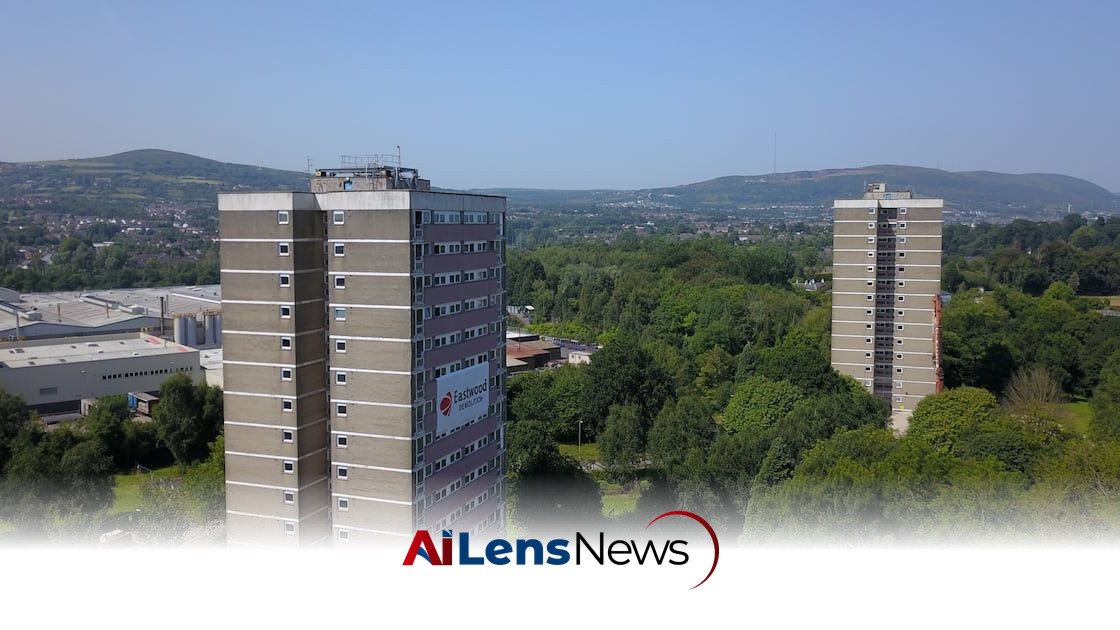


The demolition of Dunmurry's tower blocks has faced significant delays due to asbestos and logistical issues, pushing completion to late 2025.
London, United Kingdom Jul 19, 2026 ALN: The long-delayed demolition of two residential tower blocks in Dunmurry, Rathmoyne House and Coolmoyne House, has extended the timeline for completion to 2025. These buildings have been a significant part of the Seymour Hill area since their construction over 60 years ago, and their impending demolition has been a topic of discussion and concern among local residents and officials alike. The tower blocks, which have housed generations of families, reflect the changing landscape of housing needs and urban development in Northern Ireland.
Plans for the demolition of these towers were initially proposed as part of the Northern Ireland Housing Executive's (NIHE) Tower Block Action Plan, which was first introduced in 2019. The aim of this plan was to address the safety and livability of high-rise buildings across Northern Ireland, particularly those that have become outdated or pose health risks to residents. The Tower Block Action Plan came in response to growing concerns about the structural integrity and safety of such buildings, especially in light of incidents like the Grenfell Tower fire in London, which highlighted the potential dangers of high-rise living. The demolition plans received approval in 2021, with an initial target date set for July 2023. However, complications surrounding the presence of telephone masts on the buildings have delayed the demolition process by over two years, illustrating the complex regulatory and logistical hurdles that often accompany urban redevelopment projects.
In the interim, residents of Rathmoyne House and Coolmoyne House, including both Housing Executive tenants and private leaseholders, were required to relocate. This process of rehousing was not only a logistical challenge but also a source of stress for many families who had lived in the tower blocks for years. The impact of this transition on the community cannot be understated, as it disrupted lives and raised concerns about the availability of suitable alternative housing. Many residents reported feelings of uncertainty and anxiety as they navigated the rehousing process, highlighting the emotional toll that such significant changes can have on individuals and families.
As the timeline for demolition pushed into late 2025, it was discovered that the buildings contained asbestos, a hazardous material that poses serious health risks if not handled correctly. This finding has further complicated the demolition plans, necessitating additional safety measures and protocols to ensure that the asbestos is removed safely before the buildings can be demolished. The discovery of asbestos is not uncommon in older buildings, and it often requires specialized removal procedures that can be time-consuming and costly. Alliance councillor Nicola Parker spoke to the media about the situation, emphasizing that the full health and safety survey could not be completed until the buildings were vacated, which contributed to the delays. Parker's comments reflect a broader concern for public health and safety, underscoring the importance of thorough assessments in redevelopment projects.
"The delay has just meant a delay in the actual housing that’s going to be needed," Parker stated, highlighting the pressing demand for housing in the area. She noted that there are over 5,000 individuals currently on the waiting list for housing in Lisburn, with approximately 500 to 600 people specifically in need of properties in Lisburn North. The planned construction of over 100 new social housing units in place of the demolished towers is seen as a critical step toward alleviating some of this housing pressure, even if it is just a small fraction of the overall need. The waiting list for housing in the area reflects a broader crisis in affordable housing across Northern Ireland, where many families struggle to find suitable living arrangements amidst rising costs and limited availability.
Furthermore, the delays in the demolition of Rathmoyne House and Coolmoyne House are also holding up the demolition and redevelopment of three other tower blocks within the main Seymour Hill Estate. This creates a ripple effect that hinders progress in the area and contributes to ongoing frustrations within the community. Residents are eager to see improvements and new housing developments that can provide better living conditions and foster community growth. The interconnectedness of these projects highlights the importance of coordinated planning and execution in urban redevelopment, as delays in one area can significantly impact broader community development efforts.
Despite the frustrations, Parker acknowledged the emotional connection that many residents have to the tower blocks. "These blocks have been here for a long time and I think residents who did live in them felt attached to them. It was their first property; they’d lived there for a long, long time," she reflected. The nostalgia associated with the buildings is palpable, as they have become a recognizable part of the local skyline and identity for many residents. The attachment to these structures speaks to the deep-rooted connections individuals have to their homes and communities, which can complicate the process of redevelopment and necessitate sensitive engagement with residents during transitions.
In a spring update, the NIHE reported that they had made "significant progress" with the demolition plans for both tower blocks in Dunmurry, as well as other high-rise buildings such as Kilbroney House and Clarawood House in Belfast. A spokesperson for the Housing Executive expressed satisfaction with the progress made at the site, assuring the public that all safety protocols remain in place during this complex process. This statement aims to reassure residents that their safety and well-being are a priority, despite the challenges faced in the demolition timeline. The commitment to safety is crucial, particularly in light of recent events that have raised awareness about the importance of rigorous safety standards in housing developments.
The implications of these delays extend beyond just the physical structures being demolished. They reflect broader issues within the housing market in Northern Ireland, where demand for affordable housing continues to outstrip supply. The situation in Dunmurry is emblematic of the challenges faced by many communities, where aging infrastructure and a growing population create a pressing need for redevelopment and new housing initiatives. The delays in demolition are not merely a setback for those awaiting new housing; they also highlight systemic issues in housing policy, planning, and resource allocation that require comprehensive solutions.
In conclusion, while the demolition of Rathmoyne House and Coolmoyne House has faced significant delays, the eventual removal of these tower blocks is poised to pave the way for new housing developments that could address some of the acute housing needs in the area. As the community navigates these transitions, the focus remains on ensuring safety, addressing housing shortages, and fostering a sense of renewal and progress in Dunmurry. The situation underscores the importance of community engagement, careful planning, and a commitment to addressing the underlying issues in the housing market as Northern Ireland moves forward into a new era of urban development.
To learn more about the latest developments in Local & Regional, stay updated with our exclusive reports and analyses on AiLensNews.

