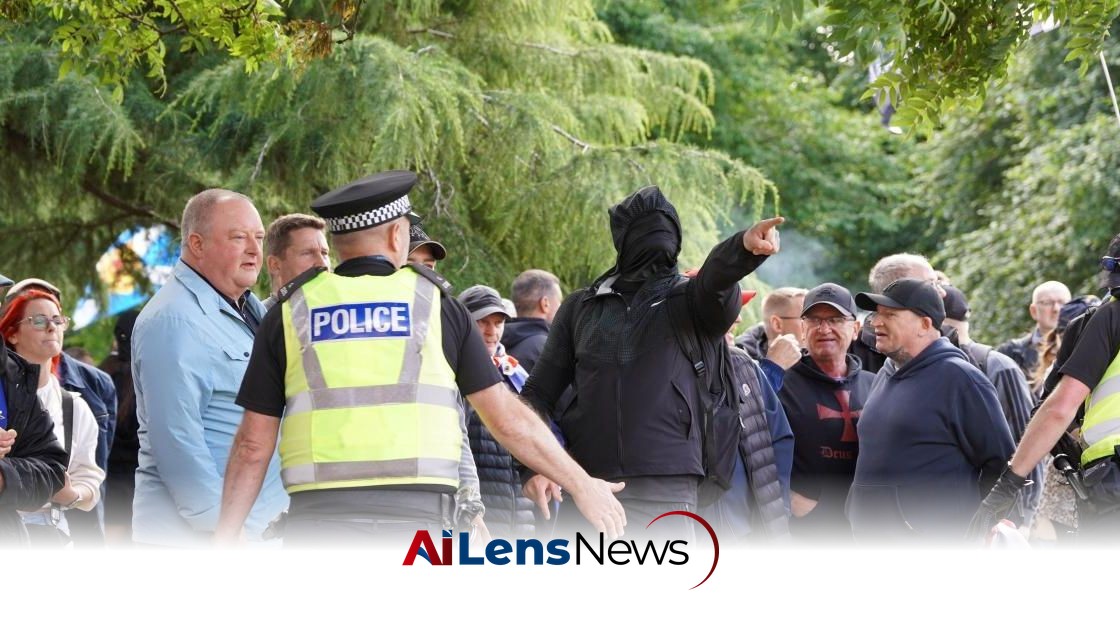


Vigilante street patrols in Glasgow, funded by a far-right group, raise fears of impersonation and community safety risks.
London, United Kingdom Jul 31, 2026 ALN: Concerns have been raised that vigilante street patrol groups in Glasgow risk being mistaken for police officers. This worrying trend has emerged in light of recent developments involving Knights Templar International (KTI), a far-right and militant Christian nationalist organization. KTI, which is run by Jim Dowson, a co-founder of the controversial political group Britain First, has announced its intention to fund these patrol groups. The funding will provide them with essential equipment such as stab vests, body cameras, and high-visibility security jackets.
The announcement of this funding was made on the Facebook page of Scots Active, a group that engages in street patrols under the pretense of protecting the local community. However, Scots Active has frequently been associated with anti-immigration protests in Glasgow, raising questions about their true motives. Reports have indicated that members of Scots Active have a WhatsApp group with a name that includes derogatory language aimed at migrants, which further complicates their public image and raises concerns about their activities.
The involvement of KTI in this matter is particularly troubling given the organization's history and ideology. KTI has been described as having a far-right agenda, and its connections to other extremist groups have been documented. The organization claims to have members not only in the UK but also in Eastern Europe, Canada, and the United States. In a video released on social media, Dowson expressed gratitude to supporters who have provided financial backing for these Scottish patrol groups, indicating a broader network of far-right support that extends beyond local boundaries.
In light of these developments, political leaders have voiced their concerns regarding the implications of such groups operating in Glasgow. The Scottish Greens, in particular, have raised alarms about the potential for these vigilante groups to impersonate police officers. Greens MSP Maggie Chapman articulated her fears that the presence of fake police officers patrolling the streets could lead to increased intimidation and anxiety among the public. She emphasized that these groups do not contribute to community safety but rather exacerbate tensions and divisions within society.
Chapman’s statements reflect a wider concern about the impact of far-right groups on social cohesion. She pointed out that by stoking fears and tensions, these groups can justify their actions against marginalized communities, particularly people of color. This strategy of intimidation can create a hostile environment, making already vulnerable populations feel even less secure in their own neighborhoods. The Scottish Government has been urged to take decisive action against these groups, with Chapman calling for measures to ensure that genuine police officers are the only ones patrolling the streets.
Adding to the complexity of the situation, Chapman warned of the potential consequences if a genuine emergency arises. She expressed concern that someone in need of immediate assistance might encounter an unqualified individual posing as a police officer, which could lead to dire outcomes. The notion of “cosplay police” patrolling the streets raises significant questions about accountability and public safety.
In response to the criticisms, North2South, another group reportedly receiving funding from KTI, defended their operations. They asserted that their high-visibility vests clearly identify them as patrol members and distinguish them from actual police officers. This statement, however, does little to alleviate concerns about the perception of authority that these groups might create in the eyes of the public. The potential for confusion between these vigilante groups and legitimate law enforcement is a significant issue that could undermine trust in official police forces.
The broader implications of these developments extend beyond Glasgow. The rise of far-right groups and their influence on local communities is a trend observed in various parts of the world. Vigilante justice often emerges in response to perceived failures of law enforcement or societal breakdown, but it can also lead to increased violence and division within communities. The glorification of such groups can embolden individuals with extremist views and contribute to a culture of fear and mistrust.
Moreover, the funding and support from organizations like KTI highlight the interconnectedness of far-right movements across different regions. This transnational support network poses a challenge for local authorities and law enforcement agencies, as they must navigate the complexities of combating extremism while ensuring the safety and security of all citizens.
As the situation in Glasgow continues to develop, it remains crucial for community leaders, law enforcement, and policymakers to address the underlying issues that give rise to such vigilante groups. This includes tackling the root causes of social discontent, such as economic inequality, lack of community resources, and the spread of misinformation. By fostering dialogue and understanding within communities, it may be possible to mitigate the appeal of extremist groups and promote a more inclusive and safe environment for all residents.
In conclusion, the emergence of far-right vigilante groups in Glasgow, particularly those supported by organizations like KTI, presents a significant challenge to community safety and cohesion. The risks associated with impersonation of police officers, the potential for increased tension and division, and the broader implications for society as a whole must be taken seriously. As local authorities and community members grapple with these issues, proactive measures and open dialogue will be essential in ensuring that public safety is maintained and that all individuals feel secure in their communities.
The emergence of such groups is not an isolated phenomenon; it reflects a broader trend of increasing far-right sentiments across Europe and beyond. In recent years, many countries have witnessed the rise of similar organizations that claim to address issues related to crime and immigration, often fueled by populist rhetoric and a growing discontent with traditional political structures. These groups frequently exploit societal fears, particularly during times of economic uncertainty or social change, to gain traction and recruit members.
In Glasgow, the situation is exacerbated by the city's diverse demographic makeup, which includes a significant population of immigrants and refugees. The presence of groups like Scots Active, which have a history of anti-immigrant sentiment, poses a direct threat to these communities. The fear of violence or harassment can deter individuals from participating in public life, seeking help, or reporting crimes, which ultimately undermines the fabric of community safety and trust.
Furthermore, the tactics employed by these vigilante groups often mimic those of legitimate law enforcement, including surveillance and public patrolling. This can create a sense of confusion among residents who may not be able to distinguish between actual police officers and self-appointed vigilantes. The potential for confrontations between these groups and marginalized communities is high, raising the risk of violence and further entrenching divisions within society.
Local authorities face the challenge of addressing the concerns raised by these groups while also ensuring that they do not inadvertently legitimize their actions. This delicate balance requires a multifaceted approach that includes community engagement, education, and outreach to counteract the narratives propagated by far-right organizations. By actively involving community members in discussions about safety and security, local leaders can foster a sense of ownership and responsibility that transcends divisive ideologies.
In addition to community engagement, law enforcement agencies must also reassess their strategies in dealing with rising extremism. This may involve increased training for officers on recognizing and responding to far-right activities, as well as developing protocols for engaging with communities that feel threatened or marginalized. Building trust between law enforcement and communities is essential in preventing the rise of vigilante justice and ensuring that all residents feel safe and supported.
As the situation in Glasgow unfolds, it serves as a critical reminder of the importance of vigilance against the rise of far-right extremism. The implications of such groups extend far beyond the immediate community, affecting social cohesion, public safety, and the overall health of democracy. By addressing the root causes of discontent and fostering inclusive dialogue, communities can work towards a future where safety and security are shared values, rather than divisive battlegrounds.
To learn more about the latest developments in Crime & Law, stay updated with our exclusive reports and analyses on AiLensNews.

