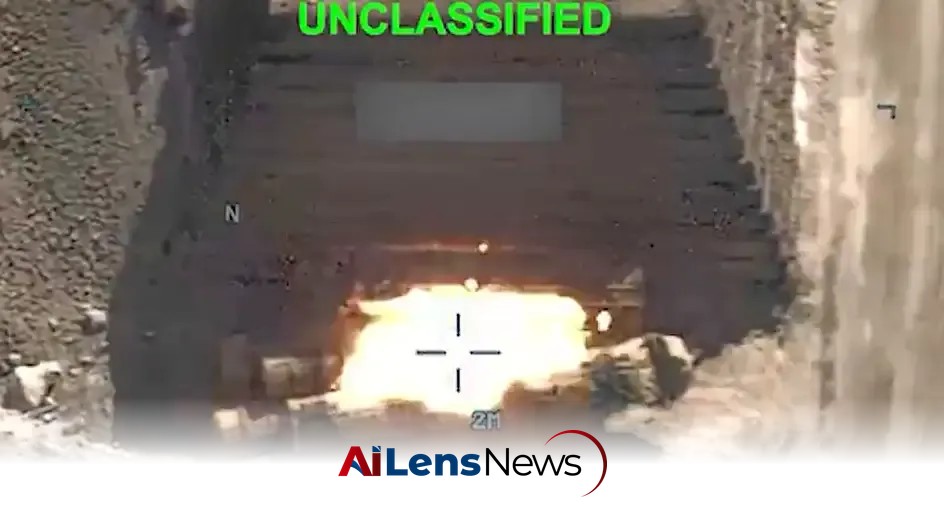


Tensions escalate in the Middle East as the US completes its 10th wave of strikes against Iranian targets, prompting a worldwide caution alert for American citizens.
Abu Dhabi, United Arab Emirates Jul 21, 2026 ALN: Tensions in the Middle East escalated on Tuesday as the United States completed its tenth wave of strikes against Iranian targets, further complicating an already volatile situation. The strikes come amid ongoing conflicts involving various factions in the region, with no clear end in sight. The U.S. military has been actively targeting sites linked to Iran, citing threats to its interests and allies. This military action is part of a broader strategy aimed at deterring Iranian aggression, particularly in light of Iran's support for proxy groups across the region.
The U.S. strikes have been concentrated on facilities believed to be associated with the Islamic Revolutionary Guard Corps (IRGC), which the U.S. has designated as a terrorist organization. The IRGC has been involved in supporting various militant groups in Iraq, Syria, Lebanon, and Yemen, contributing to the instability that has plagued these nations. The U.S. government has expressed concerns that Iranian actions have emboldened these proxy groups, leading to increased attacks on U.S. forces and allies in the region.
The current military operations are rooted in a long-standing conflict between the U.S. and Iran, which intensified following the U.S. withdrawal from the Joint Comprehensive Plan of Action (JCPOA) in 2018. The deal, which aimed to limit Iran's nuclear capabilities in exchange for sanctions relief, has since collapsed, leading to heightened tensions and a series of retaliatory actions by both sides. The U.S. has accused Iran of expanding its influence and military capabilities throughout the Middle East, which it views as a direct threat to its national security and that of its allies.
In response to the recent military actions, the U.S. State Department issued a worldwide caution alert for American citizens, advising them to remain vigilant and reconsider travel to certain areas. This alert underscores the potential risks that U.S. citizens may face due to the heightened tensions and the ongoing conflict in the region. The State Department's travel advisories are often issued in response to specific threats and are intended to provide guidance to Americans abroad. The advisory highlights the precarious situation for U.S. citizens in the Middle East, where the likelihood of being caught in escalating violence is significant.
In a related development, Major General Turki Al-Malki, the official spokesperson for the Coalition to Restore Legitimacy in Yemen, addressed the ongoing threats posed by the Houthi movement. The Houthis, who are backed by Iran, have been engaged in a protracted conflict with the Yemeni government since 2014. The conflict has resulted in a humanitarian crisis, with millions of people in need of assistance. The war in Yemen is often viewed as a proxy conflict, with Iran supporting the Houthis while a Saudi-led coalition backs the Yemeni government.
General Al-Malki emphasized that all Houthi threats against vessels transiting the region would be met with swift and firm action, labeling such threats as violations of international law and acts of maritime piracy. The Houthi movement has increasingly targeted shipping in the Red Sea, raising concerns about the safety of maritime navigation and the potential for a broader conflict that could disrupt global trade routes. The Red Sea is a crucial maritime corridor for international shipping, and any disruption could have significant implications for global commerce, particularly in the transport of oil and goods.
All Houthi threats against transiting vessels will be dealt with swiftly and firmly, as such threats are a blatant violation of international law and fall under acts of maritime piracy.
— Major General Turki Al-Malki
The situation remains tense, with various factions vying for control and influence in the region. The U.S. strikes are part of a broader strategy to deter Iranian aggression and protect its allies, but the potential for escalation remains high. The ongoing conflict in Yemen, along with the broader U.S.-Iran tensions, complicates the regional dynamics further. The involvement of multiple actors, including local militias and international coalitions, creates a complex web of alliances and enmities that can change rapidly.
The ongoing military actions and heightened tensions raise concerns about the stability of the Middle East. Analysts warn that continued hostilities could lead to a broader conflict, impacting not only regional players but also global interests. The Middle East is a critical area for global energy supplies, and any disruption in the region could have far-reaching implications for the world economy. The potential for a military confrontation involving not just the U.S. and Iran, but also their respective allies, raises alarms about a wider conflict that could engulf the region.
Furthermore, the potential for miscalculation or unintended escalation is significant. The U.S. has deployed additional military assets to the region as a deterrent, but this also increases the risk of confrontation. Iranian officials have vowed to retaliate against U.S. actions, and the situation could quickly spiral out of control if diplomatic channels are not utilized effectively. The delicate balance of power in the region is constantly shifting, and any misstep could lead to dire consequences.
As the U.S. and its allies navigate this complex landscape, the international community watches closely, hoping for a resolution that can bring lasting peace to the region. The United Nations and various countries have called for dialogue and de-escalation, but the entrenched positions of the involved parties make this a challenging prospect. Efforts to mediate the conflict have been complicated by a lack of trust and the deeply rooted historical grievances that characterize U.S.-Iran relations.
The humanitarian situation in Yemen continues to deteriorate due to the ongoing conflict. The war has led to widespread famine, disease, and displacement, with millions of civilians caught in the crossfire. The international community has been urged to increase efforts to provide humanitarian assistance and seek a political solution to the crisis. Humanitarian organizations have reported that Yemen is facing one of the worst humanitarian disasters in the world, with millions lacking access to basic necessities such as food, clean water, and healthcare.
In conclusion, the recent U.S. strikes on Iranian targets mark a significant escalation in the ongoing tensions in the Middle East. The implications of these actions extend beyond the immediate military objectives, affecting regional stability, global security, and humanitarian conditions. As various factions continue to vie for power and influence, the need for a comprehensive and sustainable resolution becomes increasingly urgent. The path forward remains fraught with challenges, and the international community must work collaboratively to address the underlying issues contributing to the ongoing conflicts in the region. The stakes are high, and the potential for further escalation underscores the necessity for diplomatic solutions amidst the backdrop of military action.
To learn more about the latest developments in Crime & Law, stay updated with our exclusive reports and analyses on AiLensNews.

