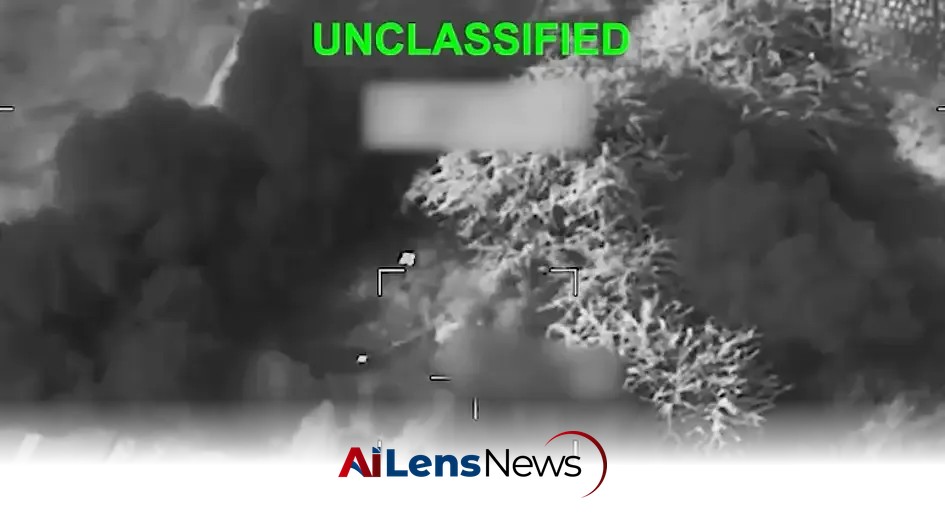


In a significant escalation, the US has launched airstrikes on Iranian territories, intensifying regional tensions. This comes after a series of confrontations between the two nations.
Abu Dhabi, United Arab Emirates Jul 16, 2026 ALN: In a dramatic escalation of hostilities, the United States has initiated a series of airstrikes targeting Iranian coastal areas and islands. This military action, which lasted approximately 90 minutes, has heightened tensions in an already volatile region. The strikes represent a significant development in the ongoing conflict between the two nations, which has seen various forms of confrontation over the years.
The strikes were reportedly aimed at specific military installations and infrastructure believed to be linked to Iran's ongoing military operations. The US government has justified these actions as necessary for national security and to deter further aggression from Iran. This justification aligns with a long-standing US policy of preemptive action in the face of perceived threats, particularly in regions where American interests and personnel are at stake.
The relationship between the United States and Iran has been fraught with tension for decades, marked by a series of conflicts and diplomatic standoffs. The recent escalation follows a pattern of confrontations that have included cyber attacks, naval skirmishes, and proxy conflicts across the Middle East. The historical backdrop of this animosity can be traced back to the 1979 Iranian Revolution, which resulted in the overthrow of the US-backed Shah and the establishment of the Islamic Republic of Iran. The subsequent hostage crisis, where American diplomats were held for 444 days, solidified a deep-seated mistrust between the two nations.
Since then, various administrations have grappled with how to approach Iran, oscillating between diplomatic engagement and military posturing. The situation intensified significantly after the US withdrew from the Joint Comprehensive Plan of Action (JCPOA) in 2018, a deal aimed at curbing Iran's nuclear ambitions in exchange for sanctions relief. The withdrawal led to a reimposition of strict economic sanctions on Iran, further exacerbating tensions and contributing to a cycle of retaliatory actions.
In the years following the JCPOA withdrawal, Iran has progressively expanded its nuclear program, enriching uranium beyond the limits set by the agreement and increasing its stockpile. This escalation has prompted fears among Western nations regarding Iran's potential to develop nuclear weapons capabilities. In response, the US has maintained a robust military presence in the region, conducting various operations aimed at countering Iranian influence.
The airstrikes were executed in response to intelligence reports indicating imminent threats to US personnel and interests in the region. The operation involved precision-guided munitions aimed at minimizing collateral damage while effectively neutralizing the identified threats. This approach reflects the US military's ongoing commitment to conducting operations that seek to limit civilian casualties, a principle that is increasingly scrutinized in modern warfare.
US officials have stated that the strikes were a measured response, intended to send a clear message to Iran regarding its military ambitions and activities in the Gulf region. This assertion is part of a broader strategy to deter Iran from further aggressive actions, particularly in light of its involvement in regional conflicts, including support for militant groups in Iraq, Syria, and Yemen. The US has consistently expressed concerns over Iran's missile program and its potential to destabilize the region.
Moreover, the strikes have raised questions about the legality of such military actions under international law. Critics argue that unilateral military interventions without explicit authorization from the United Nations could set a dangerous precedent and exacerbate tensions further. Advocates for military action, however, contend that the US has a right to defend itself and its allies against perceived threats.
The international community has reacted with concern to the escalating violence. Several nations have called for restraint from both parties, urging dialogue over military confrontation. The United Nations has expressed its desire to mediate the situation to prevent further escalation. This call for dialogue highlights the precarious nature of international relations in the region, where a miscalculation could lead to broader conflict.
Countries in the Middle East, particularly those that have historically been aligned with the US, are closely monitoring the situation. The Gulf Cooperation Council (GCC) nations, which include Saudi Arabia and the United Arab Emirates, have expressed support for US actions while also advocating for a diplomatic resolution. Conversely, nations that maintain closer ties with Iran, such as Russia and China, have condemned the US strikes, framing them as an act of aggression that undermines regional stability.
Additionally, the European Union has expressed concern over the potential for further escalation, emphasizing the need for diplomatic efforts to restore some form of dialogue between the US and Iran. The EU has historically played a mediating role in this conflict, particularly during negotiations surrounding the JCPOA, and its involvement may be critical in de-escalating the situation.
As tensions continue to rise, analysts warn of the potential for a broader conflict that could involve multiple nations in the region. The airstrikes may provoke retaliatory actions from Iran, which could further destabilize the area. Iran has a history of employing asymmetric warfare tactics, including cyber attacks and support for proxy groups, which could escalate the conflict beyond conventional military engagement.
In the wake of these developments, it is crucial for diplomatic channels to remain open. The global community is watching closely as the situation unfolds, hoping for a peaceful resolution to the ongoing tensions. The potential for miscommunication or miscalculation remains high, and the role of intermediary nations could be pivotal in de-escalating the situation.
In related news, former President Trump has publicly thanked Iran for the release of a US citizen, highlighting the complexities of US-Iran relations. This unexpected development underscores the dual nature of diplomatic interactions, where adversarial relationships can sometimes yield positive outcomes through negotiation. It serves as a reminder that despite the ongoing tensions, there are avenues for dialogue that could potentially lead to more stable relations in the future.
Overall, the airstrikes represent a significant moment in US-Iran relations, one that could have far-reaching consequences not only for the two nations involved but also for the broader geopolitical landscape of the Middle East. The coming days and weeks will be critical in determining whether this latest escalation leads to further conflict or opens the door for renewed diplomatic efforts.
The stakes are particularly high given the intertwined nature of regional politics, where alliances and enmities can shift rapidly. The involvement of external powers, including Russia and China, complicates the dynamics further, as these nations may seek to bolster Iran's position in response to US actions. The potential for a larger confrontation looms, and the international community is left to grapple with the implications of this military escalation.
To learn more about the latest developments in World News & International Affairs, stay updated with our exclusive reports and analyses on AiLensNews.

