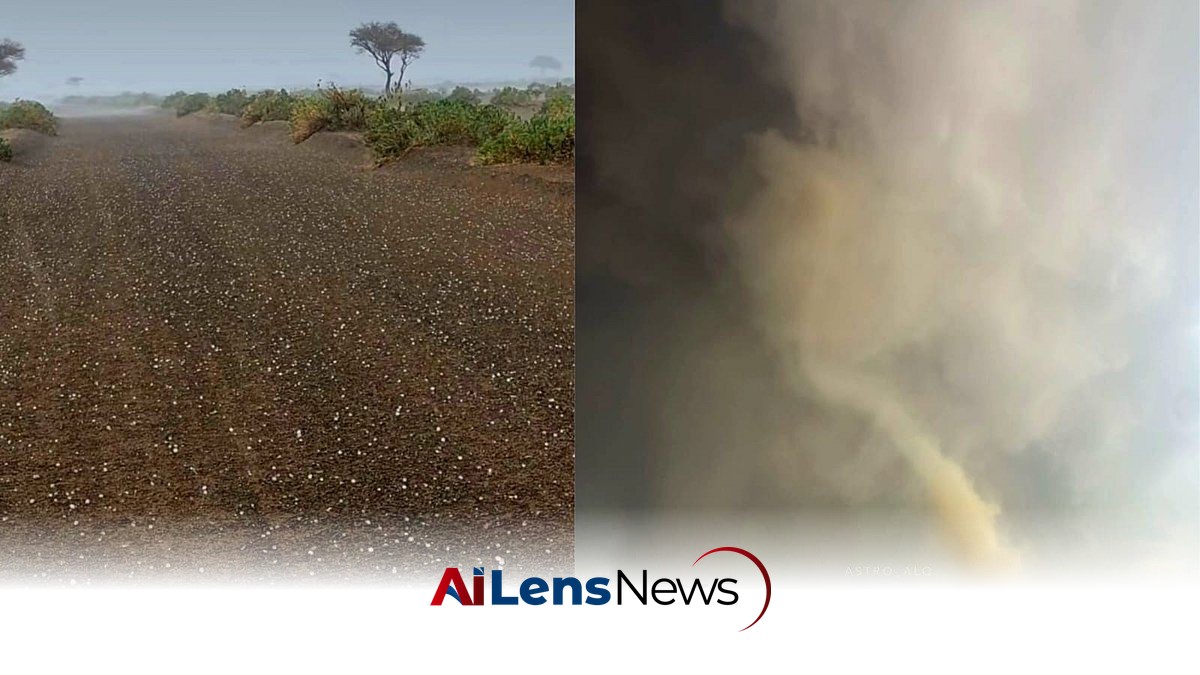


Heavy rain and hail have affected Masafi and the Eastern Region, while Dubai and Abu Dhabi remain hot and sunny with reduced visibility.
Abu Dhabi, United Arab Emirates Jul 28, 2026 ALN: The National Center of Meteorology (NCM) in the United Arab Emirates has issued a weather update indicating significant meteorological activity in the eastern regions of the country, particularly in Masafi and Marbad. This weather phenomenon includes the occurrence of hail, which has been reported to be falling in these areas. Furthermore, cold conditions have been noted in remote locations further east, suggesting a notable shift in weather patterns that could impact local communities and ecosystems.
Hail, a form of precipitation that consists of balls or irregular lumps of ice, is typically associated with severe thunderstorms. Its formation occurs when updrafts in thunderstorms carry raindrops into extremely cold areas of the atmosphere, where they freeze and fall back to the ground. The presence of hail in Masafi and Marbad is indicative of strong convective activity, which is characterized by the rapid upward movement of warm, moist air that can lead to the development of heavy rain showers and thunderstorms. These conditions are often more prevalent in the summer and early autumn months, when the temperature differences between the surface and higher altitudes create the necessary conditions for such storms to develop.
The NCM has forecasted that the convective clouds responsible for the current weather conditions are likely to persist, with expectations of continued heavy rain and the potential for additional hail in the eastern mountain regions. This ongoing weather pattern may lead to localized flooding, particularly in low-lying areas, where the ground may already be saturated from previous rainfall. Flooding can disrupt daily life, cause property damage, and pose risks to public safety, especially in regions where drainage systems may struggle to cope with sudden influxes of water.
In addition to the eastern regions, the forecast indicates that showers will extend into the central part of Sharjah emirate and the Al Ain region. The variability in rainfall intensity and distribution across different locations underscores the complexity of weather systems and the challenges they pose for accurate forecasting. While some areas may experience heavy downpours, others may receive little to no precipitation, leading to uneven impacts on agriculture, water resources, and infrastructure. This disparity can create challenges for farmers, as some may benefit from the rainfall while others may struggle with drought conditions if they are situated in less fortunate areas.
The implications of such weather events are significant for both the environment and local communities. Heavy rainfall can lead to flash flooding, which poses risks to life and property. In the UAE, where infrastructure is built to withstand certain environmental conditions, excessive rainfall can strain drainage systems and lead to water accumulation on roads, disrupting traffic and daily activities. Moreover, the agricultural sector may face challenges as excess water can either benefit crops or lead to waterlogging, depending on the timing and amount of rainfall. Waterlogged fields can result in root rot and other plant diseases, severely affecting crop yields.
Moreover, the occurrence of hail can have detrimental effects on agriculture, damaging crops and reducing yields. Farmers in the affected areas may need to assess the impact on their produce and consider implementing protective measures for future storms. The economic implications of such weather events can be profound, as both crop damage and infrastructure repairs can lead to significant financial losses. The agricultural sector, which is vital for food security and economic stability in the region, may find itself increasingly vulnerable to the impacts of severe weather.
In terms of public safety, the NCM’s alerts serve as a crucial resource for residents and travelers in the region. Awareness of severe weather conditions allows individuals to take necessary precautions, such as avoiding travel during heavy rain or seeking shelter during hail storms. The NCM's role in providing timely updates is vital for ensuring the safety of the population, particularly in areas prone to flooding and severe weather events. This proactive communication helps mitigate risks and allows communities to prepare for potential emergencies.
The current weather conditions in the UAE can also be viewed in the context of broader climatic trends. The region has been experiencing shifts in weather patterns, with increased occurrences of extreme weather events attributed to climate change. As global temperatures rise, the frequency and intensity of storms, including those that produce hail and heavy rainfall, are expected to increase. This trend poses long-term challenges for the UAE, a country that relies heavily on its natural resources and has invested significantly in infrastructure development. The potential for more frequent and severe weather events necessitates a reevaluation of existing infrastructure and emergency response strategies to ensure resilience against future challenges.
In conclusion, the weather update from the NCM highlights the immediate impacts of heavy rain and hail in Masafi and the eastern regions of the UAE. The potential for further precipitation and hail raises concerns for local communities, agriculture, and infrastructure. As the situation develops, it will be essential for residents to stay informed through official channels and for authorities to monitor conditions closely to mitigate risks associated with severe weather. The ongoing challenges posed by changing weather patterns also underscore the importance of long-term planning and adaptation strategies to address the impacts of climate change in the region. Such strategies may include improving drainage systems, investing in weather-resistant infrastructure, and enhancing community awareness and preparedness for extreme weather events.
To learn more about the latest developments in Weather & Emergency, stay updated with our exclusive reports and analyses on AiLensNews.

