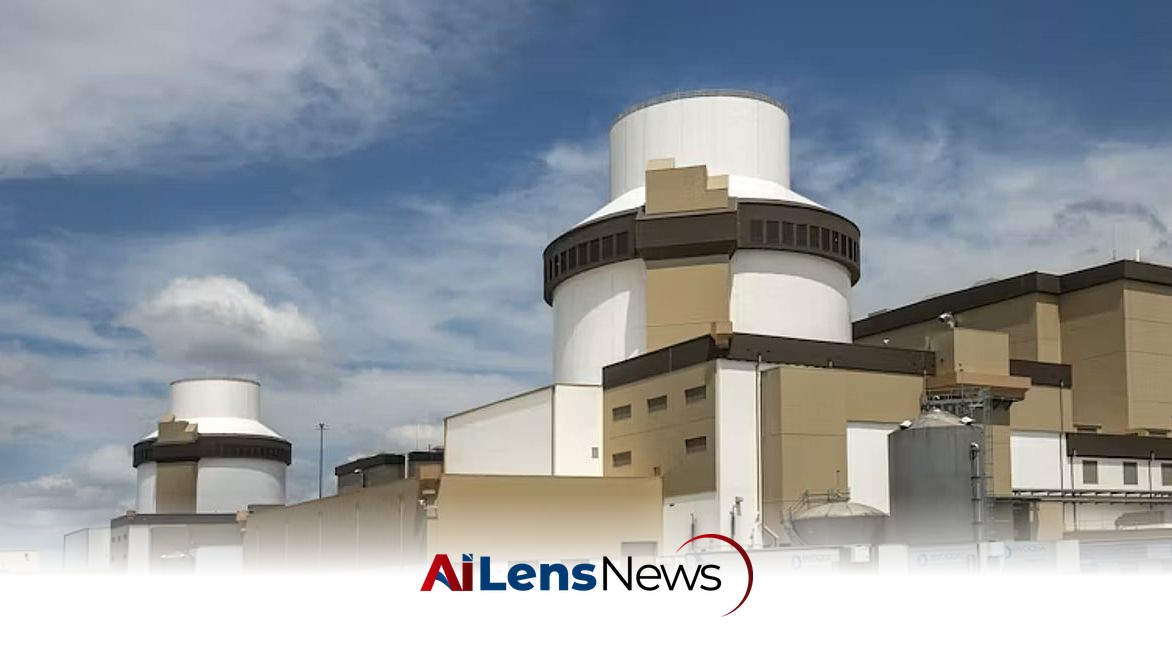


President Trump hails the early operational success of advanced nuclear reactors, marking a significant step in revitalizing America's nuclear industry.
Abu Dhabi, United Arab Emirates Jul 25, 2026 ALN: In a significant event at the White House on Friday, US President Donald J. Trump celebrated what he characterized as a "pivotal victory" for American energy dominance: multiple cutting-edge civilian nuclear reactors achieving operational "criticality" well ahead of an ambitious target set by his administration. This announcement is emblematic of Trump's broader strategy to revive and expand the United States' nuclear industry, a sector that has faced numerous challenges, including regulatory delays, cost overruns, and political opposition over the years.
The celebration featured executives from pioneering nuclear firms, highlighting the collaborative efforts between the government and private sector to advance nuclear technology. Trump's rhetoric framed the development not only as an engineering triumph but also as a necessary step away from reliance on intermittent renewable energy sources, such as solar and wind, which have faced criticism for their variable output.
Get updated faster and for FREE: Download the Gulf News app now - simply .
During the event, Trump remarked, "In the past, it took six years or more to approve a reactor! Now, America is building again... we’re leading the world in pioneering the next generation of nuclear power. There’s nobody even close." His comments reflect a broader sentiment within his administration that seeks to position the United States as a leader in nuclear technology, especially as global energy demands continue to rise.
One of the key challenges facing the nuclear industry in the United States has been the lengthy and often cumbersome approval process for new projects. For instance, obtaining mining permits for critical minerals on US mainland can take up to 30 years, which contrasts sharply with the more streamlined permitting processes in countries like China, where national industrial policy often facilitates quicker approvals. This slow pace has also affected new nuclear reactors, contributing to the stagnation of the industry.
In response to these challenges, the Trump administration has implemented significant policy shifts aimed at accelerating the approval process for nuclear projects. A notable milestone came from executive orders signed by Trump in May 2025, which directed the Department of Energy to fast-track advanced reactor demonstrations. The administration launched a pilot program that challenged private companies to achieve criticality for at least three advanced reactors by July 4, 2026 — coinciding with the nation’s 250th anniversary. The fact that four companies, including Antares Nuclear and Valar Atomics, successfully met this deadline marked a historic achievement, as these reactors represent the first privately funded advanced reactors in the United States in over 40 years.
The announcement was attended by key figures such as Energy Secretary Chris Wright and Interior Secretary Doug Burgum, who joined Trump and industry leaders to discuss the implications of this achievement. Executives from the nuclear sector emphasized a cultural shift that has occurred under the current administration, moving away from bureaucratic presentations and toward tangible energy production. One CEO highlighted the administration’s focus on results over process, which has facilitated the rapid development of new technologies.
Currently, nuclear power accounts for approximately 100 gigawatts of electricity capacity in the United States, primarily generated from traditional large-scale reactors. However, the new advanced reactor designs being developed are often smaller and modular, promising greater flexibility, enhanced safety features, and faster deployment to meet surging energy demands, particularly from sectors like data centers that are increasingly reliant on artificial intelligence.
In recent years, nuclear energy has garnered bipartisan interest, driven by growing concerns over grid reliability, rising energy costs, and the urgent need to meet decarbonization goals. Proponents of nuclear energy argue that it provides a dense, reliable, low-carbon baseload power source, which is less land-intensive and less susceptible to weather variability compared to solar and wind energy. This makes it an attractive option as the nation seeks to transition to a more sustainable energy future.
However, critics, including some environmental organizations, have raised concerns about the potential risks associated with nuclear energy. Issues such as waste disposal, proliferation risks, and the high upfront costs of building new reactors have historically posed significant hurdles for the industry. Despite these challenges, Trump’s administration has taken a decidedly pro-nuclear stance, linking nuclear expansion to national security, economic competitiveness, and reducing dependence on foreign supply chains. This is particularly relevant in the context of wind technology, which Trump has criticized for its reliance on components manufactured in China.
Moreover, the administration has explored innovative applications for nuclear technology, including offshore nuclear projects and military applications, further broadening the scope of nuclear energy’s potential impact on the economy and national security.
Reactions to the announcement have been largely positive within conservative circles, with many viewing it as a significant step toward dismantling the overly restrictive policies that have hampered the nuclear sector in the past. Supporters of the initiative see it as the beginning of an American "nuclear renaissance," while skeptics question whether the regulatory streamlining can effectively address long-standing industry challenges, such as financing and public acceptance of nuclear technology.
This event comes at a time when the United States is grappling with rapidly increasing electricity needs. Analysts project that power demand will continue to grow significantly through the mid-century, necessitating innovative solutions to meet these demands sustainably. Trump has set an ambitious goal of quadrupling the nation’s nuclear capacity by 2050, a target that will require sustained private investment, further regulatory evolution, and political continuity to achieve.
For the time being, the administration is celebrating what it views as concrete progress in an area where previous efforts have stalled for decades. The successful demonstration of advanced reactors could pave the way for a new era of nuclear energy in the United States, with implications that extend beyond energy production to encompass economic growth, job creation, and enhanced energy security.
To learn more about the latest developments in Crime & Law, stay updated with our exclusive reports and analyses on AiLensNews.

