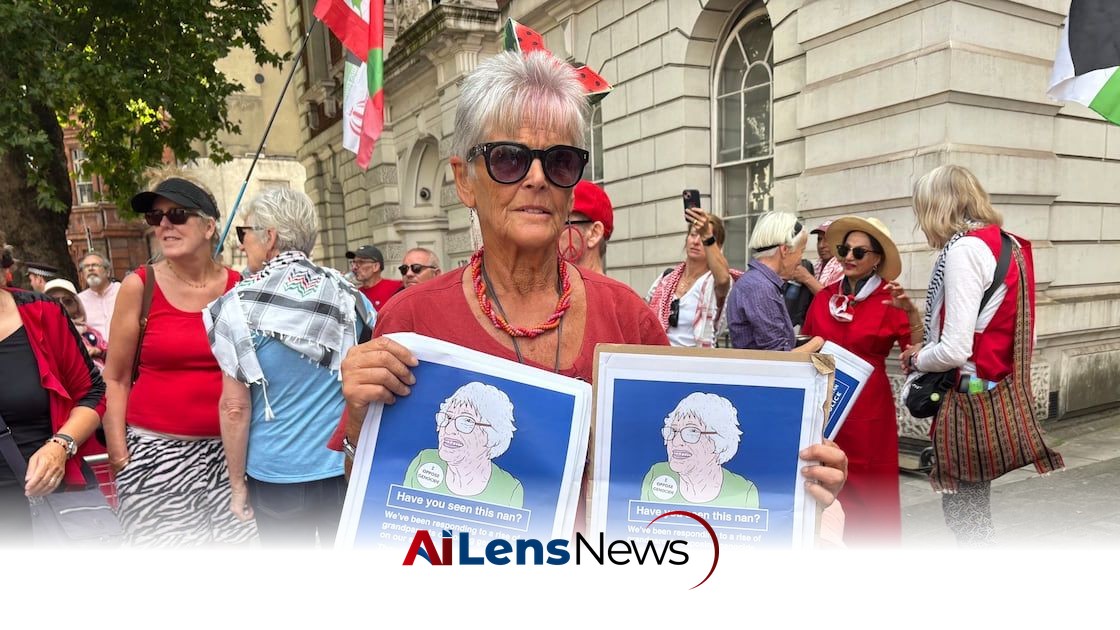



The proscription of Palestine Action has led to a significant increase in arrests, particularly among older supporters, as the group continues to advocate for Palestinian rights.
Abu Dhabi, United Arab Emirates Jul 31, 2026 ALN: The recent surge in arrests related to the proscribed group Palestine Action has brought significant attention to the UK's counter-terrorism policies and the broader implications for civil liberties and political expression. The UK has seen the largest crackdown on terrorism-related activity in a quarter of a century, with almost half of all terror-related arrests since the events of September 11, 2001, occurring within the past year. This trend raises critical questions about the intersection of activism, law enforcement, and public sentiment in the UK.
Palestine Action, established in 2020, is a direct-action protest group that emerged in response to the ongoing Israeli-Palestinian conflict, particularly focusing on the arms trade between the UK and Israel. The group's activities have included protests at factories linked to arms manufacturing for Israel, as well as demonstrations at military bases. The UK government proscribed Palestine Action in July 2022, citing the group's actions as a threat to public safety and national security. This designation allows law enforcement to arrest individuals for merely expressing support for the group, a move that has drawn criticism from civil liberties advocates.
The High Court initially ruled the ban on Palestine Action as unlawful, suggesting that the government had overstepped its authority. However, this decision was overturned by the Court of Appeal in June 2023, reaffirming the government's stance on the group's activities. The Supreme Court's decision to hear an appeal against the Court of Appeal's ruling indicates ongoing legal battles that could have significant ramifications for both the group and the broader landscape of political protest in the UK.
As the legal proceedings unfold, the campaign to de-proscribe Palestine Action has gained momentum, particularly through the efforts of the group Defend Our Juries. This organization claims that over 3,500 individuals have been arrested since the proscription, many of whom were engaging in peaceful protests in support of Palestine Action's objectives. The group's strategy of provoking mass arrests as a means of drawing attention to their cause underscores a growing tension between state power and individual rights.
The statistics surrounding terrorism-related arrests in the UK are striking. Since 9/11, a total of 6,539 individuals have been arrested for terrorism-related activities, with 2,819 of those arrests—approximately 43 percent—attributed to expressions of support for Palestine Action. This statistic highlights the disproportionate impact of the government's counter-terrorism laws on individuals advocating for Palestinian rights, raising concerns about the potential chilling effect on free speech and political dissent.
Proponents of Palestine Action argue that their activism is a necessary response to the ongoing humanitarian crisis in Gaza and the broader Palestinian territories. They advocate for the establishment of an independent Palestinian state, an end to military operations in Gaza, and the imposition of a comprehensive arms embargo and sanctions against Israel. Supporters believe that traditional political avenues have failed to bring about meaningful change, leading them to adopt direct action as a more effective method of advocacy.
One of the individuals arrested during these protests is Andrea Middleton, a creative therapist who has been vocal about her motivations for participating in demonstrations. Middleton, who works with traumatized children, expressed her commitment to the cause, stating that her experiences in her professional life compelled her to take action. Such personal narratives illustrate the deep emotional and ethical motivations driving many activists within the Palestine Action movement.
The implications of this crackdown extend beyond the immediate legal battles faced by Palestine Action. The growing number of arrests raises fundamental questions about the balance between national security and the right to protest. Critics of the government's approach argue that labeling political dissent as terrorism undermines democratic principles and stifles important conversations about foreign policy and human rights.
Moreover, the situation reflects broader geopolitical tensions surrounding the Israeli-Palestinian conflict, which remains a contentious issue in international relations. The UK's historical relationship with Israel, coupled with its role in the arms trade, complicates the narrative surrounding Palestine Action and its supporters. As public awareness of these issues grows, the potential for increased activism and dissent may lead to further confrontations between law enforcement and civil society.
In summary, the surge in arrests linked to Palestine Action highlights a critical juncture in the UK's approach to counter-terrorism and civil liberties. The legal battles ahead will likely shape the future of political protest in the country, as well as influence public discourse surrounding the Israeli-Palestinian conflict. As activists continue to advocate for Palestinian rights, the response from both the government and the public will be closely watched, with potential implications for the broader landscape of activism in the UK and beyond.
To understand the implications of Palestine Action's proscription and the subsequent arrests, it is essential to consider the context of the UK’s counter-terrorism framework. The Terrorism Act 2000 and subsequent legislation have empowered law enforcement agencies to take preemptive actions against groups perceived as threats to national security. This legal framework has often been criticized for its broad definitions of terrorism, which can encompass a wide range of activities, including non-violent protests and expressions of political dissent.
Critics argue that such measures disproportionately target marginalized communities and activists, particularly those advocating for issues related to foreign policy and human rights. The potential for misuse of these laws raises concerns about the erosion of civil liberties, especially for those engaged in peaceful protests. The situation surrounding Palestine Action exemplifies these concerns, as many of those arrested were participating in demonstrations that, while disruptive, were intended to raise awareness about the humanitarian situation in Gaza.
Furthermore, the rise in arrests has sparked a broader debate about the nature of political activism in the UK. Activism has historically played a crucial role in shaping public policy and influencing political discourse. However, the current climate suggests a growing intolerance for dissent, particularly when it challenges the status quo or critiques government policies. This trend could deter individuals from engaging in activism for fear of legal repercussions, thereby stifling public debate on significant issues.
The implications of Palestine Action’s activities and the government’s response can also be viewed through the lens of international human rights standards. The right to peaceful assembly and freedom of expression are protected under various international treaties to which the UK is a signatory. The ongoing arrests and the characterization of political dissent as terrorism may contravene these obligations, raising questions about the UK’s commitment to upholding human rights domestically.
Moreover, the situation may also influence public opinion regarding the Israeli-Palestinian conflict. As more individuals become aware of the implications of the government's crackdown on Palestine Action, there may be a shift in public sentiment towards a more critical view of the UK’s relationship with Israel and its arms trade. This could lead to increased calls for accountability and a reevaluation of the UK’s foreign policy, particularly in relation to human rights violations in conflict zones.
As the legal battles continue and public awareness grows, Palestine Action and similar groups may find new avenues for advocacy. The potential for increased collaboration with other civil society organizations could amplify their message and broaden the scope of their activism. This interconnectedness among various movements advocating for human rights and social justice could lead to a more robust response to government policies perceived as repressive.
In conclusion, the surge in arrests related to Palestine Action represents not only a significant moment in the UK’s counter-terrorism landscape but also a pivotal point for civil liberties and political expression. The ongoing legal challenges and public discourse surrounding these issues will shape the future of activism in the UK. As the situation evolves, it will be crucial to monitor how these developments impact both the Palestinian rights movement and the broader struggle for civil rights and political expression within the UK.
To learn more about the latest developments in Crime & Law, stay updated with our exclusive reports and analyses on AILensNews.

