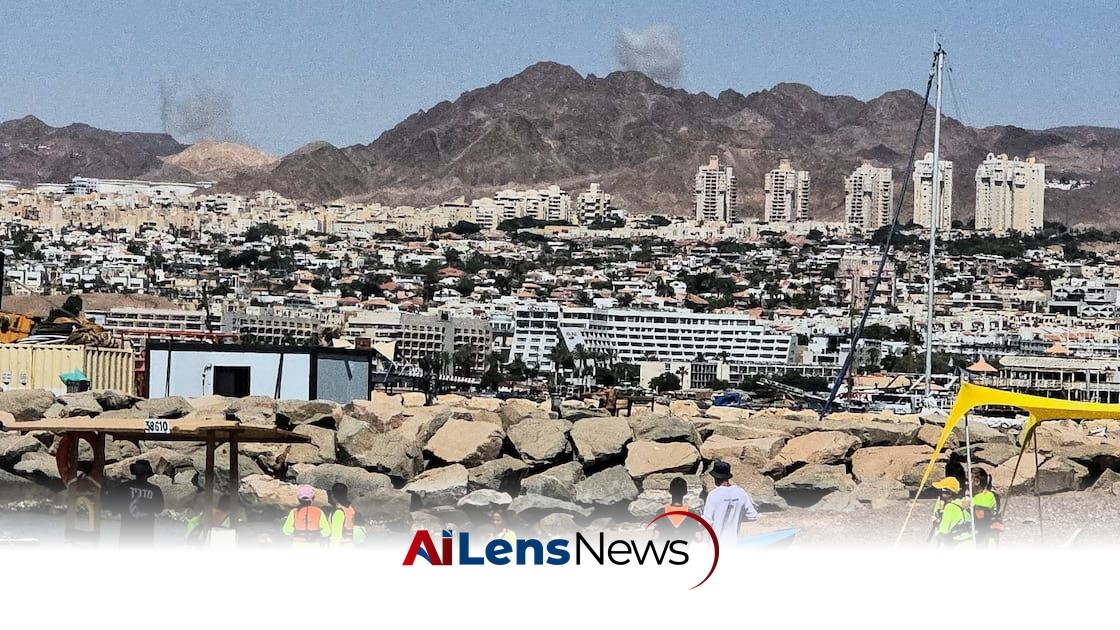


Recent Iranian missile attacks have jeopardized Jordan's economic recovery plans centered around the Red Sea port of Aqaba, crucial for bypassing the Strait of Hormuz.
Abu Dhabi, United Arab Emirates Jul 25, 2026 ALN: Summer has been mild in Jordan, the American ally under renewed Iranian aerial strikes. Najwa Salem, a mother of two in Amman, wanted to take advantage of the pleasant weather to take a family trip to the Red Sea. This week, she called a relative who works at a beachfront hotel in the coastal city of Aqaba, a four-hour drive away, and asked him to book a room for them. His reply was a stark warning: “don’t come,” because missiles and interceptions could be heard all over the area. The situation has forced many families like Najwa's to reconsider their travel plans.
“We didn’t go,” she said, reflecting the anxiety and uncertainty that has gripped many residents of Jordan as the geopolitical landscape continues to shift.
Iran resumed firing missiles and drones at the kingdom on July 9, marking a significant escalation in hostilities as daily fighting between Iranian forces and the United States returned to the forefront of regional tensions. This escalation occurred despite a Pakistani-brokered agreement last month that was intended to bolster a ceasefire between Tehran and Washington. The renewed aerial war has raised alarms not only for Jordan but for the wider Middle East, where the ramifications of such conflicts often ripple across borders.
The resumption of these aerial attacks comes at a time when Jordanian authorities were cautiously optimistic about an economic rebound. The Jordanian economy has been stagnant since the 2008 financial crisis, and this year’s war has dealt another significant blow to recovery efforts. The country, which has historically relied on tourism and foreign investments, is now grappling with the repercussions of conflict, which has deterred investment and disrupted trade.
Regional interest in Jordan and the port of Aqaba as an alternative route to the Strait of Hormuz had been expected to raise confidence in the country and attract foreign investment. The Strait of Hormuz is a critical chokepoint for global oil shipments, and any disruption in this area can have widespread implications for energy markets and international trade. As tensions in the region escalate, Jordan's strategic location and its port facilities were seen as potential stabilizers in the face of uncertainty.
The United States and other Western powers are widely perceived as being invested in maintaining five decades of stability in Jordan, often providing financial and security assistance to the kingdom. This support has been crucial for Jordan, which faces numerous challenges, including a large influx of refugees from neighboring conflicts and a struggling economy. The US has sometimes intervened to curb Israeli actions that are regarded as potentially destabilizing to Jordan’s cohesion, illustrating the delicate balance of power in the region.
A large proportion of the kingdom’s 11 million people are descendants of the Palestinian diaspora from the 1948 and 1967 wars, which adds another layer of complexity to Jordan's domestic and foreign policies. The historical context of these demographics influences the kingdom's relations with both Israel and the Palestinian territories, as well as its role in broader Arab politics.
In addition to military support, the US and Europe have underwritten large infrastructure projects in Jordan, powered by solar energy, which are planned to start in Aqaba next year. These projects were anticipated to not only provide energy but also create jobs and stimulate economic growth. However, the ongoing conflict has jeopardized these initiatives, leading to a postponement of an EU-sponsored investment conference in Jordan that was originally scheduled for the first half of this year. The conference has now been pushed to November, reflecting the uncertainty surrounding the region's stability.
Western tourists, who were expected to return to Jordan following the April 8 ceasefire in the Iran war, now appear unlikely to come back. Tourism is a vital sector for Jordan's economy, contributing significantly to GDP and employment. The ongoing conflict has deterred potential visitors, further complicating the nation's recovery efforts.
During the past two and a half weeks, dozens of Iranian projectiles have targeted the kingdom. Notably, there have been no Jordanian deaths or serious casualties recorded, but an Iranian attack on Sunday resulted in the tragic deaths of three American soldiers at an airbase in eastern Jordan—the first US fatalities in the kingdom since the renewed outbreak of hostilities. This incident underscores the potential for the conflict to escalate further, involving more regional and international actors.
Residents of Aqaba have reported hearing blasts, indicating that the city is now directly in the line of fire. It was the first time that Aqaba, rather than the neighboring Israeli city of Eilat, appeared to have been the target of fire. This shift in focus suggests a strategic maneuver by Iran, possibly aimed at signaling its capability to disrupt Jordan's economy and stability.
An executive at a Jordanian company with business interests in the port city commented on the situation, noting that although Iran announced that US forces were the target of at least one of the attacks on Aqaba, Tehran may have a larger objective. “Aqaba is very sensitive to Jordan. They wanted to send a message that they could sabotage investment and disrupt our trade,” the executive stated, highlighting the broader implications of Iran's military actions.
Shipping costs for a container to Aqaba from East Asia have skyrocketed, rising from $1,500 to $6,000 at the beginning of the war. Although costs fell after the April ceasefire, they have surged again to $6,000 in the past two weeks, according to a major Jordanian food importer. These increases in shipping costs reflect the heightened risk associated with transporting goods through the region, as well as the broader economic ramifications of the conflict.
“Shipping has been a nightmare,” said the importer, who also cited the rising costs of transferring containers by lorry from Dubai’s Jebel Ali and Jeddah. Jordanian importers have increasingly relied on these two ports as alternatives in response to Houthi threats against Red Sea shipping, which have escalated in the past week. The result is a complex web of logistical challenges that further complicate Jordan's already strained economy.
Tourism, which is vital for Jordan's economy, has also been severely impacted by the ongoing conflict. The historical sites, natural beauty, and cultural heritage that attract visitors from around the world are now overshadowed by the threat of violence and instability. The ongoing conflict has deterred potential visitors, further complicating the nation's recovery efforts. With the tourism season approaching, Jordan faces a critical juncture as it seeks to reassure both its citizens and the international community of its safety and stability.
In conclusion, the renewed Iranian strikes have disrupted not only Jordan's immediate security but also its long-term economic aspirations. As the kingdom navigates these turbulent waters, the implications of the ongoing conflict will likely resonate well beyond its borders, affecting regional stability and international relations in the Middle East.
To learn more about the latest developments in World News & International Affairs, stay updated with our exclusive reports and analyses on AiLensNews.

