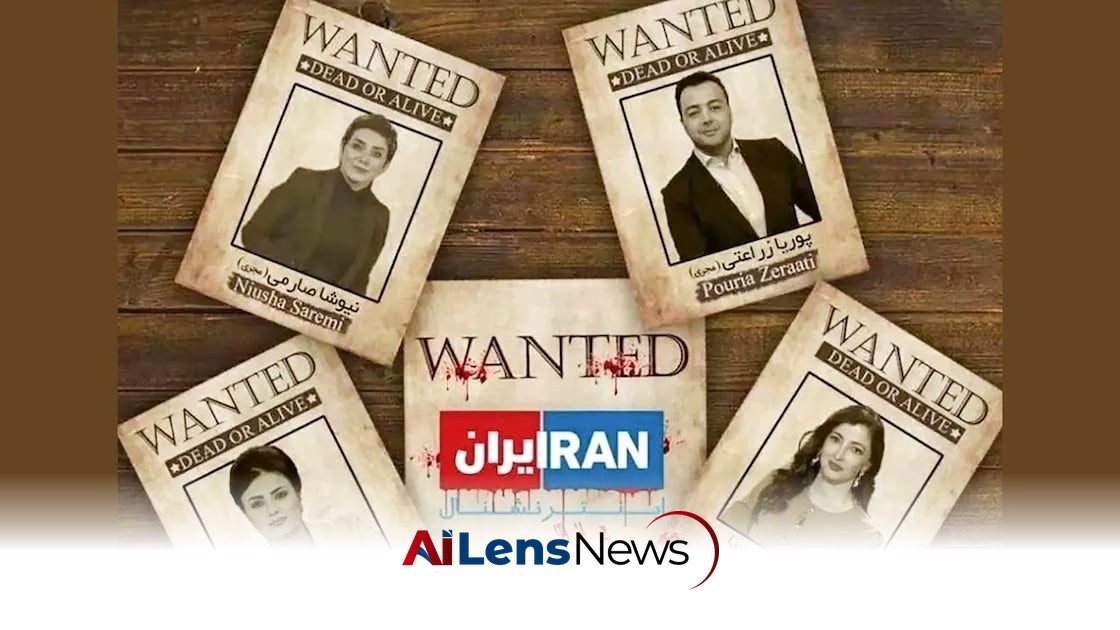


Exiled Iranian dissidents, including human rights lawyer Omid Shams, live under the shadow of death threats and intimidation from Tehran's regime, even in the UK.
Abu Dhabi, United Arab Emirates Aug 1, 2026 ALN: Omid Shams lives with a six-second countdown stalking his thoughts about his safety and relationship with his homeland. This constant anxiety is a manifestation of the broader challenges faced by Iranian dissidents living in exile. For Shams, who has become a prominent figure advocating for human rights, the stakes are particularly high. Exile from Iran is not merely a change of scenery; it is a life marked by vigilance, uncertainty, and fear of retribution from a regime that has shown itself willing to go to extreme lengths to silence dissent.
A life in exile from Iran means changing daily routines, looking over his shoulder in the street, and even checking under cars with a mirror before getting in. Such precautions may seem excessive to some, but for those like Shams who have been targeted by the Iranian government, they are necessary measures for survival. The experience of living under constant threat alters one’s perception of safety and normalcy, making everyday activities fraught with anxiety.
Iranian dissidents living under police protection like Shams have spoken about the death threats and intimidation they face from Tehran’s Islamic Revolutionary Guard Corps (IRGC) and other regime agents. The IRGC, established after the 1979 Iranian Revolution, is a powerful military and political force in Iran, tasked with safeguarding the regime's interests both domestically and abroad. Its operatives have been implicated in various forms of harassment and violence against dissidents, including assassination attempts and cyberattacks.
The IRGC has a proven track record of issuing death threats on social media, hacking phones, and seeking to shock by throwing animal corpses into homes. These tactics are not just about intimidation; they are strategic efforts to instill fear within the Iranian diaspora and discourage dissent. Courts have convicted its agents of assassinations and plots to kill exiled dissidents, highlighting the grave risks that those who oppose the regime face, even far from Iranian soil.
For those who speak out against the regime and document what goes on in their own country, the shadow of Tehran's plotting is never far away. The Iranian government has developed a sophisticated apparatus for monitoring and targeting dissidents, using both traditional intelligence methods and modern technology. This includes the use of social media to track activists and disseminate propaganda, as well as employing cyber tactics to undermine the security of those who challenge the regime.
Iranian activity in the UK and Europe, directed by the IRGC and the Ministry of Intelligence and Security, is of increasing concern to security services. Intelligence agencies in these countries are becoming more alert to the tactics employed by the Iranian regime, as they recognize the potential for violence and destabilization. The implications of this are significant, as it raises questions about the safety of not only Iranian dissidents but also the broader implications for national security in Europe.
A hallmark of this has been Iran's increased use of proxies, often criminals or teenagers recruited online, who are prepared to carry out attacks in return for money. This method allows the Iranian regime to distance itself from violent acts, complicating efforts to hold it accountable. Only this week, a Norwegian teenager was found guilty of agreeing to carry out a murder for Iran after being recruited by Tehran-backed Swedish criminals. Such cases illustrate a disturbing trend where vulnerable individuals are exploited to carry out the regime's bidding, further complicating the landscape of security for exiled dissidents.
Mr. Shams, 43, a human rights lawyer and writer, told this publication this is a new and troubling development for Iranian dissidents living in the UK. The normalization of violence against dissidents, especially through the involvement of young and impressionable individuals, poses a unique challenge. “Six seconds is enough to kill a person with a knife here in London and it happens every day,” he said. “It's very difficult to trace a teenager who would knife me on the streets back to the Iranian state. It doesn't matter if these assassinations are unsuccessful. What matters is that these are so cheap and they can increase the number of threats.” This chilling statement underscores the precariousness of life for those who dare to challenge the Iranian regime from abroad.
Iran’s intimidation of opponents in the UK has included threats against Iran International, an independent TV station based in London, which reports on the country. The station has become a key platform for Iranian dissidents to voice their concerns and share information about human rights abuses within Iran. However, this visibility has made it a target for the regime. A group calling itself Harakat Ashab Al Yamin Al Islamiyya, which translates as the Islamic Movement of Companions of the Right, claimed responsibility for a series of attacks earlier this year, which included one on Iran International TV in London.
The station was forced to temporarily close its operation in the UK’s capital after receiving threats, including to assassinate two of its presenters. This incident highlights the lengths to which the Iranian regime will go to silence dissenting voices. An Austrian of Chechen origin was jailed for three and a half years for plotting a potential attack on the station. Two Romanians were recently jailed for stabbing Iran International journalist Pouria Zeraati, a friend of Mr. Shams. These events serve as stark reminders of the tangible risks that journalists and activists face in their pursuit of truth and justice.
“This kind of threat and pressure comes like a constant noise,” said Mr. Shams. “When you're working, when you're doing things, when you're outside, when you're meeting your friends or family, it’s always there.” This omnipresent fear affects not only the mental health of dissidents but also their ability to engage in activism and advocacy effectively. The psychological toll of living under such pressure can lead to isolation, depression, and a sense of helplessness.
Mr. Shams left Iran around 13 years ago, initially to live in Denmark under a programme for human rights lawyers and writers who felt under threat from the regime. His journey to safety is emblematic of the broader experience of many Iranian dissidents who have fled their homeland in search of refuge. He moved to the UK where he obtained a doctorate in human rights law and has since been documenting human rights violations. His academic and professional achievements are commendable, yet they come at a cost, as the threats from the Iranian regime continue to loom large over his life.
As a result of his work, he has received threats, usually in the form of messages from unidentified accounts. These threats serve as a reminder that the struggle for human rights and freedom of expression is fraught with danger, even in exile. The international community must remain vigilant and supportive of those who risk their lives to stand up against oppressive regimes. The plight of Iranian dissidents like Omid Shams is not just a matter of personal safety; it raises critical questions about the responsibilities of governments and societies to protect human rights and uphold the values of freedom and democracy.
To learn more about the latest developments in Crime & Law, stay updated with our exclusive reports and analyses on AiLensNews.

