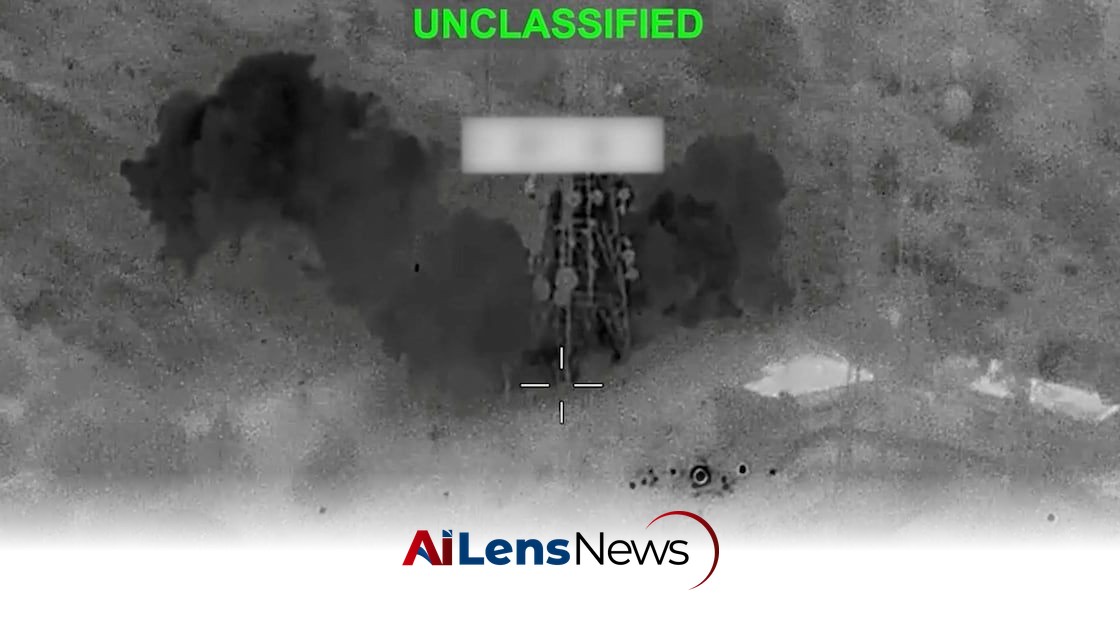


In response to ongoing US military actions, Iran has launched missile and drone strikes targeting Kuwait, Bahrain, and Jordan, escalating regional tensions.
Abu Dhabi, United Arab Emirates Jul 18, 2026 ALN: In a significant escalation of military tensions in the Middle East, Iran has launched a series of missile and drone strikes across the region, targeting key locations in Kuwait, Bahrain, and Jordan. This aggressive response comes after the seventh consecutive night of US attacks on Iranian positions, heightening fears of a broader conflict. The situation is precarious, with both sides seemingly entrenched in their positions, raising concerns about the potential for a wider military engagement that could involve multiple nations.
The recent hostilities have roots in long-standing geopolitical tensions between Iran and the United States, exacerbated by Iran's military ambitions and its support for various militant groups in the region. The US has historically viewed Iran as a destabilizing force in the Middle East, particularly due to its nuclear program and its backing of groups like Hezbollah in Lebanon and various factions in Iraq and Yemen. These dynamics have fueled a cycle of distrust and hostility, leading to military confrontations and sanctions over the years.
The US, citing national security concerns, has intensified its military presence and operations aimed at curbing Iran's influence. This includes the deployment of naval assets in the Persian Gulf and airstrikes against Iranian-linked targets in Iraq and Syria. The US administration has framed these actions as necessary to protect American interests and allies in the region, particularly Israel and Saudi Arabia, both of whom view Iran as a direct threat.
The Iranian government, on the other hand, perceives these actions as acts of aggression and a violation of its sovereignty. Over the years, Iran has developed a robust military capability, including ballistic missiles and drones, which it has used to project power beyond its borders. This military buildup, combined with its support for proxy groups, has contributed to the ongoing tensions between Iran and the US, as well as between Iran and its regional adversaries.
The Iranian military confirmed the strikes, stating they were a necessary response to protect its national interests. Reports indicate that the attacks involved a combination of ballistic missiles and drones, targeting military installations and strategic sites in Kuwait, Bahrain, and Jordan. The choice of targets suggests a deliberate strategy to send a message to both the US and its allies, demonstrating Iran's capability and willingness to retaliate against perceived threats.
In Kuwait, the strikes reportedly targeted military bases that host US troops, while in Bahrain, where the US Navy's Fifth Fleet is based, the attacks aimed at facilities that are integral to US military operations in the Gulf. Jordan, which has a peace treaty with Israel and has cooperated with the US on various military initiatives, was also struck, indicating Iran's intent to challenge US influence across the region.
While specific casualty figures remain unclear, initial reports suggest significant damage to infrastructure and military assets in the targeted areas. Local authorities in Kuwait, Bahrain, and Jordan are assessing the situation and preparing for potential further escalations. The strikes have raised alarms about civilian safety, as military installations are often located near populated areas, increasing the risk of collateral damage.
The aftermath of the attacks has led to heightened security measures in the region, with countries on high alert for potential follow-up strikes or retaliatory actions. The immediate focus for local governments is to ensure the safety of their citizens while also engaging in diplomatic discussions to mitigate the crisis.
The international community has expressed deep concern over the escalating violence. Several nations have called for restraint from both Iran and the US, urging diplomatic solutions to prevent a wider conflict. The United Nations is expected to convene an emergency meeting to discuss the situation and explore possible interventions. Countries that have significant stakes in the region, such as Russia and China, have also weighed in, advocating for dialogue rather than military confrontation.
Regional powers, including Saudi Arabia and Israel, are closely monitoring the situation, as they have a vested interest in the outcome of this conflict. Both countries have historically viewed Iran as a primary adversary and have engaged in various forms of military and intelligence operations aimed at countering Iranian influence. The potential for a broader regional conflict could have significant implications for their security strategies and alliances.
This latest round of attacks raises questions about the stability of the region and the potential for a prolonged conflict. Analysts warn that if hostilities continue, they could disrupt not only regional security but also global oil markets and international relations. The Middle East is a critical hub for global oil supply, and any significant military escalation could lead to increased oil prices, impacting economies worldwide.
Moreover, the risk of miscalculation on either side could lead to unintended consequences, further exacerbating the conflict. The potential for a wider war involving multiple countries could draw in global powers, complicating the situation and making diplomatic resolutions more challenging.
As the situation develops, the world watches closely, hoping for a de-escalation of tensions and a return to diplomatic dialogue. The international community's response will be crucial in shaping the future trajectory of the conflict. Efforts to mediate and facilitate discussions between Iran and the US, as well as regional partners, will be essential in preventing further violence and promoting stability in the region.
The current situation cannot be fully understood without considering the historical context of US-Iran relations. The relationship has been fraught since the 1979 Iranian Revolution, which resulted in the overthrow of the US-backed Shah and the establishment of the Islamic Republic. This shift led to the severing of diplomatic ties and the beginning of a long-standing adversarial relationship characterized by mutual suspicion and hostility.
In the decades since, various incidents have further strained relations, including the Iran-Iraq War, US sanctions targeting Iran's economy and nuclear program, and military confrontations in the Persian Gulf. The Joint Comprehensive Plan of Action (JCPOA) in 2015, aimed at curbing Iran's nuclear ambitions in exchange for sanctions relief, initially offered a glimmer of hope for improved relations. However, the US withdrawal from the agreement in 2018 under the Trump administration reignited tensions and led to a series of escalatory measures from both sides.
The ongoing conflict in Syria, Iran's support for militant groups, and the rise of ISIS have further complicated the geopolitical landscape, leading to a multifaceted conflict involving various state and non-state actors. As a result, the recent missile strikes are not merely a reaction to immediate provocations but are deeply rooted in decades of complex geopolitical dynamics.
Domestically, the Iranian government's military actions may be aimed at consolidating power and rallying nationalistic sentiments among its populace. In recent years, Iran has faced significant internal challenges, including economic difficulties exacerbated by sanctions, social unrest, and demands for political reform. By adopting a confrontational stance against perceived external threats, the Iranian leadership may seek to unify the population and divert attention from domestic issues.
Moreover, the Iranian leadership has historically leveraged military successes as a means of legitimizing its rule. The strikes may serve to bolster the government's image as a defender of national sovereignty and a regional power, reinforcing its narrative against US imperialism and interventionism.
The situation in the Middle East remains fluid, with the potential for further escalation looming large. As both Iran and the US remain resolute in their positions, the prospects for diplomatic engagement appear increasingly tenuous. The international community's response will be critical in shaping the outcome of this conflict and determining whether further violence can be averted. In the face of rising tensions, the hope for a peaceful resolution rests on the willingness of both sides to engage in dialogue and seek common ground.
To learn more about the latest developments in World News & International Affairs, stay updated with our exclusive reports and analyses on AiLensNews.

