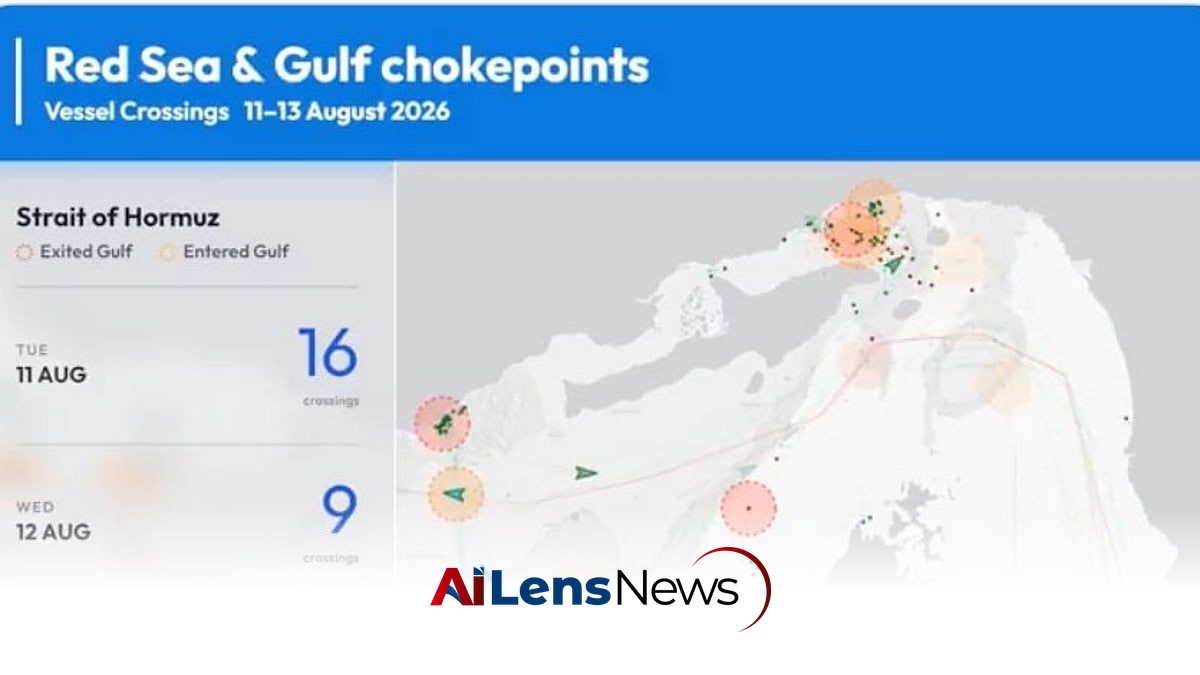



Recent data shows a 44% rise in ship crossings through the Strait of Hormuz, despite ongoing US-Iran tensions affecting marine traffic.
Abu Dhabi, United Arab Emirates Aug 15, 2026 ALN:
The Strait of Hormuz has witnessed a notable increase in ship crossings, with recent reports indicating a 44% rise. This uptick comes against a backdrop of sharply reduced traffic since a US-Israeli campaign against Iran began on February 28, 2026. The Strait of Hormuz is a vital maritime corridor that connects the Persian Gulf to the Gulf of Oman and the Arabian Sea, making it a critical passage for global maritime trade, especially for energy supplies.
Prewar daily crossings through Hormuz typically numbered around 100 to 140 vessels, carrying roughly a fifth of the world’s oil. However, recent daily totals have hovered in the single digits to low teens, according to multiple tracking firms including Kpler and MarineTraffic. The decline in traffic highlighted the heightened risks and tensions in the region, which has historically been a flashpoint for geopolitical conflicts.
According to Reuters, Hormuz traffic had been capped below the August daily average of about 12 commodity vessels amid volatile sentiment and competing US and Iranian claims of control. The situation became even more precarious as the US intensified its naval presence in the area, aimed at deterring potential Iranian threats to shipping and ensuring the security of oil transport routes.
Kpler data indicated that there were nine transits on Thursday, up from five the prior day, mostly via the Iranian route. This surge in crossings, although still low compared to pre-conflict levels, marks a significant shift in the operational landscape of maritime shipping in the region.
In a concerning development, the UAE’s Abu Dhabi National Oil Company reported that two of its vessels were attacked while transiting that evening, with the UAE placing the blame on Iran. The incident underscores the ongoing risks that vessels face while navigating through the Strait, as tensions between Iran and its regional adversaries persist.
Iran has asserted its management of the strait and has rejected claims that it is fully open, while the United States continues to maintain pressure, including a naval blockade. This complex interplay of military posturing and economic sanctions creates an environment of uncertainty that affects shipping operations and insurance premiums for maritime transport.
The Strait of Hormuz is a narrow waterway that connects the Persian Gulf to the Gulf of Oman and the Arabian Sea. It is one of the most strategically important maritime chokepoints in the world, as it serves as a conduit for a significant portion of the global oil supply. Approximately 20% of the world's oil passes through this strait, making it crucial to the energy security of many countries, particularly those in Asia and Europe. The strait's geographical significance has made it a focal point for international trade and military strategy.
The strategic importance of the Strait of Hormuz has led to numerous geopolitical tensions over the years, particularly involving Iran, the United States, and its allies in the region. The strait has been a flashpoint for military confrontations, especially during periods of heightened tensions between Iran and Western powers. Incidents such as the seizure of oil tankers, missile strikes on oil infrastructure, and naval skirmishes have all underscored the volatility of the region.
The recent spike in ship crossings comes amidst a complex geopolitical landscape characterized by tensions between Iran and the United States, as well as Israel. The US-Israeli campaign against Iran, which began in early 2026, has included a series of military and economic measures aimed at curtailing Iran's influence in the region. This campaign has led to increased naval presence in the Persian Gulf by US forces, further complicating the security environment in the Strait of Hormuz. The presence of US naval forces is intended to deter Iranian aggression and reassure allies in the region of the commitment to secure maritime routes.
The Iranian government has responded to these pressures by asserting its control over the strait, with officials claiming that they are committed to ensuring the free passage of vessels. However, this assertion is met with skepticism by the US and its allies, who maintain that Iran poses a significant threat to maritime safety in the region. Iran’s military capabilities, including its naval forces and missile technology, have been a source of concern for the international community.
The recent increase in ship crossings through the Strait of Hormuz raises several implications for global trade and energy markets. First and foremost, the uptick in traffic suggests a potential easing of the immediate fears that had previously led to significant declines in maritime activity in the region. This could indicate that shipping companies are beginning to navigate the increased risks associated with transiting through the strait. However, the recent attacks on vessels, as reported by the UAE’s Abu Dhabi National Oil Company, underscore the persistent dangers that remain.
Such incidents can lead to heightened insurance costs for shipping companies, which may impact the overall cost of oil and other commodities transported through the strait. Furthermore, any escalation in military confrontations could result in significant disruptions to global oil supply chains. The interconnectedness of global markets means that instability in the Strait of Hormuz can have ripple effects across economies, particularly those heavily reliant on oil imports.
Looking ahead, the situation in the Strait of Hormuz remains fluid and unpredictable. The international community is closely monitoring developments, particularly as the US and Iran continue to engage in a high-stakes game of geopolitical maneuvering. The potential for further military confrontations exists, particularly if Iran perceives its interests to be threatened by US actions in the region. The delicate balance of power in the Gulf is influenced not only by US-Iran relations but also by the actions of regional players like Saudi Arabia and the UAE.
Additionally, the responses of other regional players, such as Saudi Arabia and the UAE, will be critical in shaping the future dynamics of maritime security in the Strait of Hormuz. Both nations have significant interests in ensuring the free flow of oil through this vital waterway, and their actions will likely influence the broader geopolitical landscape. Cooperation among Gulf states in security matters could either mitigate or exacerbate tensions, depending on the prevailing political climate.
In conclusion, while the recent increase in ship crossings through the Strait of Hormuz may indicate a temporary stabilization of maritime activity, the underlying tensions and risks associated with the region remain significant. The interplay between military actions, economic interests, and diplomatic negotiations will continue to be pivotal in determining the future of this crucial maritime chokepoint. As the global economy remains interconnected, the stability of the Strait of Hormuz will be a key factor in shaping energy prices and international trade flows in the coming months.
To learn more about the latest developments in World News & International Affairs, stay updated with our exclusive reports and analyses on AILensNews.

