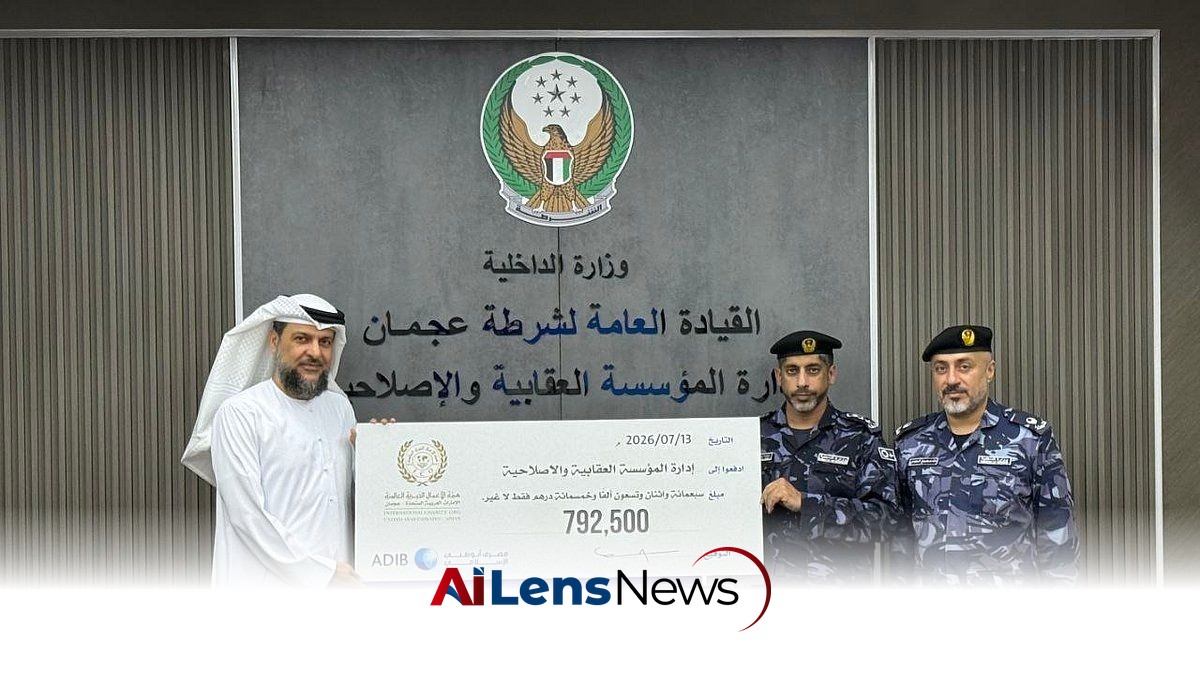


Ajman Police receives Dh792,500 from the International Charity Organisation to help free inmates facing financial hardships and support their reintegration into society.
Abu Dhabi, United Arab Emirates Jul 20, 2026 ALN: Ajman: Ajman Police has received a financial contribution of Dh792,500 from the International Charity Organisation (ICO) to help secure the release of a number of inmates at the emirate’s Correctional and Rehabilitation Institution, offering them an opportunity to overcome financial hardships and start a new chapter in their lives.
The support forms part of ongoing efforts to strengthen social solidarity and provide assistance to inmates facing financial challenges, while helping them reintegrate positively into society. This initiative is particularly significant in the context of the UAE's broader commitment to humanitarian efforts and social welfare, reflecting a growing awareness of the need to support vulnerable populations, including those who have been incarcerated.
Colonel Mohammed Mubarak Al Ghafli, Director of the Correctional and Rehabilitation Institution in Ajman, expressed his appreciation to the International Charity Organisation for its continued humanitarian support and community-focused initiatives. He highlighted that this contribution is not merely a financial transaction but a lifeline for many individuals who are striving to rebuild their lives after incarceration.
He said the contribution reflects the values of social responsibility and highlights the important role charitable institutions play in promoting social cohesion and extending support to vulnerable groups.
Al Ghafli noted that the donation would help ease the burdens of several inmates and enable them to move beyond difficult circumstances, giving them a fresh start after their release. This aspect of the initiative underscores the importance of rehabilitation over punishment, aligning with modern correctional philosophies that emphasize reintegration into society as a key goal of the justice system.
He added that the initiative supports the institution’s strategy of providing comprehensive rehabilitative care for inmates, while enhancing opportunities for their successful reintegration into society. This approach is increasingly recognized as essential for reducing recidivism rates, as individuals who receive support and resources upon their release are less likely to reoffend.
Dr Khalid Al Khaja, Secretary-General of the International Charity Organisation, said charitable work extends beyond providing financial assistance and includes helping people overcome crises and supporting them and their families during challenging times. His comments shed light on the multifaceted nature of charitable initiatives, which can include counseling, vocational training, and family support services, all aimed at fostering resilience and empowerment among beneficiaries.
He said such efforts are inspired by the teachings of Islam and reflect the vision of the UAE leadership, which has made charitable and humanitarian work an integral part of the country’s social fabric. This cultural foundation supports a national ethos that prioritizes community welfare and encourages citizens and organizations alike to engage in acts of kindness and generosity.
Dr Al Khaja also stressed the organisation’s commitment to safeguarding the privacy and dignity of beneficiaries across all humanitarian initiatives, ensuring that support is delivered with respect and compassion. This principle is vital in maintaining the dignity of those receiving aid, particularly in sensitive situations such as incarceration and subsequent reintegration into society.
The financial contribution from ICO is part of a larger trend within the UAE, where various government bodies and non-profit organizations are increasingly collaborating to address social issues. Such partnerships can enhance the efficacy of programs aimed at helping disadvantaged groups, including former inmates, by pooling resources and expertise.
In recent years, the UAE has made significant strides in reforming its criminal justice system, focusing on rehabilitation rather than purely punitive measures. This shift has been accompanied by various initiatives designed to support inmates during and after their time in correctional facilities. Programs that offer vocational training, education, and mental health support are becoming more prevalent, reflecting a growing understanding of the complex challenges faced by those reentering society.
Moreover, the financial assistance provided by ICO can be seen as a step towards breaking the cycle of poverty and crime. Many inmates face significant financial obstacles upon release, including debts, lack of employment opportunities, and social stigma. By providing financial support, the ICO is not only facilitating their release but also helping to address some of these systemic issues that contribute to recidivism.
The implications of this initiative extend beyond individual inmates; they resonate throughout the community. When individuals successfully reintegrate into society, they contribute to the economy and social fabric, reducing the burden on social services and enhancing community safety. This aligns with the UAE's long-term vision for sustainable development and social harmony.
In conclusion, the collaboration between Ajman Police and the International Charity Organisation illustrates a proactive approach to addressing the needs of a vulnerable population. By providing financial assistance and emphasizing rehabilitation, the initiative seeks to foster a more inclusive society where individuals can overcome their past and contribute positively to their communities. As the UAE continues to evolve in its approach to social issues, initiatives like these serve as a model for other nations grappling with similar challenges.
The broader context of this initiative lies within the UAE's commitment to social welfare and humanitarian efforts, which are deeply rooted in the nation’s cultural and historical landscape. The UAE's leadership has consistently emphasized the importance of community support and social responsibility, making it a priority to assist those in need, including marginalized groups such as former inmates.
In addition, the UAE's legal framework has been evolving to support rehabilitation-focused policies. Legislative reforms have been introduced to create a more humane correctional environment and to provide inmates with opportunities for education and skill development. These reforms aim to reduce recidivism rates by equipping individuals with the tools they need to reintegrate successfully into society.
Furthermore, the role of non-governmental organizations and charity groups in the UAE cannot be understated. Organizations like the ICO play a critical role in bridging the gap between governmental efforts and the needs of the community. Their involvement not only provides financial support but also brings expertise and resources that can enhance the effectiveness of rehabilitation programs.
As the UAE continues to face challenges related to crime and social integration, initiatives like the one between Ajman Police and ICO are essential. They represent a shift towards a more compassionate and understanding approach to justice, one that recognizes the potential for change and the importance of second chances. The long-term implications of such initiatives could lead to a reduction in crime rates, increased public safety, and a more harmonious society where individuals are given the opportunity to contribute positively.
Ultimately, the success of these initiatives will depend on continued collaboration between various stakeholders, including government agencies, non-profits, and the private sector. By working together, these entities can create a comprehensive support system that addresses the root causes of crime and provides individuals with the resources they need to build successful lives after incarceration. This kind of holistic approach is vital for fostering a safe and inclusive society that values the potential of every individual, regardless of their past.
In summary, the financial contribution from the International Charity Organisation to Ajman Police is more than just a monetary donation; it is a significant step towards transforming lives and building a more supportive community. The emphasis on rehabilitation and social reintegration aligns with global best practices in criminal justice reform and reflects the UAE's commitment to progressive social policies. As such, this initiative stands as a testament to the power of collaboration and compassion in addressing complex social issues and promoting the welfare of all citizens.
To learn more about the latest developments in Crime & Law, stay updated with our exclusive reports and analyses on AiLensNews.

