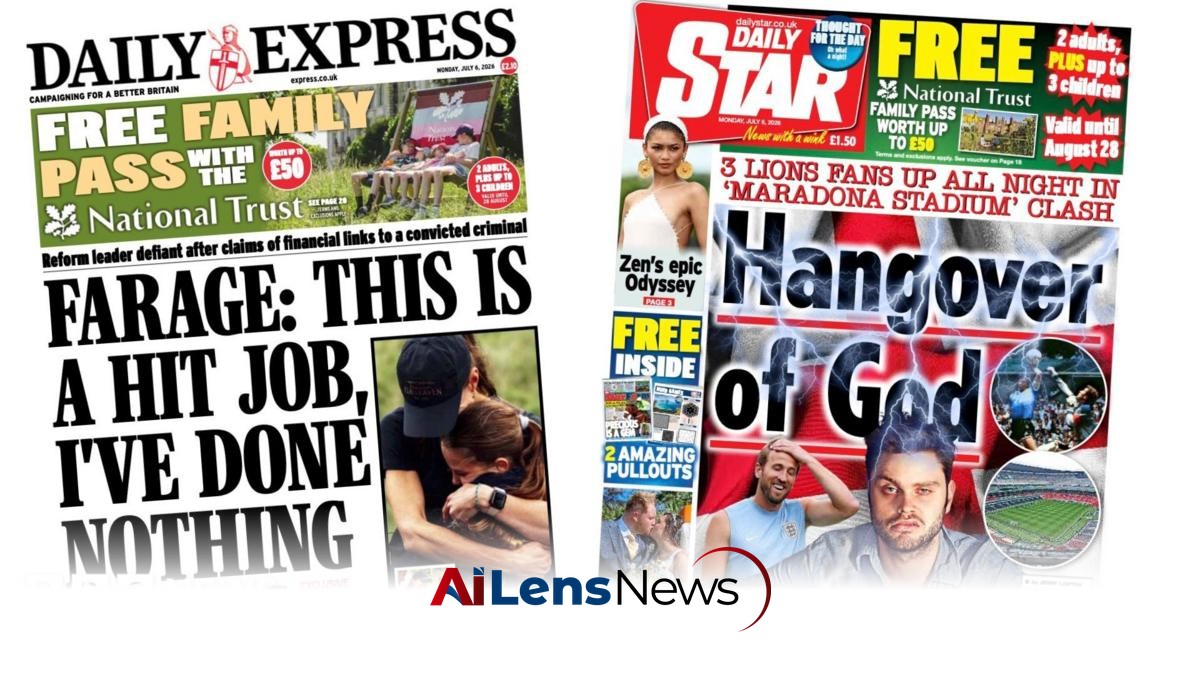


Reports highlight Reform UK leader Nigel Farage's failure to declare benefits from an ally prior to becoming an MP, leading to significant media coverage.
New Delhi, India Jul 6, 2026 ALN: Recent headlines have focused on the controversy surrounding Reform UK leader Nigel Farage, who has stated, "I've done nothing wrong" in response to allegations regarding his financial disclosures. This issue has gained traction in several papers, particularly concerning Farage's failure to declare benefits received from an ally in the year leading up to his election as a Member of Parliament. The allegations suggest that Farage may have violated transparency rules by not disclosing these benefits, which raises questions about accountability among public officials. The implications of these claims could have significant repercussions for Farage's political career and the integrity of the political system.
The controversy surrounding Farage is not merely a personal issue; it taps into a larger discourse about the ethical conduct expected from politicians and their obligation to maintain transparency with the public. Financial disclosures are critical for ensuring that elected officials act in the best interests of their constituents and do not engage in corrupt practices. If Farage is found to have breached these rules, it could set a precedent for how similar cases are handled in the future, potentially leading to stricter regulations or reforms in the political landscape.
The story has been prominently featured across various publications, with headlines emphasizing Farage's defense against the accusations. The Daily Express and Daily Star are among the papers that have highlighted the controversy, framing it as a potential "hit job" against the politician. This portrayal suggests that some segments of the media may be sympathetic to Farage and view the allegations as an attempt to undermine his political influence. Such framing can significantly affect public perception, either bolstering support for Farage among his base or further alienating detractors who demand accountability.
Moreover, the role of the media in shaping narratives around political figures cannot be underestimated. In today’s digital age, where information travels fast and social media amplifies messages, the portrayal of Farage in print and online can influence public opinion and political discourse. The coverage of this controversy reflects broader media trends, where sensationalism often takes precedence over nuanced reporting, potentially leading to a polarized public response.
Public response to the allegations has been mixed. Supporters of Farage argue that the claims are politically motivated, asserting that opponents are leveraging the situation to discredit him and his party. This perspective is common among political figures who find themselves embroiled in controversy, as supporters often rally around their leaders in the face of perceived attacks. On the other hand, critics of Farage have called for greater scrutiny and accountability from elected officials, emphasizing that no one is above the law, regardless of their political stature.
This situation reflects broader concerns about transparency in politics and the responsibilities of public figures. The public's trust in political leaders is crucial for a functioning democracy, and incidents like this can erode that trust. When politicians fail to disclose financial interests or benefits, it raises alarm bells about potential conflicts of interest and the integrity of decision-making processes. The implications of this controversy extend beyond Farage himself; they affect public sentiment towards the political system as a whole.
This controversy is not isolated; it connects to ongoing discussions about the ethical standards expected of politicians. The issues at play here are emblematic of a larger crisis of confidence in political institutions. In recent years, numerous scandals involving financial misconduct, lobbying, and lack of transparency have prompted calls for reform and greater oversight of elected officials. The public’s growing awareness and demand for accountability are reflected in movements advocating for transparency in government, including the push for more stringent financial disclosure requirements and independent oversight bodies.
The importance of transparency and ethical conduct in politics cannot be overstated. Political leaders are expected to serve the public interest, and any deviation from this standard can lead to widespread disillusionment among constituents. As voters increasingly prioritize integrity and ethical behavior in their representatives, incidents like the one involving Farage may influence electoral outcomes and party dynamics moving forward. Political parties that fail to address ethical concerns risk alienating their voter base and facing significant challenges in future elections.
As the situation develops, it will be important to monitor how Farage and his allies respond to these allegations and what impact this may have on his political future. The unfolding narrative serves as a reminder of the importance of transparency and accountability in governance. The political landscape is ever-changing, and the outcomes of such controversies can have lasting effects on both individual careers and the broader political environment.
In conclusion, the allegations against Farage highlight the ongoing struggle for accountability in politics. As citizens demand more from their leaders, the consequences of failing to meet these expectations can be severe. The outcome of this controversy may not only shape Farage's future but could also influence the political climate in the UK, prompting a reevaluation of standards and practices within political institutions. The importance of ethical conduct and transparency in governance remains paramount as the public seeks to rebuild trust in their elected officials.
To understand the broader implications of the allegations against Farage, it is essential to consider the historical context of political accountability in the UK. The nation has seen various political scandals over the years, ranging from the expenses scandal that rocked Parliament in 2009 to more recent controversies involving lobbying and the influence of money in politics. Each of these incidents has contributed to a growing public demand for transparency and ethical behavior from elected officials.
Furthermore, the rise of social media has transformed the political landscape, enabling rapid dissemination of information and allowing the public to engage directly with political figures. This shift has placed additional pressure on politicians to maintain high ethical standards, as any misstep can quickly become a trending topic, leading to public outrage and calls for accountability.
The role of watchdog organizations and independent bodies in monitoring political conduct has also gained prominence. These organizations work to ensure that politicians adhere to ethical guidelines and are held accountable for any violations. The effectiveness of these bodies is crucial in restoring public trust and ensuring that politicians are acting in the best interests of their constituents.
In light of these developments, the allegations against Farage serve as a test case for the political system in the UK. How the situation is resolved may influence public attitudes towards political accountability and could lead to significant changes in how politicians are regulated. As the public continues to demand greater transparency, the onus is on political leaders to respond to these expectations and uphold the integrity of the democratic process.
Ultimately, the ongoing discourse surrounding Farage’s situation reflects a critical juncture in the relationship between politicians and the public. As voters become increasingly informed and engaged, the pressure on elected officials to maintain ethical standards will only intensify. The outcomes of controversies like this one may not only shape individual careers but could also redefine the political landscape in the UK for years to come.
To learn more about the latest developments in Politics, stay updated with our exclusive reports and analyses on AiLensNews.

