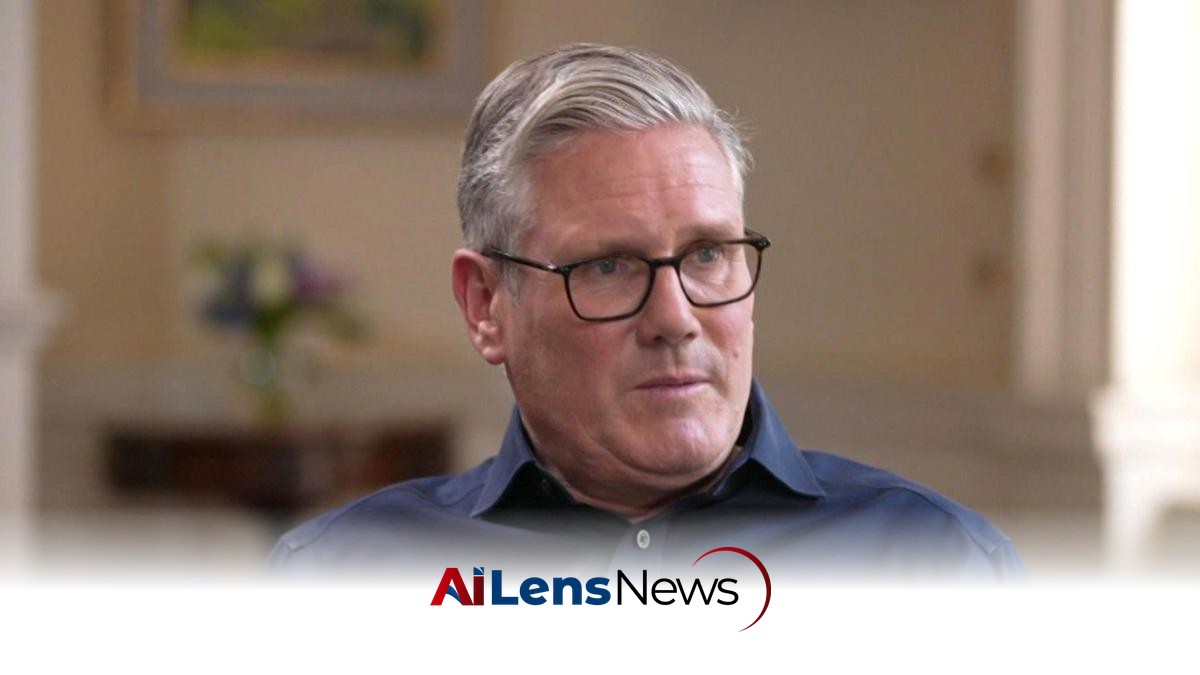


In a candid interview, Sir Keir Starmer reflects on his resignation as Prime Minister and warns successor Andy Burnham of ongoing global challenges.
New Delhi, India Jul 4, 2026 ALN: Sir Keir Starmer has warned his likely successor Andy Burnham will have to spend just as much time dealing with global turmoil as he has during his time in No 10.
In an untypically candid interview, the outgoing prime minister spoke for the first time about the "intensely personal" and "really tough" decision he took alongside his wife and children to accept that his "political career" was "over". This resignation comes at a time when the Labour Party is grappling with significant challenges, both domestically and internationally, and Starmer's reflections shed light on the complexities of leadership in today's political climate.
Sir Keir told the BBC he had "saved" the Labour Party and been a successful prime minister. His tenure has been marked by a series of global crises, including geopolitical tensions, economic instability, and public health emergencies, all of which have demanded a significant amount of his attention. As he prepares to step down, Starmer's assertions about his leadership highlight the pressures faced by contemporary leaders who must navigate an increasingly interconnected world.
He promised to "keep my mouth shut" under his successor, insisting that he liked Burnham and the pair had "always got on". This statement indicates a desire for a smooth transition of leadership, which is crucial for maintaining party unity and public confidence. However, it also raises questions about the nature of political mentorship and the role former leaders play in shaping the future direction of their parties.
Sir Keir has faced frequent criticism during his two years as prime minister - an anniversary he is marking this weekend - about the amount of time he has spent on the world stage, with critics labelling him "never here Keir". This criticism reflects a broader concern among voters about the balance between domestic and international responsibilities. Many citizens feel that their leaders should prioritize issues that directly affect their lives, such as the cost of living crisis, healthcare, and education, rather than focusing predominantly on global diplomacy.
Among Burnham's supporters in parliament are those who hope he will be able to focus more on issues in the UK such as the cost of living and public services. The cost of living crisis has been a pressing issue for many families, with rising prices for essentials such as food and energy placing significant strain on household budgets. Supporters of Burnham believe that his leadership could pivot the party's focus back to these critical domestic concerns.
"It is not sensible to think you can just separate these two things out," Sir Keir said. This statement underscores the interconnectedness of domestic and international issues in modern governance. Economic policies, for instance, are often influenced by global market trends and international relations, making it challenging for leaders to prioritize one over the other without considering the broader implications.
Asked if a prime minister could spend less time on diplomacy than him, he replied: "No, I don't think it is possible." This assertion speaks to the realities of contemporary leadership, where global events can have immediate and profound effects on national policy and public sentiment. Leaders today must be prepared to engage with international partners and navigate complex geopolitical landscapes, while also addressing the needs and concerns of their constituents.
He added: "There's often this discussion - what's the right balance between dealing with international affairs and dealing with domestic affairs? They're one and the same thing." This perspective highlights the necessity for leaders to adopt a holistic view of governance, recognizing that the challenges they face are often multifaceted and require coordinated responses that encompass both domestic and international strategies.
Sir Keir continued: "Whoever's my successor is going to face the same global conflict. We keep saying, and it's true, we're in a more dangerous and volatile world than we've been in for probably most of my lifetime. That's not just a phrase, that's reality. That's not going to change. And the domestic challenges aren't going to change." His reflections on the global landscape suggest that future leaders will need to be equipped with the skills and knowledge necessary to navigate these complexities, ensuring they can respond effectively to both immediate crises and long-term challenges.
Having repeatedly vowed to fight on as prime minister, including facing any challengers in a Labour leadership election, Sir Keir ultimately changed his mind and resigned within three days of Burnham's victory in the Makerfield by-election. This swift resignation may reflect an awareness of the shifting dynamics within the party and the need for new leadership to rejuvenate the party's image and electoral prospects.
He described it as a "really, really tough" decision which he ultimately came to that weekend with his wife, Victoria, and teenage children at Chequers, the prime minister's countryside residence. The personal nature of his decision highlights the emotional toll that political leadership can take on individuals and their families. It also illustrates the importance of familial support in navigating the challenges of public service.
"I grappled with what was the best thing to do for me, for the country, for the government," Sir Keir said. "And those discussions inevitably start with many discussions with colleagues, with parliamentary colleagues, with the team here, with my immediate advisers, with trade unions, so many people in that discussion." This acknowledgment of the collaborative nature of political decision-making emphasizes the importance of dialogue and consultation in leadership, particularly during times of transition.
"But for me, and this may be different for other people, in the end it became an intensely personal decision. And that's why it was a decision taken ultimately when Vic and I were away with the kids. We went to Chequers and just spent two days together as a family. And that's when I came to my final decision." His emphasis on family discussions as a pivotal factor in his resignation underlines the personal sacrifices that leaders often make in service of their country, as well as the weight of responsibility they carry.
He added: "Taking the decision that your political career is over, it is an intensely personal matter, or at least it was for me. I wanted to do that with Vic, and that's what I did." This sentiment resonates with many individuals who have faced significant life changes, highlighting the universal nature of grappling with personal and professional crossroads.
Sir Keir appeared to acknowledge that his successor is almost certain to be Burnham, although at other times he made reference to "whoever my successor is" and said there was "a little bit of process to go". This nuanced language suggests an understanding of the political landscape and the need for due process in leadership transitions. It reflects the complexities of party politics, where succession is rarely straightforward and often involves negotiation and consensus-building.
He said he had "never had any personal animosity" towards the former Greater Manchester mayor and that he would "do everything I possibly can to make sure" that the next government succeeds. This commitment to supporting his successor underscores the importance of unity within the party as it prepares for future elections and seeks to maintain public trust.
Sir Keir committed to remaining an MP until at least the next election but said he would be "keeping my mouth shut, rather than giving constant advice to my successor about what they should be doing". This statement reflects a desire to allow Burnham the space to lead without the shadow of his predecessor looming over him, which is crucial for establishing a new vision for the party.
He made clear that he sees his four years as Labour leader in opposition as "absolutely core" to his legacy. This perspective highlights the importance of opposition leadership in shaping party identity and policy direction, particularly in a time of significant national and global challenges.
Describing Labour when he became leader as "politically, financially and morally bankrupt", he said it had been "hard and bloody work". His candid assessment of the party's state at the start of his leadership underscores the significant challenges he faced and the transformative efforts required to rebuild the party's credibility and public support.
Sir Keir said that in electoral terms his success should sit alongside Clement Attlee's victory in 1945 and Sir Tony Blair's in 1997. This comparison to historical milestones in the Labour Party's history reflects a sense of pride in his achievements and a belief in the enduring significance of his leadership.
He added: "The Labour Party arguably could have been lost, but I stepped up as leader and with others we saved the Labour Party." This assertion highlights the transformative nature of his leadership and the collaborative efforts that were necessary to restore the party's fortunes.
But he said he had been ousted because Labour MPs no longer believed he was "the right person to take us into the next election". This acknowledgment of the party's internal dynamics and the shifting perceptions of leadership illustrates the complexities of political survival and the ever-changing landscape of public opinion and party allegiance.
To learn more about the latest developments in Politics, stay updated with our exclusive reports and analyses on AiLensNews.

