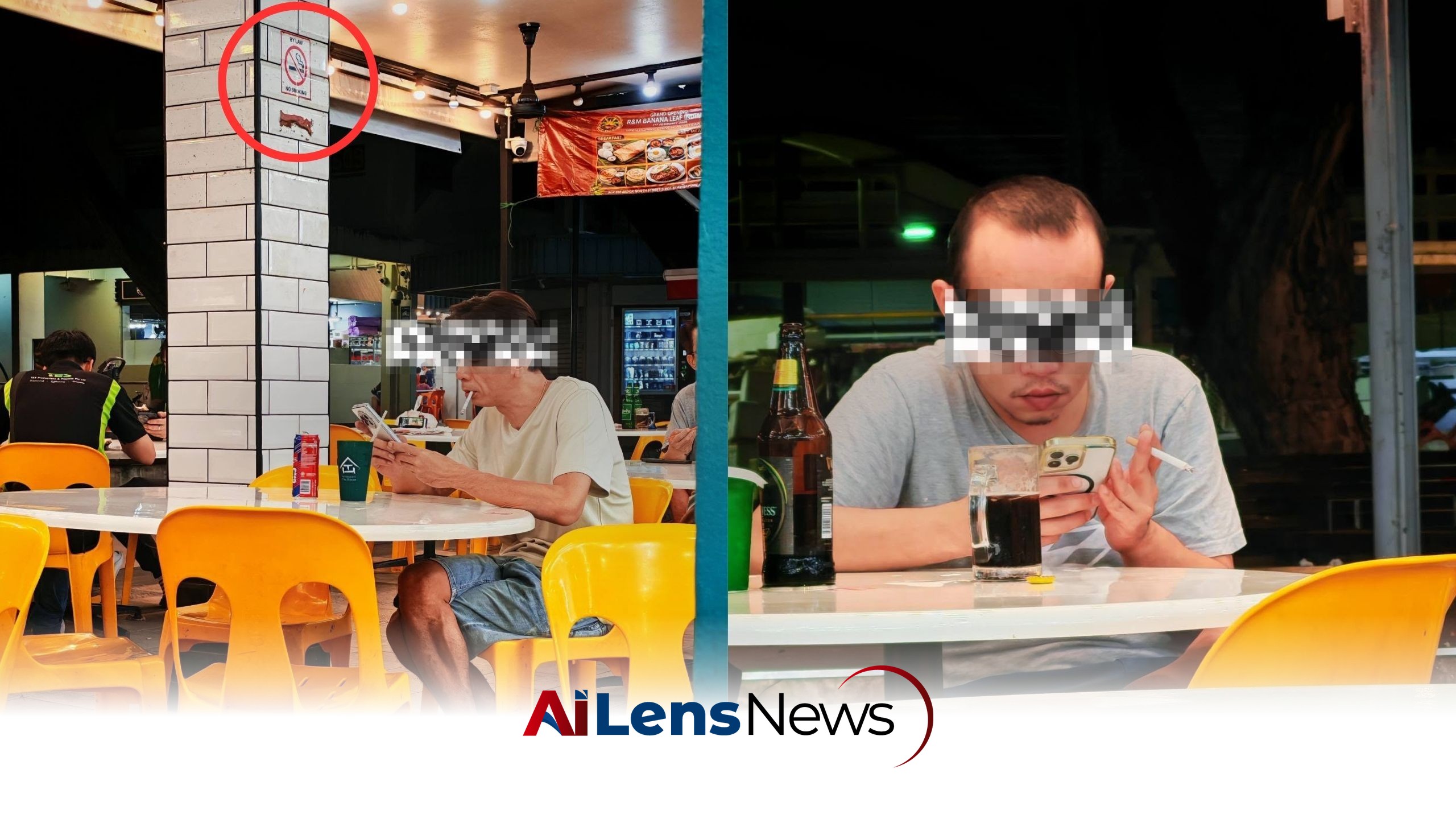


Netizens express outrage over smokers in a non-smoking area at a Bedok North coffee shop, urging for stricter enforcement and penalties.
Singapore, Singapore Jul 23, 2026 ALN: What’s with people ignoring the signs nowadays? A social media post has drawn attention after a netizen voiced a complaint about people who were spotted smoking in what was supposed to be a non-smoking area at a coffee shop in Bedok North. This incident has sparked a wider conversation about smoking enforcement and public health regulations in Singapore, particularly in communal spaces like coffee shops.
Smoking in designated non-smoking areas is not just a matter of etiquette; it is a public health issue. The Health Promotion Board of Singapore has long advocated for smoke-free environments to protect non-smokers from secondhand smoke, which is known to have serious health implications. Secondhand smoke exposure can increase the risk of respiratory infections, heart disease, and lung cancer among non-smokers, particularly vulnerable populations such as children and the elderly.
The coffee shop culture in Singapore is deeply ingrained in the social fabric of the nation. These establishments serve as communal gathering spots for friends, families, and colleagues. As such, the enforcement of smoking regulations in these venues is crucial for maintaining a comfortable and safe environment for all patrons. The incident in Bedok North reflects a growing frustration among the public regarding the enforcement of these regulations.
Other people shared their thoughts and opinions about what was posted. One commenter admitted that these types of incidents have been rampant recently, and that it should be reported to the authorities. This sentiment echoes a broader concern among Singaporeans about the effectiveness of current enforcement measures. The National Environment Agency (NEA) is responsible for upholding smoking regulations, but many citizens feel that more proactive measures are needed.
Moreover, others stated that the netizen should have confronted the smokers, especially if the staff there never did anything to stop them. This suggestion raises questions about the role of bystanders in enforcing public health regulations. While some individuals may feel empowered to address the issue directly, others may hesitate due to fear of confrontation or potential escalation of conflict. The social dynamics at play in such situations can complicate the enforcement of smoking bans.
“Just remind them not to smoke in the non-smoking area. Or if you’re scared, you can ask the drinks stall people to inform them not to smoke. Sometimes I also forget I’m holding a cigarette. The force of habit is hard to break… All they need is a simple, gentle reminder,” a netizen declared. This perspective highlights the notion that personal responsibility plays a role in smoking enforcement. However, it also underscores the challenges of changing habitual behavior, particularly in a social setting where smoking may be normalized.
One more netizen claimed that there is nothing that one can do to stop these smokers unless there are authorities patrolling for enforcement. If one is brave enough to confront these smokers, they should be ready to quarrel or even have a fight with them. This comment reflects a sense of helplessness that many individuals feel when faced with the reality of non-compliance. The lack of visible enforcement can lead to a perception that smoking regulations are not taken seriously, thereby encouraging more individuals to disregard the rules.
Others also admitted that the coffee shops should be fined in these instances as well, because their employees should go and tell the customers that it is not a place for smoking. This idea of holding establishments accountable for the actions of their patrons is not new. Many countries have implemented measures that impose fines on businesses that fail to enforce smoking bans. The rationale behind this approach is that businesses have a vested interest in maintaining a safe environment for their customers and should take proactive steps to ensure compliance with health regulations.
“It is useless to complain to the NEA/town council. I have made a complaint with photos of patrons smoking in the non-smoking areas and they just told me that they will continue to monitor,” a comment concluded. This frustration with the complaint process highlights a potential gap in communication between the public and regulatory authorities. Effective enforcement requires not only the presence of regulations but also a responsive system that addresses public concerns in a timely manner.
In similar news related to employee concerns, there has been a report where a Singaporean shared that a staff member shouted at them when asked to segregate those trays for halal or non-halal. This incident, while seemingly unrelated, reflects broader themes of customer service and employee conduct in public spaces. It raises questions about the training and support provided to staff in handling customer interactions, particularly in diverse settings where cultural sensitivities may be at play.
It was revealed that an older male worker aggressively asked the netizen and her friend to place the trays in their designated areas. However, the netizen’s friend responded sharply, stating that sorting trays was the staff’s responsibility. This exchange illustrates the tension that can arise in service encounters, particularly when expectations about roles and responsibilities are not clearly communicated. The incident serves as a reminder of the importance of effective communication and respect in customer service interactions.
As the conversation around smoking enforcement continues, it is essential for stakeholders—including regulatory agencies, business owners, and the public—to engage in constructive dialogue about how to create safer, healthier environments. This may involve re-evaluating current enforcement strategies, increasing public awareness about the health risks associated with smoking, and fostering a culture of mutual respect in public spaces. Ultimately, the goal is to ensure that all individuals can enjoy communal spaces free from the harmful effects of smoking and other disruptive behaviors.
To learn more about the latest developments in Crime & Law, stay updated with our exclusive reports and analyses on AiLensNews.

