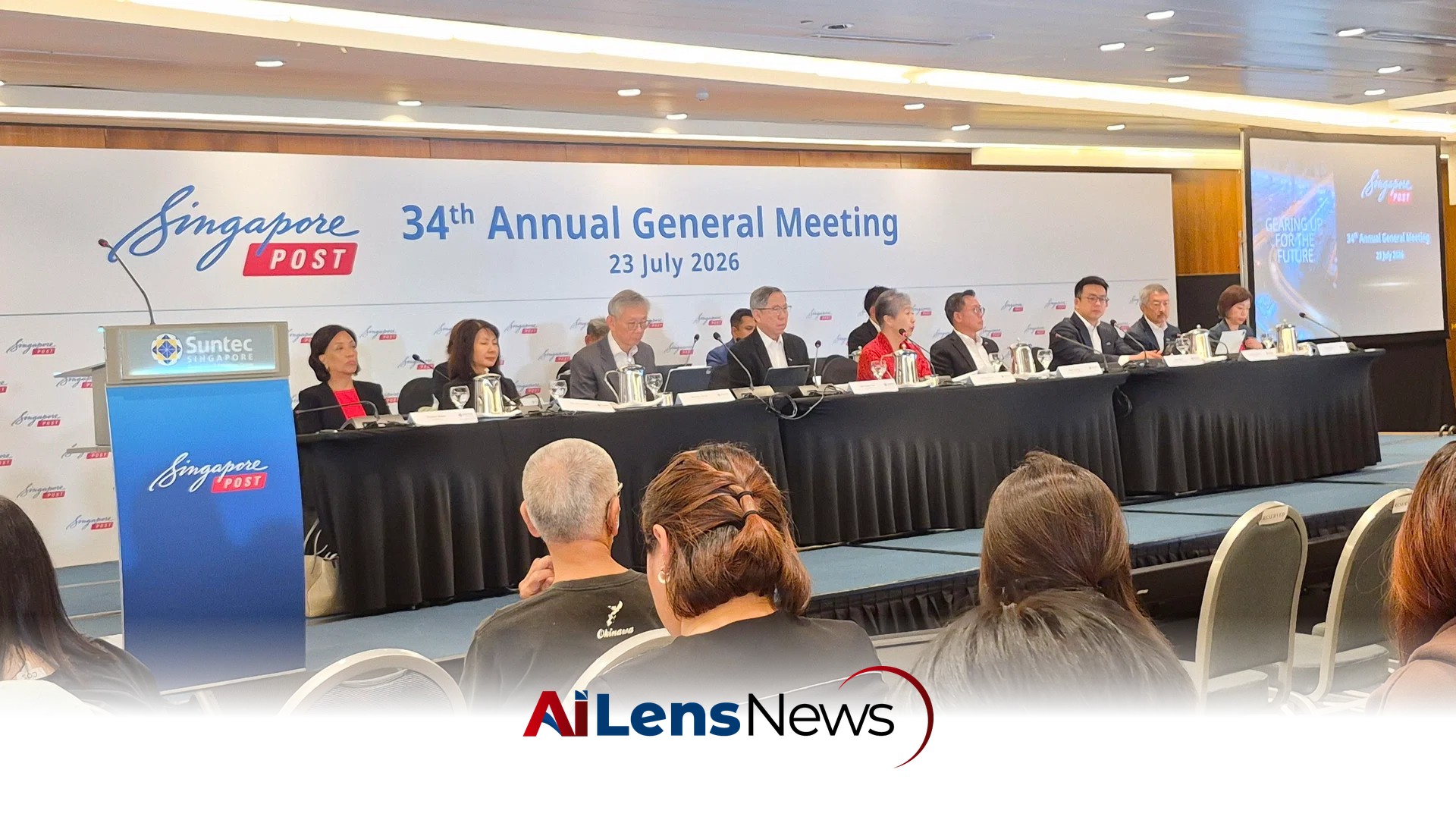


Teo Swee Lian, chairperson of Singapore Post, reveals that discussions with the government about state aid for the postal service are ongoing but confidential.
Singapore, Singapore Jul 23, 2026 ALN: [SINGAPORE] Singapore Post (SingPost), the national postal service provider, is currently engaged in discussions with the government regarding potential state aid to support its loss-making postal business. This revelation was made by SingPost chairperson Teo Swee Lian during a shareholder inquiry at the company’s 34th annual general meeting (AGM), held on Thursday, July 23, at Suntec Singapore. Teo's comments underscore the critical situation facing the postal service as it navigates a challenging economic landscape.
During the AGM, which lasted approximately two and a half hours, Teo addressed concerns raised by shareholders regarding the company's financial performance and operational challenges. She confirmed that discussions with the government are ongoing but refrained from providing specific details, stating, "until and unless the government has decided that it wants to reveal it." This statement highlights the sensitive nature of negotiations concerning state aid, as well as the complexities involved in public-private partnerships, particularly in the context of a national service provider that is integral to the country's infrastructure.
SingPost has faced significant challenges in recent years, primarily due to the decline in traditional mail volumes, which have been exacerbated by the rise of digital communication and e-commerce. The company has reported losses in its postal segment, prompting concerns about its long-term viability and the sustainability of its operations. The discussions about state aid are reflective of a broader trend within the postal industry, where many postal services worldwide are grappling with similar issues of declining revenue and the need to adapt to changing consumer behaviors.
In the context of Singapore, the postal sector has historically been a critical component of the nation’s logistics and communication infrastructure. However, as the digital landscape evolves, traditional postal services have been forced to rethink their business models. The shift towards e-commerce has created new opportunities, but it has also intensified competition from private logistics companies that are often more agile and better equipped to meet the demands of modern consumers.
The implications of the ongoing discussions between SingPost and the government are significant. If state aid is granted, it could provide a much-needed financial lifeline for the struggling postal business, allowing it to invest in modernization efforts, enhance service offerings, and ultimately improve its competitiveness. However, the nature and extent of any potential aid will likely depend on various factors, including the government’s assessment of the postal service's long-term viability and its strategic importance to the national economy.
Moreover, the approval of 12 resolutions during the AGM indicates that SingPost is taking a proactive approach to addressing its operational challenges. These resolutions may include measures aimed at improving efficiency, reducing costs, and exploring new revenue streams, which are essential for the company’s recovery and growth. The board’s willingness to engage with shareholders and seek their input is also a positive sign of corporate governance and transparency.
As the postal industry continues to face an uncertain future, the outcome of the discussions between SingPost and the government could set a precedent for how state support is provided to other struggling sectors in Singapore. The government's role in supporting key industries, particularly in times of economic distress, is a topic of considerable debate, as it raises questions about the balance between public and private interests.
In addition, the evolution of postal services in Singapore is not just a local issue but part of a global conversation. Many postal services around the world are re-evaluating their roles in society, as they confront the dual pressures of declining mail volumes and the need to innovate. Some countries have successfully transformed their postal services into logistics and e-commerce hubs, leveraging their existing infrastructure to adapt to new market realities.
For SingPost, the path forward will likely require a combination of strategic partnerships, investment in technology, and a renewed focus on customer service. The company may need to explore collaborations with e-commerce platforms, enhance its delivery capabilities, and diversify its service offerings to remain relevant in a rapidly changing marketplace.
In conclusion, the ongoing talks between SingPost and the government about potential state aid are emblematic of the broader challenges faced by the postal industry in Singapore and beyond. The outcome of these discussions will not only impact SingPost's future but may also influence the strategic direction of postal services in the region as they adapt to the changing demands of consumers and the economy. As stakeholders await further developments, the situation underscores the critical need for innovation and adaptability in an industry at a crossroads.
Historically, SingPost has played a vital role in Singapore's development, facilitating communication and commerce across the island nation. Established in 1800, it has evolved from a traditional mail service into a multifaceted logistics provider, adapting to the needs of a changing society. However, the rapid digitization of communication has led to a marked decline in traditional mail volumes, which have dropped significantly over the past decade. This decline has forced SingPost to reassess its business model in order to remain viable in a market increasingly dominated by digital solutions.
The rise of e-commerce has brought both challenges and opportunities. While it has led to a surge in parcel deliveries, it has also intensified competition from both local and international logistics companies that specialize in fast and efficient delivery services. Companies such as DHL, FedEx, and local startups have emerged as formidable competitors, often offering more specialized services that cater to the needs of e-commerce businesses. SingPost's ability to compete in this landscape will depend on its capacity to innovate and adapt its services to meet evolving consumer expectations.
Furthermore, the potential state aid discussions reflect a broader context of government involvement in supporting key industries during economic downturns. The COVID-19 pandemic has underscored the importance of resilient supply chains and the role of logistics in ensuring the continuity of essential services. As economies worldwide grapple with the aftermath of the pandemic, discussions about state support for critical sectors have become increasingly prominent. In Singapore, the government has historically played a proactive role in supporting industries deemed vital for national interest, and the outcome of SingPost’s discussions could set a precedent for future interventions.
As SingPost navigates these challenges, it must also consider the implications of its operational decisions on its workforce. The postal service employs a significant number of individuals, and any restructuring or modernization efforts could have far-reaching consequences for its employees. Balancing the need for efficiency with the responsibility to its workforce will be crucial as the company seeks to implement changes that will ensure its long-term sustainability.
Finally, the discussions surrounding state aid and operational changes at SingPost serve as a reminder of the importance of adaptability in a rapidly changing world. The postal industry, once seen as a stable and essential service, is now at a crossroads where innovation and responsiveness to market demands are critical for survival. As stakeholders continue to monitor the situation, the outcomes of these discussions will not only affect SingPost but could also shape the future of postal services in Singapore and beyond, as they strive to remain relevant in an increasingly digital and competitive landscape.
To learn more about the latest developments in Economy, stay updated with our exclusive reports and analyses on AiLensNews.

