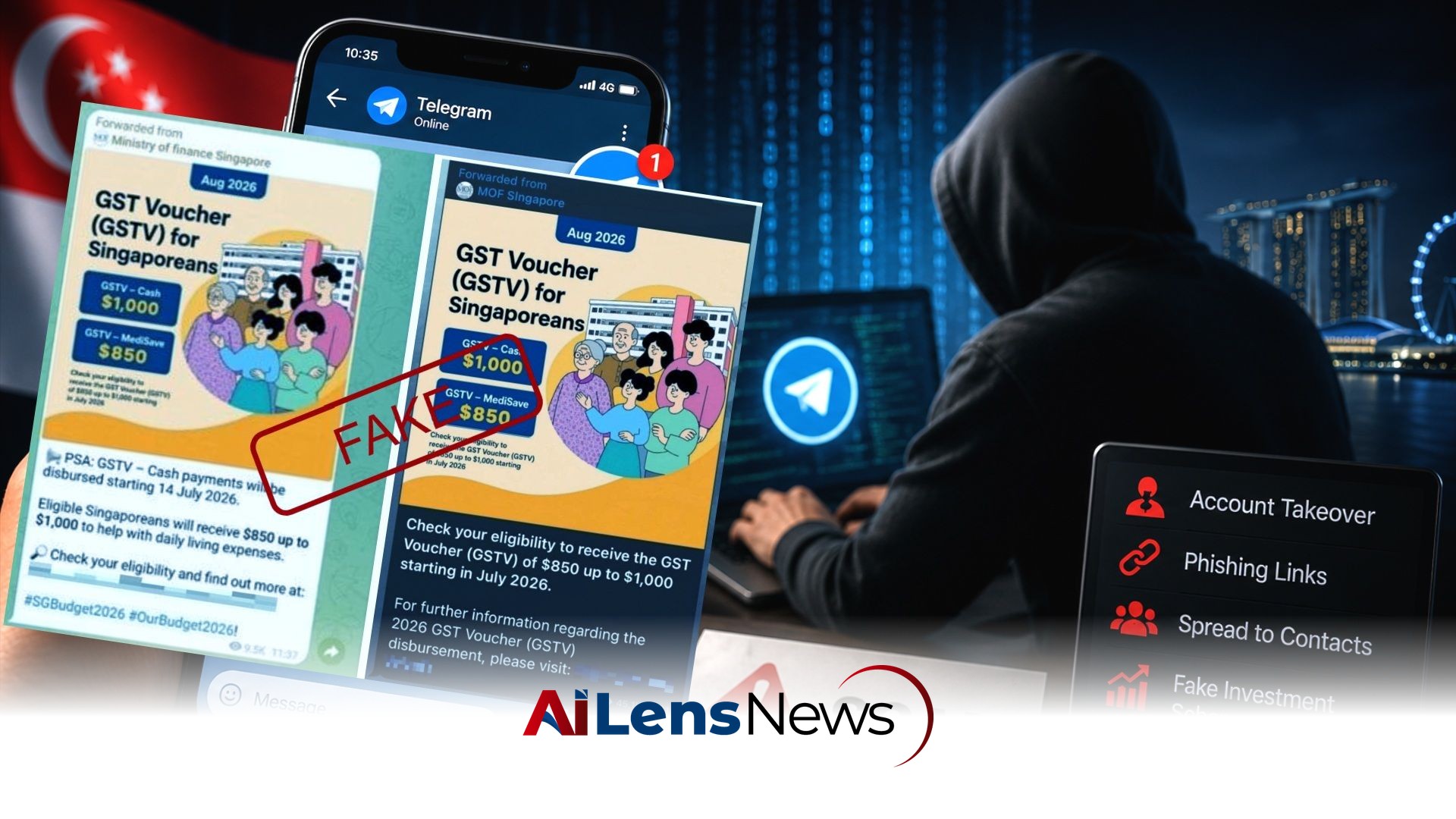


The Singapore Police Force has issued a warning about a new scam involving fraudulent GST Voucher messages on Telegram, leading to account takeovers and phishing attempts.
Singapore, Singapore Jul 18, 2026 ALN: The Singapore Police Force (SPF) has issued a warning regarding a resurgence of Telegram scams that exploit the public’s trust in government financial assistance programs, specifically targeting the Goods and Services Tax Voucher (GSTV) scheme. This advisory was disseminated on July 16, 2026, amidst growing concerns over the increasing sophistication of online scams that prey on vulnerable individuals.
The GSTV is a significant financial aid initiative implemented by the Singapore government aimed at providing financial relief to lower- and middle-income households. The scheme is designed to offset the Goods and Services Tax (GST) and alleviate the cost of living for citizens, particularly in light of rising prices and economic pressures. With the government’s commitment to supporting its citizens, the GSTV scheme has become a critical lifeline for many families.
Unfortunately, the popularity and importance of the GSTV scheme have made it a prime target for scammers. The scam typically begins with a deceptive Telegram message that includes an infographic designed to look official, alongside a fraudulent link that claims to assist users in checking their eligibility for GSTV payments. Once victims click on the link, they are prompted to provide sensitive personal information, including their mobile number, full name, and National Registration Identity Card (NRIC) number. More alarmingly, victims may also be asked for their Telegram verification code, which allows scammers to gain unauthorized access to their accounts.
Once the scammers have taken control of a victim’s Telegram account, they can exploit it to further their malicious activities. This includes sending phishing links to the victim’s contacts, who are likely to trust the messages because they appear to come from a known source. Additionally, victims may find themselves unwittingly added to Telegram groups that promote fraudulent investment schemes or other scams. The SPF has emphasized the urgent need for the public to remain vigilant against such tactics, especially as this particular scam has recently resurfaced.
In its advisory, the SPF made it clear that legitimate communications regarding GSTV payments will never require individuals to click on links or provide personal information through unofficial channels. For those Singaporeans who have already registered for the GSTV scheme, payments will be automatically disbursed if they meet eligibility criteria, without any need for additional action on their part. This assurance aims to alleviate any fears citizens may have regarding the security of their personal information.
Furthermore, the SPF highlighted that SMS notifications sent from the official government domain "gov.sg" are purely informational and will not request recipients to reply, click on links, or share any personal details. The Ministry of Finance (MOF) has also clarified that it does not operate any Telegram broadcast channels and will not reach out to individuals via Telegram regarding GSTV payments. All pertinent information will be communicated through the MOF’s official channels, ensuring that the public can verify the legitimacy of any communications they receive.
To combat the threat posed by these scams, the police have urged the public to enhance their digital security. One effective measure is to enable Telegram’s Two-Step Verification feature, which adds an additional layer of security to user accounts. This feature requires users to enter a verification code sent to their phone in addition to their password when logging in, making it more difficult for unauthorized individuals to gain access.
The SPF also recommends utilizing the ScamShield app, which is designed to help users identify and report scams, as well as activating banking security features such as two-factor authentication, transaction limits, and Money Lock, where applicable. These tools and practices are essential in creating a robust defense against potential scams and cyber threats.
Individuals are advised to exercise caution by avoiding links from unknown contacts and ensuring that any government-related websites they visit end with the suffix “.gov.sg” before entering any personal information. The ScamShield app and website can be valuable resources for checking the legitimacy of suspicious links, phone numbers, and messages. Most importantly, individuals should never share their Telegram verification codes or one-time passwords with anyone, as doing so can lead to account compromise.
Account takeover scams can have a rapid and widespread impact, as messages sent from hijacked accounts often come from individuals that victims already know. This familiarity can lead friends and family members to trust the sender without realizing that the account has been compromised. As a result, phishing links and fraudulent investment promotions can quickly spread to a wider audience, increasing the potential for financial loss among unsuspecting victims.
To mitigate these risks, it is crucial for individuals to adopt a cautious mindset when encountering unexpected messages that prompt them to click on links or share verification codes, even if the messages appear to originate from trusted contacts. Taking a few moments to verify the authenticity of such messages could prevent a scam from escalating and affecting others. The SPF encourages the community to engage in discussions about online safety and share knowledge about identifying and reporting scams.
In a related note, the Ministry of Finance has announced that approximately 1.5 million Singaporeans are set to receive GSTV cash payouts of up to S$850 in August, alongside additional MediSave top-ups for senior citizens, which can amount to as much as S$450. This financial assistance is part of the government’s ongoing efforts to alleviate the cost of living for its citizens, particularly in light of recent economic challenges. The announcement of these payouts has likely contributed to the increase in scam attempts, as scammers seek to exploit the heightened awareness and anticipation surrounding these financial aids.
The public’s awareness and understanding of these scams are critical in combating their prevalence. As digital communication continues to evolve, so too do the tactics employed by scammers. Thus, it is imperative for individuals to remain informed about potential threats and to adopt best practices for online safety. By fostering a culture of caution and verification, the community can work together to protect itself from the growing menace of cybercrime.
In addition, community organizations and local leaders play a vital role in spreading awareness about such scams. Workshops, seminars, and informational campaigns can serve as platforms to educate citizens on how to recognize scams and protect their personal information. By collaborating with law enforcement and tech companies, these organizations can help create a more secure digital environment.
Ultimately, the responsibility of combating scams does not lie solely with the authorities; it requires a collective effort from every member of society. By staying informed and vigilant, individuals can contribute to a safer online community, thereby reducing the risk of falling victim to scams and helping to protect others from similar threats.
To learn more about the latest developments in Crime & Law, stay updated with our exclusive reports and analyses on AiLensNews.

