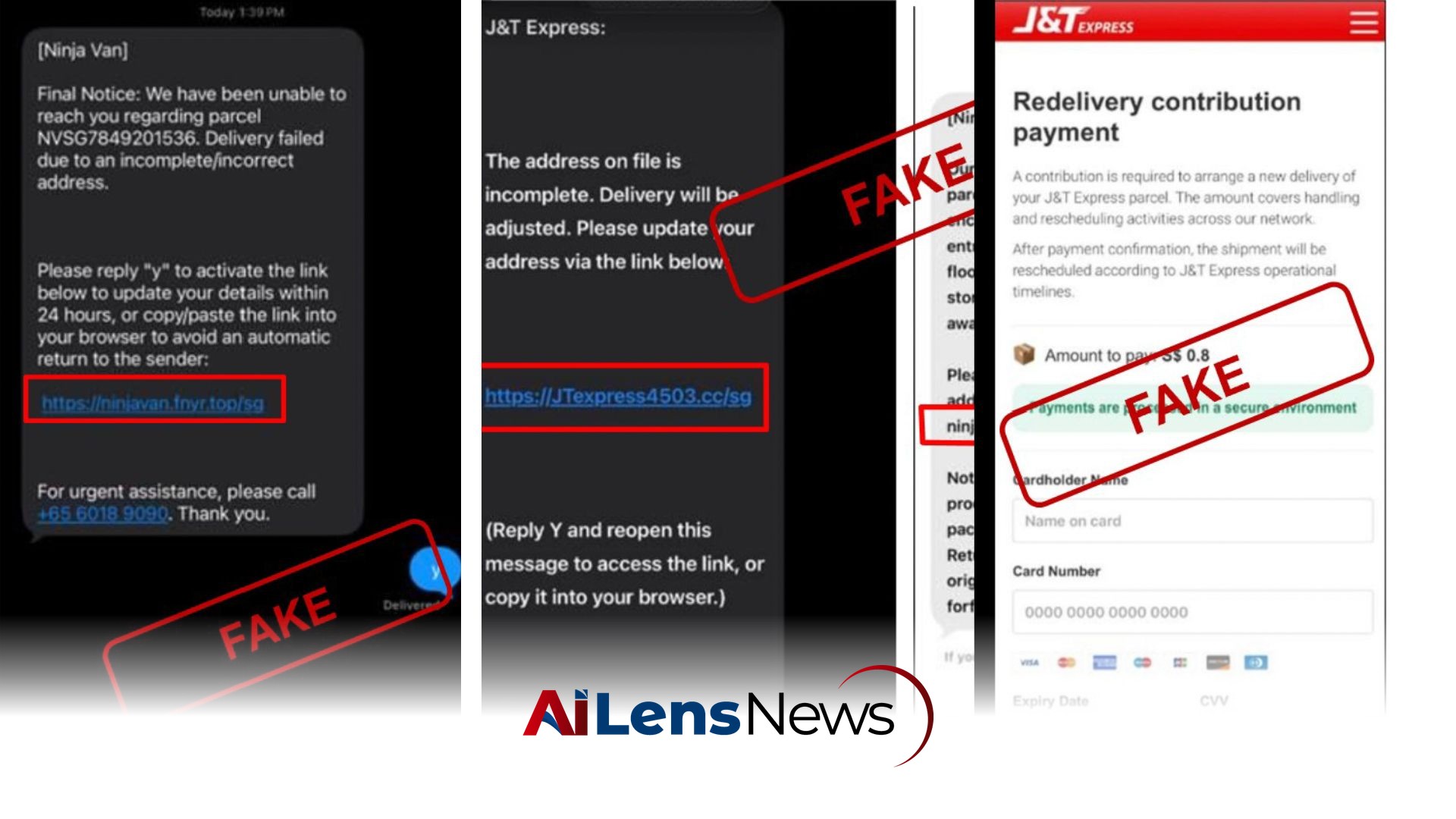


The Singapore Police Force has reported significant losses due to courier phishing scams, urging the public to verify delivery messages before responding.
Singapore, Singapore Jul 17, 2026 ALN: The Singapore Police Force (SPF) is warning the public about a rise in phishing scams disguised as parcel delivery problems after victims lost more than S$259,000 in less than three weeks. This alarming trend underscores the growing sophistication of cybercriminals who exploit everyday scenarios to deceive unsuspecting individuals.
SPF reported that 43 cases have been documented since June 24, with a staggering 20 reports received on July 13 alone. The scam typically initiates with what appears to be a routine delivery message, which many people might receive without thinking twice. This familiarity with delivery notifications makes it easier for scammers to manipulate their victims.
Victims of these scams receive an SMS from a number using the +212 country code, which is associated with Morocco, or an email from a seemingly random address that impersonates well-known courier companies such as Ninja Van or J&T Express. The message typically claims that a parcel cannot be delivered due to an invalid address and urges the recipient to update their details within a tight deadline, often 24 hours.
The link provided in the message directs victims to a counterfeit website designed to closely mimic the legitimate courier’s site. Once there, victims are prompted to pay a small redelivery fee, which usually ranges from S$0.06 to S$1.64. This seemingly minor expense can lead to devastating consequences. After victims enter their bank card details and approve the payment through their banking app or digital token, scammers gain unauthorized access to their card information. Alarmingly, in some instances, victims have found that their credit cards were added to payment services like Google Pay or Apple Pay without their knowledge.
Many victims only realize something is amiss when they notice unauthorized transactions on their bank or credit card statements. This delayed recognition of fraud highlights the need for increased vigilance and awareness regarding financial transactions.
In light of these incidents, the SPF is urging the public to exercise caution and take a moment to verify unexpected delivery messages, particularly those that evoke a sense of urgency. The police have issued several recommendations to help the public protect themselves from falling victim to such scams:
Add protection by downloading the ScamShield app, which helps identify and block scam messages. Additionally, enabling two-factor or multi-factor authentication and setting transaction limits for online banking can provide an extra layer of security.
Check suspicious messages, phone numbers, and website links through official ScamShield channels to ascertain their legitimacy before taking any action.
Inform authorities, family members, and friends about scam attempts and report any fraudulent bank transactions immediately to mitigate potential losses.
“Anyone with information on such scams may call the Police Hotline at 1800-255-0000 or submit information online at SPF noted, adding “If you require urgent Police assistance, please dial 999.” For further information on scams, members of the public can visit or call the ScamShield Helpline at 1799.
Parcel delivery notifications have become an integral part of daily life for many individuals, making them a convenient disguise for scammers. The prevalence of online shopping and the reliance on courier services have created an environment where such messages are commonplace, thus increasing the likelihood that individuals will let their guard down. A request for just a few cents may appear harmless, but it can be sufficient to compromise banking details, leading to much larger financial losses.
It is crucial for individuals to take a few extra seconds to verify a delivery message by checking the courier’s official app or website instead of following links sent via text or email. This small pause could potentially save thousands of dollars and prevent the distress that comes from being a victim of fraud.
This rise in courier phishing scams is part of a broader trend of increasing cybercrime in Singapore. The country has been recognized for its robust digital infrastructure and high internet penetration rate, making it a prime target for cybercriminals. The SPF has been actively working to combat these threats through public awareness campaigns and the development of tools such as the ScamShield app, which aims to empower individuals to protect themselves against various forms of scams.
In recent years, Singapore has seen a significant uptick in reported scams, with losses amounting to millions of dollars. The government has responded by enhancing law enforcement capabilities and collaborating with tech companies to improve cybersecurity measures. However, as technology evolves, so too do the tactics employed by cybercriminals, necessitating ongoing vigilance from both authorities and the public.
As part of its efforts to combat cybercrime, the SPF has emphasized the importance of community engagement in reporting suspicious activities. By fostering a culture of awareness and proactive reporting, the police hope to create a more resilient society that is better equipped to deal with the challenges posed by cyber threats.
In conclusion, the recent surge in courier phishing scams serves as a stark reminder of the need for continuous vigilance in the digital age. Individuals must remain informed about the tactics employed by scammers and take proactive measures to safeguard their personal and financial information. By doing so, they can help to protect themselves and contribute to the larger effort of combating cybercrime in Singapore.
Furthermore, the implications of these scams extend beyond individual losses. They represent a significant challenge to the overall trust in digital transactions and e-commerce, which are vital components of Singapore's economy. As more consumers engage in online shopping, the potential for scams increases, leading to a need for enhanced consumer education and protective measures from businesses and financial institutions alike.
Businesses, particularly those in the logistics and delivery sector, must also play a role in combating these scams. By implementing more robust verification processes and educating their customers about the risks of phishing, they can help reduce the likelihood of individuals falling victim to these schemes. For instance, companies could send official communications through their verified apps or email addresses, making it easier for consumers to identify legitimate messages.
In addition, the collaboration between law enforcement and technology companies is crucial in the fight against cybercrime. With advancements in artificial intelligence and machine learning, there are opportunities to develop more sophisticated tools that can detect and prevent scams before they reach potential victims. This proactive approach could significantly reduce the incidence of such scams and protect consumers from financial harm.
As the digital landscape continues to evolve, it is imperative that both individuals and institutions remain vigilant and proactive in their efforts to combat cybercrime. The rise of courier phishing scams serves as a reminder that while technology can facilitate convenience and efficiency, it also presents new challenges that require a collective response from society as a whole.
To learn more about the latest developments in Crime & Law, stay updated with our exclusive reports and analyses on AiLensNews.

