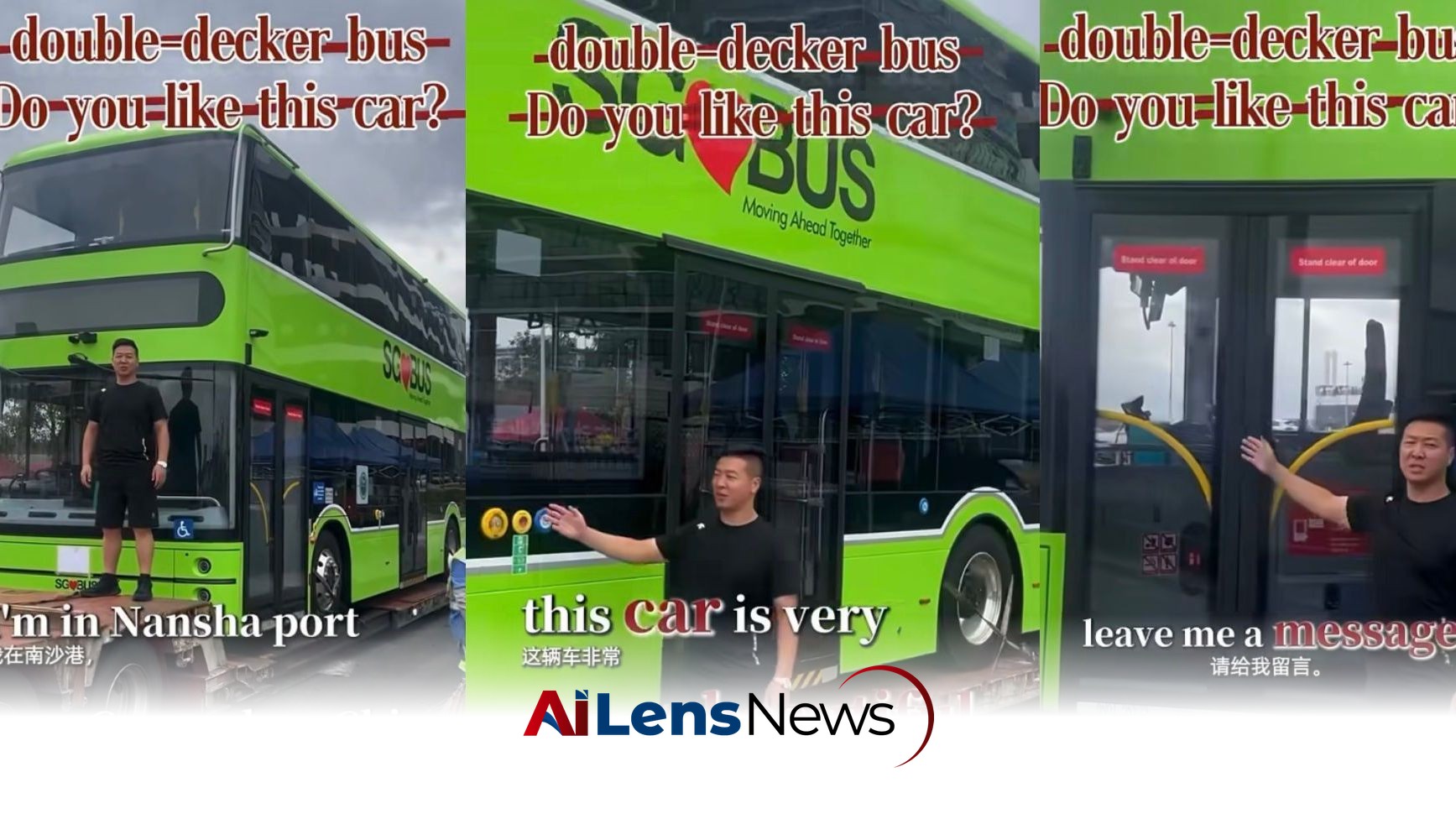


A Singapore double-decker bus has been spotted for sale in Guangzhou, China, igniting curiosity and amusement among netizens after a promotional video surfaced online.
Singapore, Singapore Jul 24, 2026 ALN: A Singapore double-decker bus has recently captured the attention of netizens after being featured in a promotional video from a vehicle center in Guangzhou, China. The bus, which is a familiar sight on Singapore's roads, has stirred curiosity and excitement among online users, prompting discussions about the implications of such vehicles being available outside their country of origin.
In a video posted on July 15 by an Instagram account, a man named "Peter" introduces himself while standing at the Port of Nansha, showcasing the vibrant green bus emblazoned with the slogan "Moving Ahead Together". This slogan is representative of Singapore's commitment to progress and innovation in public transport, a sector that has been continually evolving to meet the needs of its citizens.
Peter enthusiastically describes the bus, saying, "This is a bus. Do you like this car? This car is very beautiful. If you want to own this car, leave me a message. Thank you." His promotional pitch highlights not only the aesthetic appeal of the bus but also its practical features, which include two levels that provide ample space for passengers. The design of double-decker buses has been a hallmark of urban public transport in many cities around the world, including London and Singapore, as they maximize passenger capacity while minimizing road congestion.
According to reports, Peter is a car dealer at the China Nansha International Auto Centre. The bus in question likely originated from a Chinese manufacturer and may be part of a larger order of over 500 buses placed by Singapore's Land Transport Authority (LTA) last December. This order signifies Singapore's ongoing efforts to modernize its public transport fleet, ensuring that it remains efficient, reliable, and environmentally friendly. The fact that these buses are now being showcased in China raises interesting questions about the global vehicle supply chain and the potential for cross-border vehicle sales.
The sight of a Singapore bus in China has left many online users both astonished and amused. One Instagram user commented, "SMRT bus? In Guangzhou? Hmm, interesting, I’ll notice that next time to Guangzhou," while another quipped, "Wait, we can own Singapore buses now?" Such reactions reflect a blend of surprise and intrigue, as many people may not have considered the possibility of Singapore's public transport vehicles making their way into the Chinese market.
When asked if he was delivering the bus to Singapore, Peter responded with a series of raised hands emojis, leaving the question open-ended. This ambiguity has further fueled speculation among viewers about whether Singapore buses might soon be available for purchase by private individuals or businesses in China. The concept of owning a piece of Singapore's public transport system is likely to appeal to collectors or enthusiasts of unique vehicles.
Some commenters even questioned the legality of selling "Singapore buses". However, a clarification on Facebook noted that Peter was likely referring to the brand and model of the bus rather than selling the bus itself. This distinction is crucial, as it underscores the complexities involved in international vehicle sales, including regulations regarding branding, ownership, and the rights associated with public transport vehicles.
This unexpected appearance of a Singapore bus in China has sparked a lively discussion online, highlighting the unique cross-border dynamics of vehicle sales and branding. The phenomenon reflects broader trends in globalization, where products and services are increasingly crossing national borders, leading to a blending of cultures and markets.
As the conversation continues, many are left wondering about the future of such vehicles and their availability in different markets. The implications of this event extend beyond mere curiosity; they may signal a shift in how public transportation vehicles are marketed and sold internationally. The potential for Singapore's public transport vehicles to find new homes abroad could open up new revenue streams for manufacturers and contribute to the global exchange of transportation solutions.
In related news, SMRT bus captains were recently honored as road safety heroes at the SRSC Gala 2025, showcasing the ongoing commitment to safety and excellence in public transportation. This recognition emphasizes the importance of responsible driving and the role of bus captains in ensuring the safety of passengers. Such initiatives highlight the dedication of Singapore's public transport system to maintaining high standards of service and safety, which is a critical aspect of public trust and satisfaction.
The discussion surrounding the sale of Singapore buses in China also touches on broader issues of public transport sustainability and innovation. As cities around the world grapple with traffic congestion and environmental concerns, the demand for efficient and eco-friendly public transportation solutions is likely to grow. Singapore's experience in developing a robust public transport system could serve as a model for other countries looking to enhance their own transport infrastructure.
Moreover, the visibility of Singapore's buses in China could foster greater interest in the country's transport technologies and practices. This could lead to collaborative efforts between Singaporean and Chinese companies in the transport sector, paving the way for joint ventures or partnerships aimed at improving public transport systems in both nations.
In conclusion, the sighting of a Singapore double-decker bus in China is more than just an amusing anecdote; it represents the interconnected nature of today's global economy. The reactions from online users reflect a blend of curiosity and excitement about the possibilities that arise when national boundaries blur in the realm of technology and transportation. As discussions about the future of public transport continue, the implications of this event may resonate well beyond social media, influencing how vehicles are perceived, marketed, and utilized across different markets.
To learn more about the latest developments in Crime & Law, stay updated with our exclusive reports and analyses on AiLensNews.

