

A recent report reveals that most buyers of million-dollar HDB flats in Singapore paid no cash over valuation, indicating a shift in the housing market dynamics.
Singapore, Singapore Jul 20, 2026 ALN: Buying a million-dollar HDB resale flat doesn’t always mean paying a hefty cash premium. A new PropNex survey found that nearly seven in ten buyers of million-dollar HDB resale flats in 2025 paid no cash over valuation (COV).
Many of these record-priced homes were sold at their assessed market value instead of above it. This trend indicates a significant shift in the perception of property values within Singapore's housing market, particularly concerning HDB flats, which have traditionally been viewed as more affordable housing options. The findings challenge the idea that million-dollar resale flats are driven by buyers willing to pay large cash premiums. Instead, the survey suggests the market has accepted higher valuations for some sought-after flats, as reported by The Business Times.
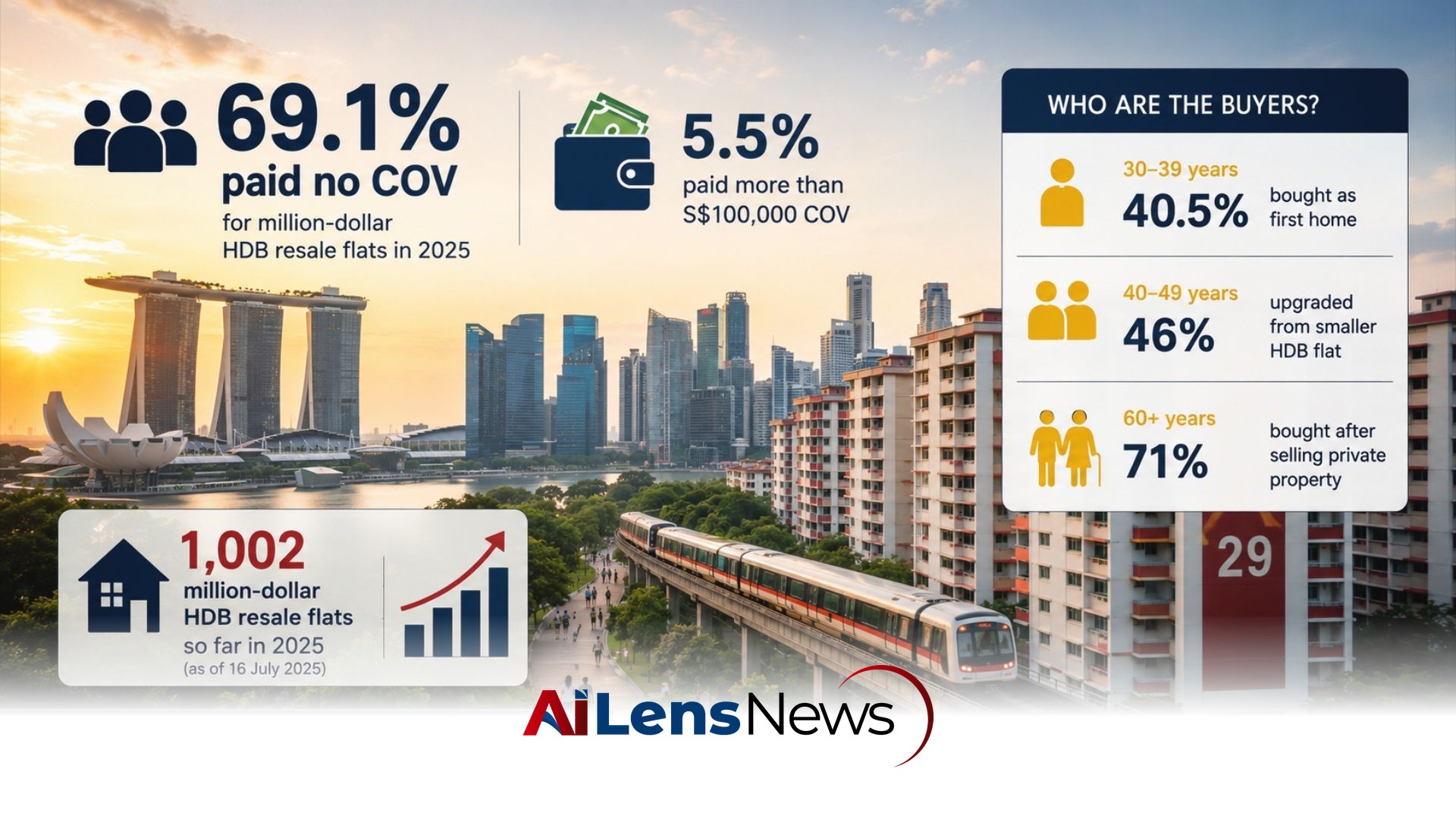
According to PropNex, 69.1% of buyers paid no COV at all. Another 11.8% paid less than S$40,000 in COV, while around 6.4% paid between S$40,000 and S$80,000. A smaller proportion, 3.6%, paid between S$80,000 and S$100,000, and about 5.5% paid more than S$100,000. There were also buyers in another 3.6% of transactions who were unsure of the COV paid.
COV applies when the agreed resale price exceeds the HDB valuation, and the difference must be paid fully in cash. If the resale price matches the valuation, no COV is required. This mechanism has been a crucial aspect of Singapore’s real estate market, as it directly affects how buyers negotiate and finalize their purchases.
The survey covered 110 million-dollar HDB resale transactions completed by PropNex salespersons in 2025. Prices ranged from S$1 million to about S$1.7 million. Most sales took place in Toa Payoh, Bukit Merah, Kallang Whampoa, Queenstown, and Clementi, areas known for their strategic locations and amenities, which contribute to their desirability among buyers.
Demographic analysis of the buyers revealed that people aged between 30 and 49 accounted for about 71% of the transactions tracked. Among buyers aged 30 to 39, approximately 40.5% purchased a million-dollar resale flat as their first home. In the 40-49 age group, 46% upgraded from a smaller HDB flat, indicating a trend of upward mobility and investment in larger living spaces as families grow.
Older buyers also formed a notable part of the market. Those aged 60 and above accounted for 12.7% of sales, with about 71% of these buyers purchasing after selling their private homes. PropNex noted that many of these older buyers were using the move to free up housing wealth while settling into a replacement home for retirement. This reflects a broader trend in Singapore's housing market, where older homeowners are downsizing or relocating to more suitable living arrangements as their needs change.
The survey also found that many buyers in their 30s and 40s had monthly household incomes exceeding S$10,000. This demographic trend suggests that younger generations are experiencing increased financial stability, allowing them to invest in higher-value properties. Factors contributing to this financial capability include accumulated savings, substantial Central Provident Fund (CPF) balances, and career progression, all of which enhance their purchasing power in the competitive real estate market.
The resale market continues to produce new million-dollar transactions at a brisk pace. From January 1 to July 16 in 2025, 1,002 HDB resale flats had already crossed the S$1 million mark. This puts 2026 on course to match or even exceed the record 1,593 such transactions recorded throughout 2025, according to PropNex. This rapid increase in million-dollar transactions signifies a transformation in the market where high-value HDB flats are becoming commonplace rather than anomalies.
The agency attributed this demand to changing lifestyles, rising household wealth, and different housing needs across various life stages. As Singapore's economy grows and evolves, so too do the preferences and requirements of its citizens regarding housing. The government’s efforts to enhance public housing and the overall quality of life in urban areas have also played a significant role in driving this trend.
Furthermore, PropNex emphasized that keeping enough homes available across different price ranges will be crucial. It is vital that households with varying budgets can still find suitable housing options. The issue of housing affordability remains a pressing concern in Singapore, especially as property prices continue to rise. Ensuring that there are affordable options available across the spectrum will help maintain social stability and prevent economic disparities from becoming entrenched.
The survey suggests that the bigger story isn’t just about buyers throwing cash around. It’s about how parts of Singapore’s resale market have matured to the point where seven-figure valuations are becoming accepted by both buyers and valuers. This acceptance indicates a shift in the market's dynamics, where traditional notions of property value are being redefined in light of current economic conditions and buyer expectations.
Keeping housing affordable across every price segment will matter just as much as tracking the next resale record. Policymakers and stakeholders in the housing market will need to consider these trends carefully to ensure that the housing landscape remains accessible and equitable for all segments of the population.
In recent years, the Singaporean government has introduced various measures to ensure that the housing market remains stable and affordable. These include initiatives aimed at increasing the supply of public housing, enhancing the quality of existing flats, and providing financial assistance to first-time buyers. The government's focus on building more affordable housing options reflects its commitment to ensuring that homeownership remains a realistic goal for Singaporeans across different income levels.
Additionally, the government has also been proactive in monitoring the property market closely to prevent overheating and to ensure that prices do not spiral out of control. By implementing cooling measures when necessary, the authorities aim to maintain a balanced market that supports both buyers and sellers. This approach is particularly important given the rising prices of properties in recent years, which have led to concerns about affordability and access to housing for lower-income families.
As the landscape of HDB flats evolves, it is essential to recognize the cultural and social significance of these homes in Singapore. HDB flats are not just properties; they represent a way of life for many Singaporeans. They are often seen as the cornerstone of the nation’s social fabric, providing affordable housing and fostering community bonds. The changing dynamics of the HDB market, including the rise of million-dollar flats, may challenge traditional perceptions but also underscore the evolving aspirations of Singaporeans.
In conclusion, the findings from the PropNex survey illustrate a notable shift in the HDB resale market, where million-dollar transactions are becoming increasingly common and accepted. As buyers adapt to higher valuations and changing market conditions, it remains critical for stakeholders to ensure that the housing market remains inclusive and accessible for all Singaporeans. The ongoing evolution of the HDB market will undoubtedly continue to shape the future of housing in Singapore, influencing both policy decisions and the lived experiences of its residents.
To learn more about the latest developments in Economy, stay updated with our exclusive reports and analyses on AiLensNews.

