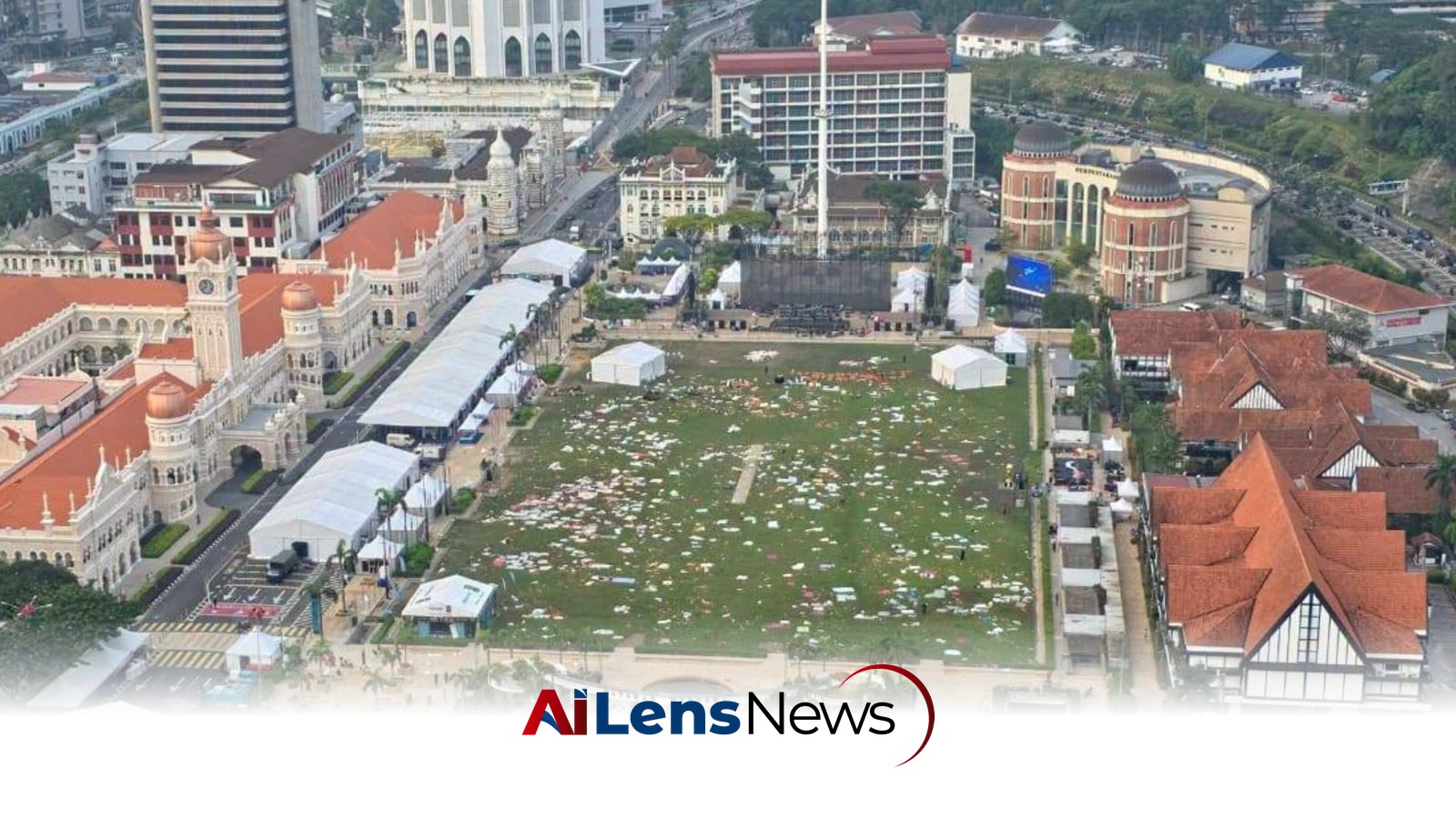


The aftermath of the FIFA World Cup final at Dataran Merdeka has sparked a debate among Malaysians about whether the solution to littering lies in better facilities or improved public habits.
Singapore, Singapore Jul 24, 2026 ALN: The recent debate over littering at Dataran Merdeka, particularly following the live broadcast of the 2026 FIFA World Cup final, has reignited discussions about civic responsibility and the adequacy of waste disposal facilities in public spaces. Minister in the Prime Minister’s Department (Federal Territories) Hannah Yeoh commended the efforts of the Kuala Lumpur City Hall (DBKL) workers who diligently cleaned up the area after the event. However, her remarks also served as a reminder to the public about the importance of proper waste disposal and the responsibilities of individuals in maintaining cleanliness in shared spaces.
Yeoh's emphasis on civic responsibility is not merely a call for cleaner streets, but a broader appeal to the national dignity of Malaysia. She highlighted that while taxpayers are entitled to public services, littering not only undermines the aesthetic and environmental integrity of the nation but also places an unnecessary burden on public workers who are tasked with cleaning up after events. This sentiment reflects a growing concern among civic leaders about the relationship between public behavior and national pride.
The issue of littering in Malaysia is not new and has been a persistent challenge in urban areas, particularly in high-traffic locations like Dataran Merdeka, which is a historical and cultural landmark in Kuala Lumpur. The square has been the site of numerous significant events, including independence celebrations and various public gatherings. As such, it attracts large crowds, making waste management a critical concern. The influx of visitors during major events often leads to an increase in litter, raising questions about the adequacy of existing waste management systems.
In the wake of Yeoh's comments, a variety of opinions emerged on social media platforms, particularly X (formerly known as Twitter). Some users pointed to the lack of adequate trash disposal facilities during the event as a contributing factor to the litter problem. One user suggested that the DBKL should have placed trash bins every 10 meters to accommodate the large number of attendees. This perspective underscores a common argument that the physical infrastructure of waste disposal plays a critical role in influencing public behavior. The suggestion that auxiliary police should issue fines to those caught littering reflects a desire for stricter enforcement of littering laws as a deterrent against irresponsible behavior.
On the other hand, a significant number of respondents argued that the issue is less about the availability of bins and more about the attitudes and mentality of the individuals attending such events. Some emphasized that civic mentality is paramount, asserting that responsible citizens should be willing to hold onto their rubbish until they can find an appropriate place to dispose of it. This perspective advocates for a cultural shift towards greater personal accountability and respect for communal spaces. The idea that individuals should carry their waste home, even if it is inconvenient, aligns with practices observed in various countries where public littering is less prevalent. Countries like Japan and Taiwan exemplify this cultural norm, where individuals are often expected to take their waste with them, fostering a sense of responsibility towards cleanliness.
Interestingly, the discussion also touched on historical precedents that have influenced current waste management practices. A notable example cited was the aftermath of the 1995 Tokyo sarin gas attacks perpetrated by the Aum Shinrikyo cult, which led to a significant reduction in the number of public trash cans in Japan. This decision was made as a security measure to prevent similar incidents from occurring. The implications of such historical events highlight the delicate balance that authorities must maintain between public convenience and safety. In Malaysia, while the context may differ, the principle remains the same: the presence of public trash cans must be weighed against potential risks. Security concerns, especially in crowded areas, can complicate waste management strategies and necessitate a careful approach to infrastructure planning.
Moreover, the notion that trash generated by individuals is neither toxic nor grotesque raises a philosophical question about public behavior and personal responsibility. Many respondents pointed out that individuals often generate waste that is manageable and should not be discarded carelessly. Holding onto rubbish until a suitable disposal option is available is not only a sign of personal responsibility but also a reflection of a more profound respect for the environment and community. This argument aligns with global trends towards sustainability and environmental stewardship, where individuals are encouraged to minimize waste and dispose of it responsibly. The push for reducing single-use plastics and promoting recycling initiatives further emphasizes the need for a cultural shift in how waste is perceived and managed.
Another user shared their experience of visiting Taiwan, where they noted a lack of public trash disposal facilities. This observation points to a cultural difference in waste management practices, where individuals are encouraged to take their waste home instead of relying on public bins. Such cultural norms can significantly influence public behavior regarding littering and waste disposal. The contrast between Malaysia and Taiwan serves as a case study in how societal attitudes towards waste can shape public spaces. In Taiwan, the government has implemented strict waste disposal laws, including fines for littering, which have contributed to a cleaner environment and a more responsible citizenry.
Despite the various opinions expressed, the underlying theme of this debate is the need for a comprehensive approach to waste management in public spaces. While increasing the number of trash cans may provide a short-term solution, fostering a culture of civic responsibility is essential for long-term change. This involves not only improving infrastructure but also engaging in public education campaigns that promote responsible waste disposal and environmental stewardship. Educational initiatives can play a crucial role in shaping public attitudes and behaviors, encouraging individuals to take pride in their communities and actively participate in maintaining cleanliness.
Furthermore, the role of public events in shaping community behavior cannot be understated. Large gatherings, such as the FIFA World Cup final viewing, provide a unique opportunity to engage the public in discussions about civic responsibility. Event organizers, local governments, and community leaders can collaborate to create initiatives that encourage attendees to act responsibly, such as providing information on waste disposal options or organizing clean-up activities post-event. These initiatives can serve as a platform for promoting civic engagement and fostering a sense of community ownership over public spaces.
In conclusion, the debate over littering at Dataran Merdeka encapsulates broader issues of civic responsibility, public infrastructure, and cultural attitudes towards waste disposal. As Malaysia continues to develop and host significant events, addressing these concerns will be crucial for maintaining the dignity of public spaces and fostering a culture of respect among citizens. Ultimately, the responsibility to keep public areas clean lies not only with the authorities but also with each individual who shares these spaces. A collective effort towards civic responsibility, supported by adequate infrastructure and public education, can lead to a cleaner and more sustainable environment for all.
To learn more about the latest developments in Society & Social Issues, stay updated with our exclusive reports and analyses on AiLensNews.

