

The discussion surrounding George Washington's ownership of slaves at his Philadelphia residence raises critical questions about America's historical narrative and its implications today.
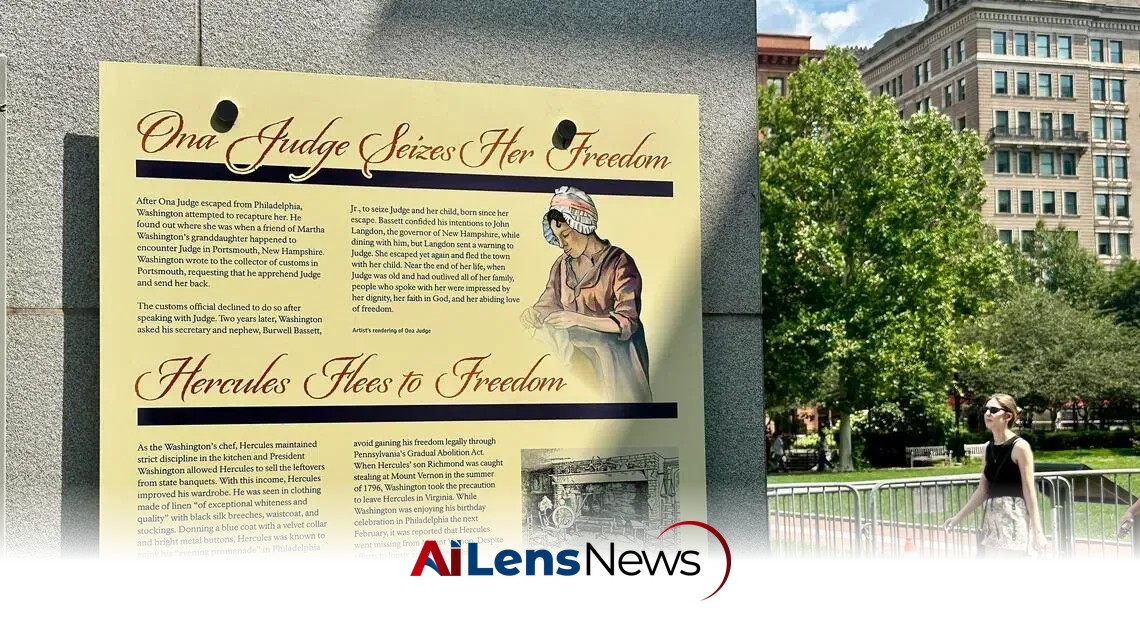
Singapore, Singapore Aug 16, 2026 ALN: The afternoon sun filters into the cheerful, red-brick memorial that marks the spot where once stood the home of George Washington, America’s first president. Visitors stream in, pausing at the panels that describe the presidency in its infancy. One corner draws particular attention. Some shrug, move on. Others linger, break into conversation.
The President’s House exhibit in Philadelphia reveals that George Washington owned nine slaves while living there, sparking debate on how slavery is presented in American history. This revelation is particularly poignant as the nation approaches its 250th birthday, a time when many are reflecting on the complexities of American identity. The legacy of slavery is not merely a historical footnote; it is a fundamental part of the narrative that shaped the United States, influencing social, economic, and political structures that persist to this day.
The Trump administration pushed to revise museum exhibits, emphasizing national greatness and downplaying slavery’s role in the nation’s history. This initiative was part of a broader trend that sought to reshape how American history is taught and understood, often prioritizing a narrative that glorifies the nation’s founding while minimizing its darker chapters. This led to significant controversy, as many believe that such revisions misrepresent the past and fail to acknowledge the profound impact of slavery on American society.
Critics of these revisions argue that they risk erasing the lived experiences of enslaved individuals and the systemic racism that has persisted long after the abolition of slavery. The historical narrative surrounding figures like George Washington is particularly contentious; while he is often celebrated for his leadership and contributions to the founding of the nation, his role as a slave owner complicates this legacy. The juxtaposition of Washington’s ideals of liberty and justice with his participation in the institution of slavery raises critical questions about the values upon which the United States was built.
This controversy is part of broader culture wars over how America’s history and social issues are taught and represented in public institutions. The ongoing debates reflect a nation grappling with its past and the legacies that continue to shape its present. In recent years, the discourse around race and history has intensified, with movements advocating for racial justice and historical accuracy gaining momentum.
These cultural conflicts are not new; they echo through the annals of American history, from the abolitionist movement to the Civil Rights era, and into contemporary discussions surrounding systemic racism and reparative justice. The debates often center around who gets to tell the story of America and whose voices are included in the national narrative. As museums and educational institutions grapple with these questions, they must navigate the delicate balance between honoring historical figures and acknowledging their flaws.
Museums play a crucial role in shaping national identity and understanding history. As institutions that educate the public, they have the responsibility to present a comprehensive view of the past, including uncomfortable truths. The presentation of slavery in American history is essential for fostering a more inclusive understanding of the nation's narrative. This responsibility extends beyond mere acknowledgment; it requires a commitment to contextualizing the experiences of enslaved individuals and recognizing the long-lasting impacts of slavery on American society.
As America reflects on its history, the discussions surrounding George Washington’s White House and the legacy of slavery remind us that the past is not just a series of events but a living part of our national consciousness. The way we choose to remember and represent this history will influence future generations. Engaging with the complexities of our past allows for a more nuanced understanding of contemporary issues related to race, justice, and equality.
Furthermore, as the nation approaches its 250th anniversary, it is crucial to engage in open dialogues about its history, ensuring that all voices are heard and acknowledged. This includes recognizing the contributions of African Americans and other marginalized groups who have been integral to the nation’s development but often overlooked in mainstream narratives. By doing so, we can work towards a more equitable society that honors the diverse tapestry of American history.
In conclusion, the legacy of slavery in America is a complex and often painful topic. It challenges us to confront uncomfortable truths about our past while striving for a more inclusive future. As the nation continues to evolve, the conversations surrounding historical representation and the impact of slavery will remain vital in shaping a collective identity that is honest, reflective, and forward-looking. The ongoing debates serve as a reminder that history is not static; it is an evolving dialogue that requires participation from all corners of society.
To learn more about the latest developments in Crime & Law, stay updated with our exclusive reports and analyses on AiLensNews.

