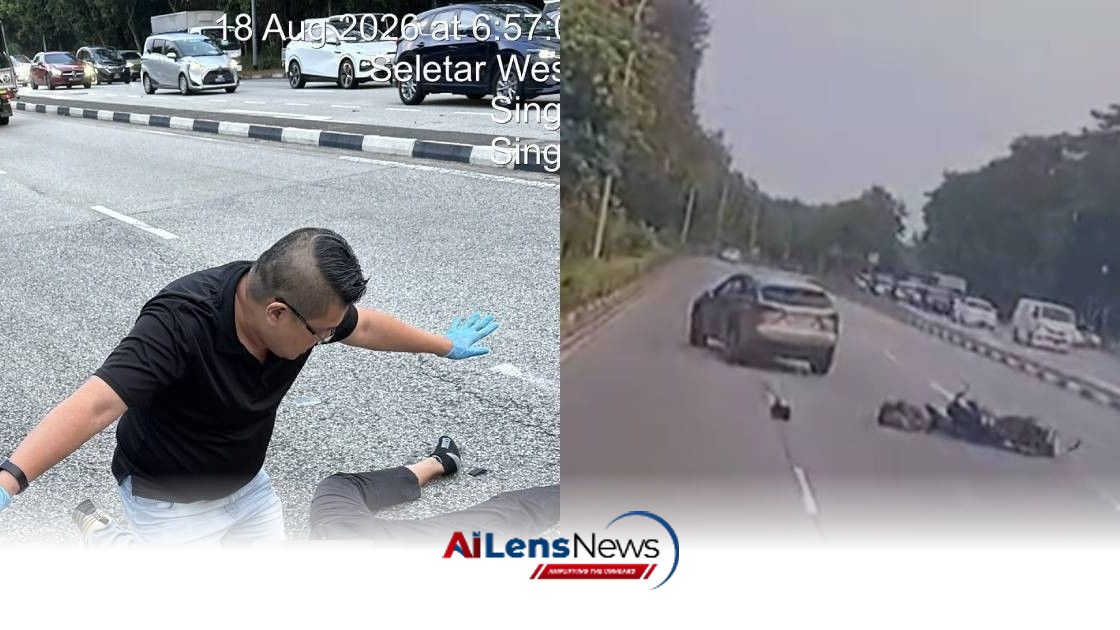



Martin Wong, a first responder at a fatal accident, addresses online criticism regarding the death of a motorcyclist he attempted to save.
Singapore, Singapore Aug 22, 2026 ALN: When Martin Wong encountered a serious traffic accident along Seletar West Link on the evening of August 18, he immediately stopped to assist. While waiting for the ambulance to arrive, he assessed the condition of the injured motorcyclist and performed cardiopulmonary resuscitation (CPR) on him. This act of quick thinking and immediate response is often the difference between life and death in emergency situations, showcasing the critical role that bystanders can play in the aftermath of a traumatic event.
Tragically, the 25-year-old motorcyclist later succumbed to his injuries in the hospital. This unfortunate outcome has raised significant concerns and questions about the circumstances surrounding the incident. Following the incident, footage circulated online, leading some to question whether the motorcyclist's death was a result of the accident or the CPR administered by Wong. Such inquiries are not uncommon in the wake of tragic accidents, as the public often seeks to understand the factors that contribute to life-threatening situations.
In response to the criticism, Wong expressed understanding for those who only viewed snippets of the incident. “They may only be seeing one part of what had happened,” he explained. This highlights a broader issue in today's digital age, where social media and online platforms can sometimes distort the context of an event. The rapid dissemination of video clips often leads to public speculation and judgment based on limited information, which can have profound implications for those involved.
Despite facing scrutiny, Wong holds no ill will towards those questioning the situation, emphasizing the need for compassion in light of the tragedy. “A young man lost his life, and there is a family grieving for him,” he stated. This perspective underscores the human element often lost in discussions surrounding accidents and emergencies. The emotional toll on families and communities is significant, and it is essential to approach such matters with sensitivity and empathy.
Wong hopes to foster a better understanding of first aid and the critical actions required in the initial moments of an emergency. He recounted the many times he has assisted others, noting that certain incidents linger in one’s memory, especially when the outcomes are not as hoped. “But I also know that I cannot control the final outcome of every emergency,” he remarked. This acknowledgment reflects a reality that many first responders face; despite their best efforts, they cannot guarantee a positive outcome in every situation, which can be a heavy burden to bear.
Despite the challenges and the emotional weight of such experiences, Wong remains committed to helping others. “If you are trained, the situation is safe, and somebody needs help, I still believe we should be willing to step forward,” he affirmed. This statement serves as a rallying cry for individuals to take action in emergencies, emphasizing the importance of preparedness and the willingness to assist those in need.
As an adjunct professor and director of Xin Yuan Community Care, Wong also volunteers as a first aid trainer and is actively involved in community emergency preparedness. His role in the community extends beyond immediate responses to emergencies; he is also dedicated to educating others about the importance of first aid training and emergency response. This commitment is crucial, as it helps to build a culture of preparedness that can save lives.
Wong advocates for broader public education on basic first aid, CPR, and the use of Automated External Defibrillators (AEDs). “You don’t need to be a healthcare professional to make a difference,” he said. “What matters is knowing what you can do, staying within your ability, and being prepared to act when somebody needs help.” This message is vital in a society where the ability to respond effectively to emergencies can significantly impact survival rates and outcomes for victims.
Wong's experience highlights the importance of community readiness and the role of Good Samaritans in emergency situations. The actions of individuals like Wong can inspire others to take training courses and become more involved in their communities, fostering a sense of responsibility and empowerment. As communities become more prepared, the potential for positive outcomes in emergencies increases, ultimately leading to a safer environment for everyone.
In conclusion, the tragic incident along Seletar West Link serves as a reminder of the unpredictability of life and the importance of being prepared for emergencies. Wong’s commitment to first aid education and community support exemplifies the spirit of the Good Samaritan, encouraging others to step forward in times of crisis. As society continues to grapple with the implications of such tragedies, it becomes increasingly clear that fostering a culture of preparedness and compassion is essential for the well-being of all individuals and communities.
To learn more about the latest developments in Local & Regional, stay updated with our exclusive reports and analyses on AILensNews.

