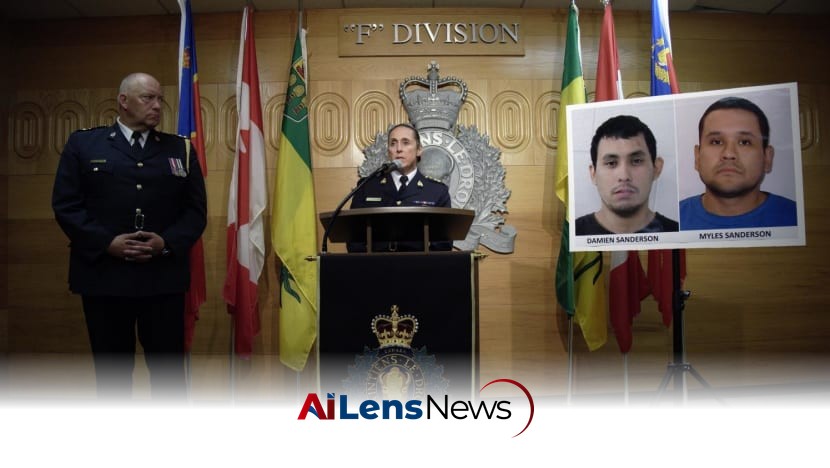


Canadian police are searching for two suspects involved in a stabbing spree that left 10 dead and 15 injured in Saskatchewan, raising concerns over community safety.
Singapore, Singapore Sep 5, 2022 ALN: WELDON, Saskatchewan: Canadian police are actively searching for two suspects connected to a horrific stabbing spree that resulted in the deaths of 10 individuals and injuries to at least 15 others, primarily within an indigenous community early Sunday. The stabbings, which occurred across 13 crime scenes, mark one of the deadliest mass killings in modern Canadian history, an event that is sure to resonate throughout a nation that is generally unaccustomed to such violence.
This tragic event has brought to the forefront issues surrounding community safety, mental health, and the impact of substance abuse, particularly in indigenous communities. The Federation of Sovereign Indigenous Nations, which represents 74 First Nations in Saskatchewan, has pointed out a potential connection between the attacks and the ongoing struggles with illegal drugs in their communities. This highlights a broader societal issue that has plagued many indigenous populations across Canada, where the effects of colonialism, systemic poverty, and marginalization have contributed to cycles of violence and trauma.
Prime Minister Justin Trudeau expressed his shock and sorrow, stating, "I am shocked and devastated by the horrific attacks today. As Canadians, we mourn with everyone affected by this tragic violence, and with the people of Saskatchewan." Trudeau's response underscores the national significance of the incident, as it has not only affected the immediate victims and their families but has also sent ripples of fear and grief throughout the country.
Authorities have identified the two suspects as Damien Sanderson, 31, and Myles Sanderson, 30, releasing their photographs and descriptions but withholding further details regarding their motives or the identities of the victims. The police investigation is ongoing, and the lack of information regarding the suspects' motivations has left many in the community and beyond searching for answers. Rhonda Blackmore, commanding officer of the Saskatchewan Royal Canadian Mounted Police, stated during a news conference, "It appears that some of the victims may have been targeted, and some may be random. So to speak to a motive would be extremely difficult at this point in time." This ambiguity has led to increased anxiety within the affected communities, as residents grapple with the unpredictability of violence.
Among the deceased was a mother of two, as reported by local media, citing her former partner. Michael Brett Burns lamented, "It's sick how jail time, drugs, and alcohol can destroy many lives." His comments reflect a painful truth that many families face in the wake of such tragedies, where the intersection of substance abuse and violence leads to devastating outcomes. The loss of life in this incident is not only a personal tragedy for the victims' families but also a communal loss for the James Smith Cree Nation, which has been significantly impacted by the violence.
In May, Myles Sanderson was listed as "unlawfully at large" by Saskatchewan Crime Stoppers, although no further information was provided regarding the reasons for his status. This raises questions about the effectiveness of the justice system in managing individuals who may pose a risk to public safety. The community is left to wonder how someone with a history that includes being unlawfully at large could be involved in such a violent act.
The suspects were last seen traveling in a black Nissan Rogue, which was spotted in Regina, approximately 320 km (200 miles) south of the crime scenes located in the James Smith Cree Nation and the village of Weldon. The decision to issue a province-wide dangerous persons alert reflects the urgency of the situation and the need for public vigilance as law enforcement agencies work to apprehend the suspects. Police advisories urged the public to report any suspicious individuals and to take precautions, including sheltering in place, while advising against picking up hitchhikers or approaching suspicious persons. "Do not leave a secure location. Use caution allowing others into your residence," one advisory warned, emphasizing the seriousness of the threat posed by the suspects.
By midday, a police alert indicated that the suspects might be in Regina, where a significant police presence was already mobilized due to a Canadian football game at Mosaic Stadium. This situation created a complicated dynamic for law enforcement, as they had to balance public safety concerns with the need to maintain order during a large public event. However, Blackmore noted that it remains unclear where the suspects might be headed or if they have changed vehicles, which complicates the search efforts and adds to the uncertainty surrounding the case.
"It is horrific what has occurred in our province today," Blackmore remarked, labeling the attacks as one of the largest, if not the largest, in recent provincial history. This statement reflects the gravity of the situation and the broader implications for community safety and mental health in Saskatchewan and beyond. The psychological impact on residents, particularly those in the indigenous community, cannot be understated, as they navigate the aftermath of such a traumatic event.
The Saskatchewan Health Authority activated an emergency response, deploying additional staff to treat the victims, later declaring the situation under control as the risk of a high influx of patient transfers diminished. "We can confirm that multiple people have been triaged and cared for at multiple sites and that a call for additional staff to help respond to this situation has occurred," the health authority stated. This response highlights the importance of preparedness in the face of mass casualty incidents and the need for healthcare systems to be equipped to handle sudden surges in patient needs.
The James Smith Cree Nation, an indigenous community with a population of about 3,400, primarily engages in farming, hunting, and fishing. Weldon is a small village with around 200 residents. The close-knit nature of these communities means that the impact of the violence will be felt deeply, as families and friends of the victims come to terms with their loss. In response to the violence, the nation's elected elders declared a state of emergency, establishing two emergency operations centers to manage the crisis. This declaration serves as a critical step in mobilizing resources and support for those affected, as well as addressing the immediate needs of the community in the wake of the tragedy.
Indigenous people constitute less than 5 percent of Canada's population of approximately 38 million and often face higher rates of poverty, unemployment, and lower life expectancy compared to other Canadians. This systemic inequality contributes to the challenges faced by indigenous communities, making incidents of violence even more devastating. The government has a responsibility to address these disparities and provide support to help communities heal and rebuild after such tragedies.
Trudeau confirmed that his government has been in direct communication with the leadership of the James Smith Cree Nation, stating, "We are ready to assist in any way we can." This commitment to support is crucial, but it also raises questions about the long-term solutions needed to address the root causes of violence and instability in indigenous communities. The need for comprehensive strategies that include mental health support, addiction services, and community development is more pressing than ever.
As the investigation continues and the search for the suspects unfolds, the nation watches closely, hoping for a resolution that brings justice to the victims and their families. The implications of this tragic event will likely reverberate for years to come, prompting discussions about public safety, community health, and the ongoing challenges faced by indigenous populations in Canada. The collective grief and outrage felt by many Canadians may serve as a catalyst for change, pushing for greater awareness and action to prevent such violence from occurring in the future.
To learn more about the latest developments in Crime & Law, stay updated with our exclusive reports and analyses on AiLensNews.

