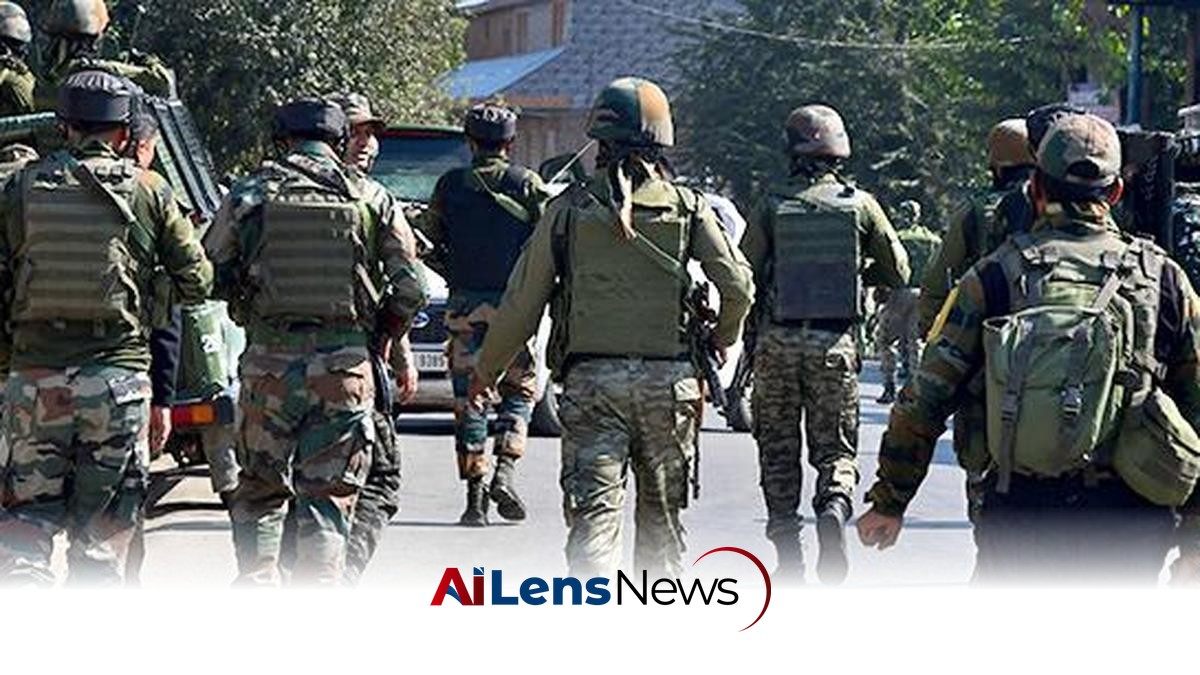


The anti-terror operation in Shopian, J&K, continues as security forces search for two Lashkar-e-Taiba terrorists, Zakir Ganie and Latif Bhat, cornered in an orchard.
New Delhi, India Jul 5, 2026 ALN: The ongoing search operation in Jammu and Kashmir's Shopian district, which entered its second day on Sunday, highlights the persistent challenges faced by security forces in the region. The operation is focused on locating two local terrorists affiliated with the banned militant organization Lashkar-e-Taiba (LeT), who have been cornered in a dense orchard. The situation underscores the complex security dynamics in Jammu and Kashmir, particularly in areas with a history of militancy, where the interplay of local grievances, political instability, and external influences creates a challenging environment for both civilians and security personnel.
According to officials, the search operation was initiated after surveillance cameras captured images of the two terrorists, identified as Latif and Zakir, in an orchard located in the Meemandar area. This area encompasses seven villages, which have now been cordoned off by a joint team comprising the Army, Jammu and Kashmir Police, and the Central Reserve Police Force (CRPF). By the end of the first day, security forces had successfully cleared four villages, indicating a systematic approach to the operation and a concerted effort to minimize the risk of the terrorists escaping into populated areas.
Latif and Zakir are reported to have engaged in a gunfight with the approaching Army personnel, firing upon them as they attempted to close in. This exchange of fire is indicative of the high-stakes nature of such operations, where security personnel must navigate not only the physical terrain but also the psychological tactics employed by militants. The response from the Army was swift, resulting in a gunfight that further complicated the situation. The use of firearms in close proximity to civilian areas raises significant concerns about collateral damage, and security forces are often under pressure to balance operational effectiveness with the safety of local residents.
To enhance their operational effectiveness, the Army's specialized counter-insurgency unit, known as the Victor Force, has been deployed to the area. This unit is trained to handle complex insurgent situations, and its involvement signifies the seriousness of the threat posed by the two terrorists. The Victor Force's expertise in urban and rural counter-insurgency operations is crucial, particularly in an area like Shopian, where the dense vegetation of orchards can provide ample cover for militants. Additional personnel have been sent to the region to ensure that all potential escape routes are secured, particularly through the thick foliage of the orchard, which provides cover for the terrorists. The summer months exacerbate this challenge, as the dense vegetation can obscure visibility and hinder surveillance efforts, allowing militants to exploit blind spots and evade capture.
Security records indicate that both Latif and Zakir hail from Kulgam district, situated in the southern part of Kashmir. Zakir has reportedly been associated with the LeT since 2024, while Latif joined the ranks of the organization the previous year. This timeline suggests a concerning trend of local youth becoming involved in militancy, which poses a significant challenge for authorities trying to curb the recruitment of young individuals into extremist organizations. The allure of militancy for local youth can often be attributed to a combination of socio-economic factors, including unemployment, lack of educational opportunities, and a sense of disenfranchisement from the political process. These issues create a fertile ground for radicalization, making it imperative for authorities to address the underlying causes of militancy.
Shopian district has historically been a key area in the broader context of militancy in Kashmir. Its geographical position serves as a critical transit corridor connecting south Kashmir to central Kashmir and the Pir Panjal range. This strategic significance has made it a focal point for both militants and security forces alike. The region's topography, combined with its socio-political dynamics, contributes to the complexities of counter-insurgency operations. The presence of various militant groups, alongside local grievances, complicates the security landscape, requiring a nuanced approach from security forces that considers both military objectives and community relations.
Officials have emphasized the importance of containing local operatives like Latif and Zakir. While there has been a noticeable increase in the use of foreign terrorists in attacks, local militants play a crucial role in sustaining the logistics and recruitment networks that fuel ongoing violence in the region. Disrupting these networks is essential for breaking the cycle of local recruitment and reducing the overall level of militancy in Kashmir. The implications of targeting local militants extend beyond immediate tactical gains; they also resonate with broader strategic goals of restoring peace and stability in the region.
The implications of this operation extend beyond the immediate goal of apprehending the two terrorists. It reflects the broader security strategy employed by Indian authorities to combat militancy in Jammu and Kashmir. The focus on local terrorists indicates an understanding that addressing the root causes of militancy, such as unemployment, lack of educational opportunities, and political disenfranchisement, is necessary for long-term stability in the region. The multifaceted nature of the conflict in Jammu and Kashmir requires not only military action but also a concerted effort to engage with the local population, build trust, and promote socio-economic development.
As the search continues, the local population remains in a state of heightened tension. The presence of security forces, combined with the ongoing operation, can lead to disruptions in daily life and may exacerbate feelings of fear and uncertainty among residents. Historically, such operations have sometimes resulted in civilian casualties, further complicating the relationship between the local population and security forces. Community engagement and communication are critical during such operations to mitigate misunderstandings and foster cooperation between security forces and civilians.
In conclusion, the second day of the search operation in Shopian serves as a reminder of the ongoing struggle against militancy in Jammu and Kashmir. The challenges posed by local terrorists, their recruitment, and the socio-political context in which they operate necessitate a multifaceted approach from security forces. As the situation develops, the focus will remain on not only apprehending Latif and Zakir but also on addressing the broader issues that contribute to the cycle of violence in the region. The outcome of this operation may have implications for future counter-insurgency strategies and the overall security landscape in Jammu and Kashmir. The need for a comprehensive strategy that combines military action with community development and dialogue remains essential for achieving lasting peace in the region.
To learn more about the latest developments in Crime & Law, stay updated with our exclusive reports and analyses on AiLensNews.

