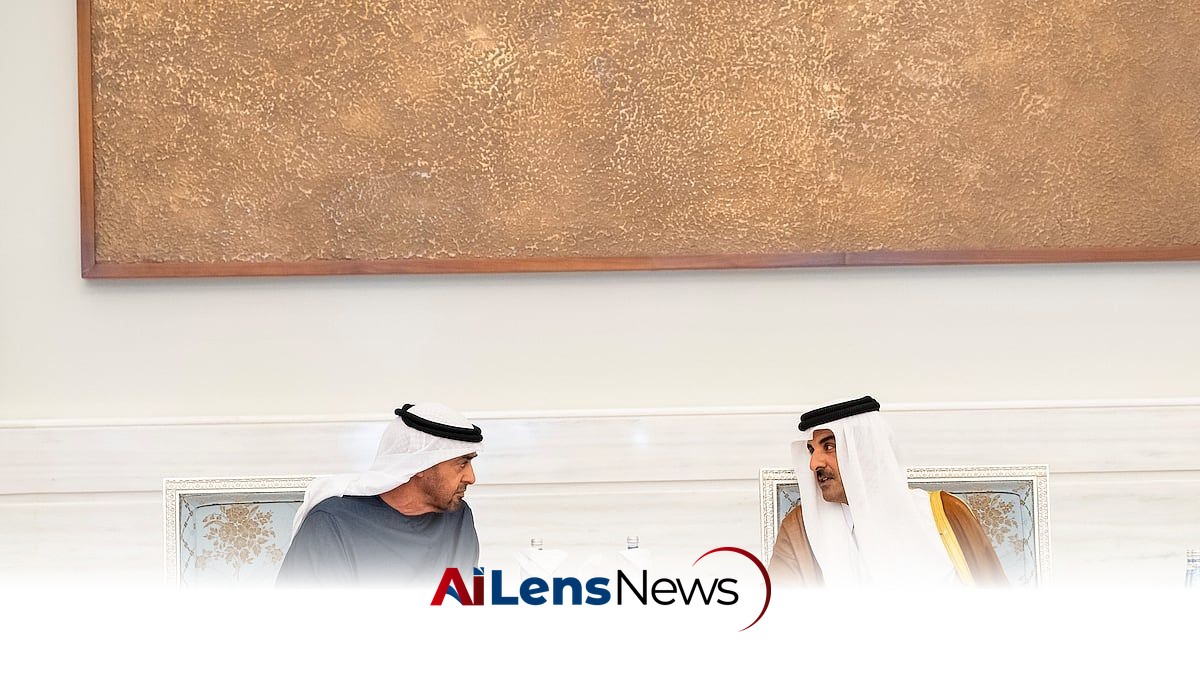


Sheikh Mohamed bin Zayed Al Nahyan visits Qatar to offer condolences to Sheikh Tamim bin Hamad Al Thani on the death of Sheikh Hamad bin Khalifa Al Thani.
Riyadh, Saudi Arabia Jul 15, 2026 ALN: Doha: UAE President His Highness Sheikh Mohamed bin Zayed Al Nahyan on Wednesday offered his condolences to His Highness Sheikh Tamim bin Hamad Al Thani, Emir of the State of Qatar, on the passing of Sheikh Hamad bin Khalifa Al Thani. This gesture of solidarity highlights the close ties and mutual respect that exist between the United Arab Emirates (UAE) and Qatar, particularly during times of mourning.
Sheikh Hamad bin Khalifa Al Thani, who served as the Emir of Qatar from 1995 until his abdication in 2013, played a pivotal role in transforming Qatar into a significant player on the global stage. His leadership was marked by a focus on economic diversification, infrastructural development, and an assertive foreign policy. Under his rule, Qatar saw substantial growth in its natural gas industry, which positioned the country as one of the world's leading exporters of liquefied natural gas (LNG). This economic boom not only elevated Qatar's status internationally but also allowed for significant investments in various sectors, including education, healthcare, and sports.
During a visit to Lusail Palace in Doha, Sheikh Mohamed also extended his heartfelt condolences to the Al Thani family and the people of Qatar, praying that God grant the deceased eternal peace and give his loved ones strength and comfort. The passing of Sheikh Hamad is a significant event for the nation, as he was not only a former leader but also a beloved figure who contributed to the cultural and social fabric of Qatar.
Sheikh Tamim bin Hamad Al Thani expressed his appreciation to His Highness the UAE President for his sincere and fraternal sentiments towards Qatar and its people following their loss.
The expression of condolences from Sheikh Mohamed bin Zayed Al Nahyan is emblematic of the deep-rooted relationship between the UAE and Qatar, which has evolved over decades. Historically, both nations have shared cultural, economic, and social ties, with familial connections between their ruling families further strengthening this bond. The mutual respect and collaboration have been evident in various regional initiatives and joint ventures that aim to promote stability and prosperity in the Gulf region.
Also offering condolences alongside His Highness was the accompanying delegation, which included Sheikh Hamdan bin Mohammed bin Rashid Al Maktoum, Crown Prince of Dubai, Deputy Prime Minister and Minister of Defence; Sheikh Tahnoon bin Zayed Al Nahyan, Deputy Ruler of Abu Dhabi and National Security Adviser; Sheikh Hamdan bin Mohamed bin Zayed Al Nahyan, Deputy Chairman of the Presidential Court for Special Affairs; Sheikh Sultan bin Hamdan Al Nahyan, Adviser to the UAE President; Sheikh Mohammed bin Hamad bin Tahnoon Al Nahyan, Adviser to the UAE President; and a number of ministers and senior officials. The presence of such a high-profile delegation underscores the importance of the occasion and the solidarity among the Gulf Cooperation Council (GCC) states.
The GCC, which includes Saudi Arabia, the UAE, Oman, Kuwait, Bahrain, and Qatar, has faced various challenges in recent years, including political rifts and differing foreign policy approaches. However, the recent expressions of condolences and support among member states reflect a desire to maintain unity and cooperation in the face of adversity. The passing of a prominent leader like Sheikh Hamad serves as a reminder of the shared history and collective aspirations of the Gulf nations.
Sheikh Hamad's legacy is also marked by his efforts to promote a more open and progressive society in Qatar. He was instrumental in establishing the Qatar Foundation, which focuses on education, research, and community development. This foundation has played a vital role in transforming Qatar into a hub for education and innovation, attracting international institutions and fostering a culture of learning and growth.
Moreover, Sheikh Hamad's commitment to sports and culture was evident through Qatar's successful bid to host the FIFA World Cup 2022, a milestone event that has brought global attention to the nation. His vision for Qatar extended beyond economic prosperity to include cultural diplomacy, which has positioned the country as a center for dialogue and cultural exchange in the region.
As Qatar mourns the loss of Sheikh Hamad bin Khalifa Al Thani, the expressions of support from neighboring countries, particularly the UAE, reinforce the importance of regional solidarity. The condolences offered by Sheikh Mohamed bin Zayed Al Nahyan and the accompanying delegation serve not only as a mark of respect for the deceased but also as a reaffirmation of the enduring ties that bind the Gulf states together.
In conclusion, the passing of Sheikh Hamad bin Khalifa Al Thani is a significant moment for Qatar and the Gulf region as a whole. It highlights the need for unity among the GCC states and the importance of maintaining strong diplomatic relations. As the region navigates its challenges, the legacy of leaders like Sheikh Hamad will continue to inspire future generations to work towards a more prosperous and harmonious Gulf community.
In the context of the broader geopolitical landscape, Sheikh Hamad's leadership and vision have left an indelible mark on Qatar's identity. His tenure coincided with a period of rapid globalization, and he adeptly leveraged Qatar's natural resources to enhance its global standing. The emphasis on education and cultural initiatives under his guidance has also fostered a sense of national pride and identity among Qataris, reinforcing the importance of cultural heritage in a rapidly changing world.
Furthermore, Sheikh Hamad's role in regional diplomacy cannot be understated. His tenure saw Qatar engage with various international actors, often positioning itself as a mediator in regional conflicts and a supporter of various humanitarian initiatives. This diplomatic approach has allowed Qatar to maintain a unique and influential role within the Gulf region and beyond, further solidifying its status as a key player on the world stage.
As the Gulf region continues to face challenges, including economic pressures and political tensions, the legacy of Sheikh Hamad bin Khalifa Al Thani will serve as a guiding light for current and future leaders. His commitment to progress, stability, and regional cooperation will be essential in navigating the complexities of the modern world.
In light of Sheikh Hamad's passing, it is also an opportune moment for reflection among the GCC states regarding their shared goals and challenges. The expressions of condolences and support from leaders like Sheikh Mohamed bin Zayed Al Nahyan signal a collective understanding of the importance of unity and collaboration in addressing regional issues. As the Gulf nations look to the future, the lessons learned from Sheikh Hamad's leadership can inform their approaches to governance, diplomacy, and economic development.
In summary, the condolences extended by the UAE President and the accompanying delegation are not merely formalities but rather a testament to the enduring bonds of friendship and cooperation that exist between the UAE and Qatar. As both nations navigate this period of mourning, they are reminded of their shared history and the potential for continued collaboration in the pursuit of peace, stability, and prosperity in the Gulf region.
To learn more about the latest developments in World News & International Affairs, stay updated with our exclusive reports and analyses on AiLensNews.

