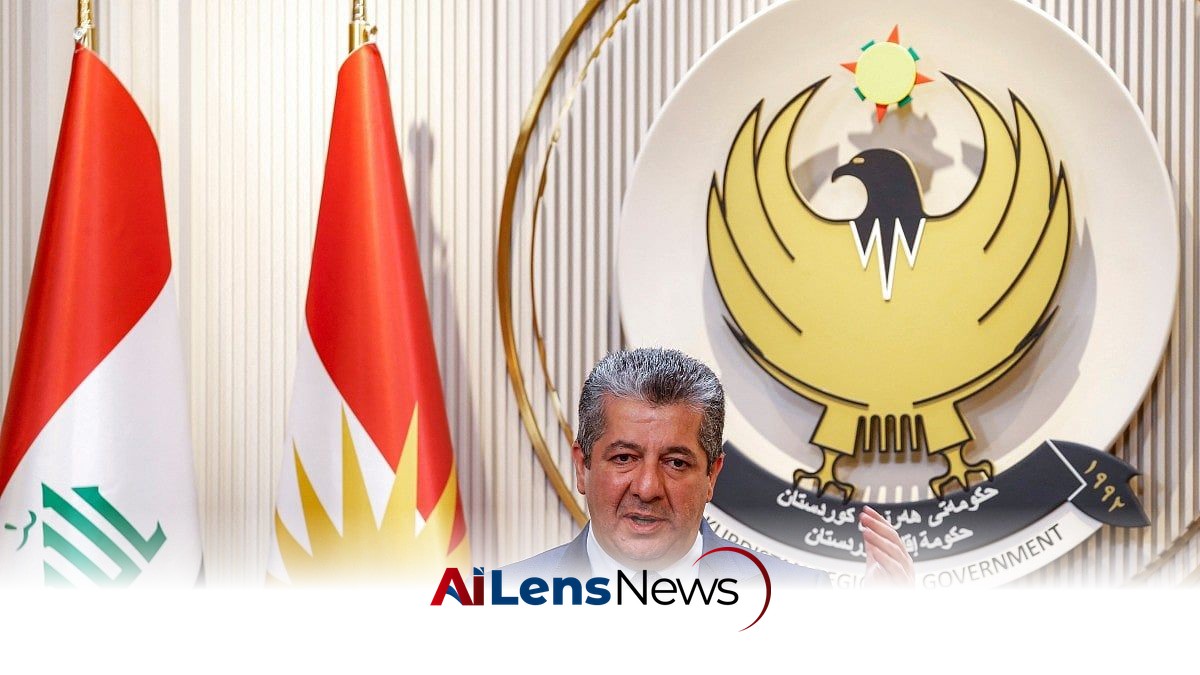


The UAE has denounced the Iranian drone strike on the Kurdistan Regional Government's Prime Minister's office, calling it a violation of Iraqi sovereignty.
Riyadh, Saudi Arabia Aug 18, 2026 ALN: The United Arab Emirates has strongly condemned an Iranian drone attack targeting the private office of Kurdistan Regional Government (KRG) Prime Minister Masrour Barzani and the residence of the region’s security agency director in Erbil. This incident marks a significant escalation in the ongoing tensions between Iran and Iraq's semi-autonomous Kurdish region, highlighting the complex geopolitical dynamics in the area.
In a statement, the UAE Ministry of Foreign Affairs expressed its disapproval, stating: “The UAE strongly condemns the Iranian aggressive attack on Iraqi Kurdistan.” The ministry elaborated further, emphasizing that the attack constituted a blatant violation of the sovereignty of the Republic of Iraq and Iraqi Kurdistan, posing a direct threat to the security and stability of the region.
The ministry's statement reflects the UAE's ongoing commitment to supporting Iraq and its Kurdish region, reiterating solidarity with the brotherly Republic of Iraq and the Kurdistan Regional Government. The UAE has consistently advocated for the preservation of security and stability in Iraq, particularly given the region's historical vulnerabilities and the ongoing influence of external powers.
According to Kurdish authorities, two explosive-laden drones, reportedly identified as Hadid-110 or similar models, were launched from Iranian territory and struck targets in the Pirmam (Salahaddin) area, approximately 30 kilometers north of Erbil, the capital of Iraq’s semi-autonomous Kurdistan Region. Fortunately, no casualties were reported as a result of this specific attack, but the implications of such military actions are far-reaching.
Prime Minister Masrour Barzani condemned the strikes as “reckless and unacceptable,” labeling them as a dangerous escalation that poses a direct threat to the region’s security. His comments underscore the growing concern among Kurdish leaders regarding Iranian military activities in the vicinity, which have increasingly targeted not only opposition forces but also key government and security installations within the Kurdistan Region.
The KRG’s Counter-Terrorism Directorate also denounced the attack, asserting that those responsible would face consequences. This statement indicates a potential for retaliatory measures or increased defensive actions by Kurdish forces in response to Iranian aggression, which could further exacerbate tensions in an already volatile region.
The attack is part of a broader pattern of Iranian drone and missile strikes on the Kurdistan Region of Iraq, which have intensified since the outbreak of wider regional conflict involving Iran, the US, and Israel in late February 2026. This escalation is indicative of Iran's strategic approach to counter perceived threats from Kurdish opposition groups that operate from Iraqi territory. Tehran has been particularly focused on targeting bases of Iranian Kurdish opposition parties, such as Komala and the Kurdistan Democratic Party of Iran, which Iran views as significant security threats.
Kurdish authorities have reported hundreds of such attacks since early 2026, resulting in numerous deaths and injuries, predominantly among opposition fighters. This ongoing violence not only destabilizes the region but also raises concerns about the potential for a wider conflict involving various state and non-state actors in the area.
The KRG has consistently denied allowing its territory to be used against neighboring countries, asserting its commitment to maintaining a neutral stance amidst the regional tensions. However, the increasing frequency of Iranian strikes complicates this narrative, as it raises questions about the effectiveness of the KRG's security measures and its ability to protect its own sovereignty.
The UAE's condemnation of Iranian actions is significant, as it reflects broader regional concerns about Iran's influence and military activities. The UAE has previously issued similar statements regarding Iranian or Iran-linked strikes on the Kurdistan Region, emphasizing the importance of respecting Iraqi sovereignty and promoting regional stability. This stance aligns with the UAE's foreign policy objectives, which seek to counter Iranian expansionism in the Middle East.
As the situation continues to evolve, the implications of such attacks extend beyond immediate security concerns. They also affect diplomatic relations in the region, particularly between Iraq, Iran, and neighboring countries, including the UAE. The Kurdish region's stability is crucial not only for Iraq but also for the broader geopolitical landscape, as it serves as a buffer against Iranian influence and a potential partner for Western interests in the region.
In conclusion, the recent drone attack on the KRG Prime Minister's office highlights the precarious security situation in Iraq's Kurdistan Region and the ongoing challenges posed by Iranian military actions. As regional dynamics continue to shift, the need for a coordinated response to ensure the sovereignty and stability of Iraq and its Kurdish region becomes increasingly critical. The UAE's condemnation serves as a reminder of the international community's role in addressing these complex issues and supporting efforts to maintain peace in the region.
To learn more about the latest developments in World News & International Affairs, stay updated with our exclusive reports and analyses on AiLensNews.

