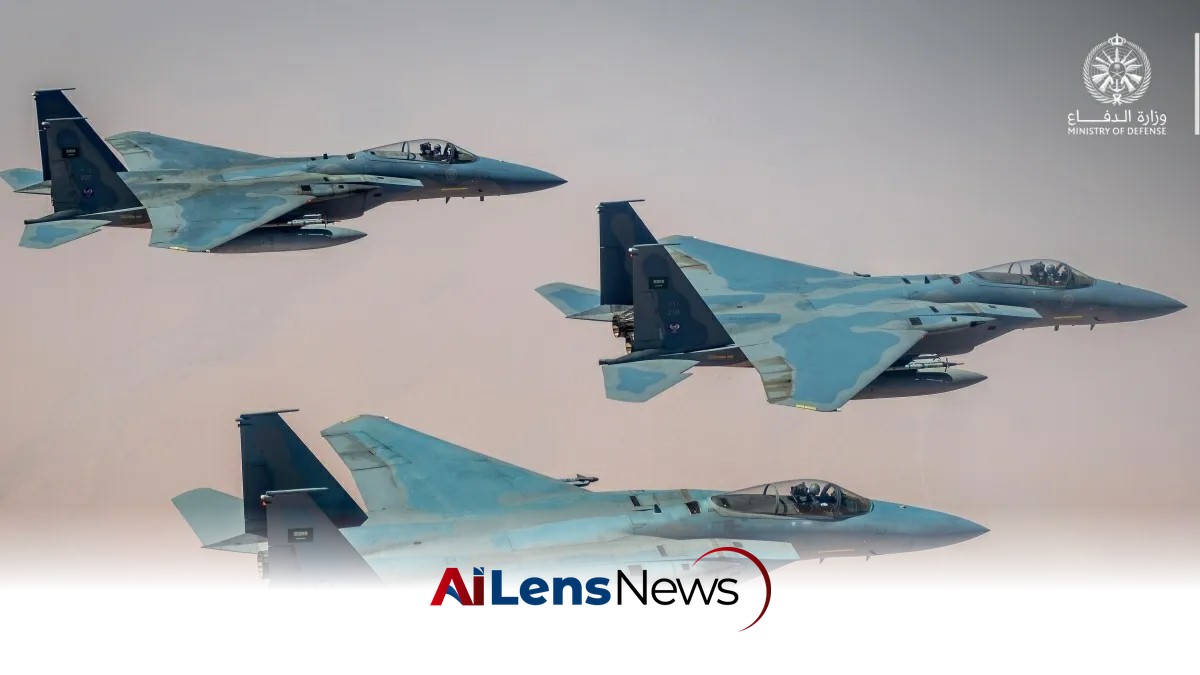


A senior Saudi official clarified that recent military strikes in Iraq were aimed at Iran-backed militias responsible for attacks on Saudi oil facilities, not the Iraqi state.
Riyadh, Saudi Arabia Aug 1, 2026 ALN: A senior Saudi official stated that the Kingdom's recent military strikes in Iraq were directed solely at Iran-backed terrorist militias responsible for attacks on Saudi territory and were not aimed at the Iraqi government or its people. This statement underscores the complex and often fraught relationship between Saudi Arabia, Iran, and various militia groups operating in the region, particularly in Iraq.
The official, speaking to Al Arabiya on Friday, indicated that the operation targeted militia military warehouses linked to the recent drone attacks on Saudi Arabia's oil facilities and critical infrastructure. These strikes represent a significant escalation in the ongoing conflict between Saudi Arabia and Iran, which has manifested in various forms, including proxy battles in neighboring countries such as Yemen, Syria, and Iraq. The involvement of Iran in supporting militias across the region has been a longstanding point of contention, with Saudi Arabia perceiving these groups as direct threats to its national security.
The official emphasized that the strikes came only after all diplomatic and political avenues had been exhausted and after Saudi Arabia had exercised what he described as the utmost restraint over recent months. This assertion reflects Saudi Arabia's broader strategy of attempting to manage its security concerns through diplomacy while also preparing for military action when necessary. The Kingdom has faced increasing threats from Iranian-backed militias, particularly in light of recent attacks that have targeted its vital oil infrastructure, which is crucial not only for the Saudi economy but for global energy markets as well.
Furthermore, the official noted that the Iran-backed militias were harming Iraq's interests and its relations with Arab and Islamic countries by using Iraqi territory and resources to carry out attacks against neighboring states. This highlights the delicate balance Iraq must maintain as it navigates its relationships with both Saudi Arabia and Iran. Iraq, which has a significant Shiite population and historical ties to Iran, has also sought to foster good relations with its Arab neighbors, including Saudi Arabia, which has invested in various initiatives to enhance economic cooperation and stability in the region. The involvement of these militias not only complicates Iraq's foreign relations but also poses challenges to its internal political stability.
The official reaffirmed Saudi Arabia's commitment to maintaining strong relations with Iraq and its people, emphasizing that the operation was limited to degrading the capabilities of the militias responsible for threatening the Kingdom's security and targeting its civilian and economic infrastructure. This statement is an attempt to reassure the Iraqi public and government that Saudi Arabia does not view Iraq as an adversary but rather as a partner in addressing shared security concerns. Such reassurances are critical as they aim to prevent the perception of Saudi Arabia as an aggressor in a region already rife with tensions.
He also dismissed attempts by some parties inside and outside Iraq to inflame sectarian tensions following the strikes, stating that such efforts would not deceive the Iraqi people and only sought to undermine Iraq's security, stability, and regional ties. Sectarian tensions in Iraq have historically been a source of conflict, and any military action perceived as targeting Shiite militias could exacerbate existing divisions within the country. The potential for sectarian violence is a genuine concern, particularly given the volatile history of sectarian strife in Iraq, which has seen significant bloodshed in the past.
On Wednesday, Saudi Arabia's Ministry of Defense announced that the Kingdom's armed forces, in coordination with the United States Central Command (CENTCOM), had carried out precision strikes against Iran-backed militia targets in Iraq linked to recent attacks on Saudi oil facilities. This coordination with CENTCOM is indicative of the strategic partnership between the United States and Saudi Arabia, particularly in the context of countering Iranian influence in the region. The U.S. has historically supported Saudi Arabia in its efforts to curtail Iranian expansionism, viewing it as a stabilizing force in the Gulf.
Saudi authorities have indicated that the operation followed drone attacks intercepted by the Kingdom's air defenses earlier this week targeting oil installations in the Eastern Province and the Riyadh region. The use of drones in these attacks highlights the evolving nature of warfare in the region, where non-state actors are increasingly employing advanced technologies to conduct strikes against state targets. This technological shift raises concerns about the future of conflict in the Middle East, as it allows for greater precision and the ability to strike from a distance, complicating traditional military responses.
In the broader context, these developments come at a time when tensions in the Middle East are already high. The ongoing conflict in Yemen, where Saudi Arabia has been engaged in a military campaign against the Iran-aligned Houthi movement, has further strained relations between Riyadh and Tehran. Additionally, the U.S. withdrawal from Afghanistan and its implications for regional security have added another layer of complexity to the geopolitical landscape. The power vacuum created by the U.S. exit has raised concerns about the resurgence of extremist groups and the potential for further Iranian influence in the region.
The implications of Saudi Arabia's strikes against Iran-backed militias in Iraq are significant. For one, they signal a willingness by the Kingdom to take military action to protect its interests, potentially leading to further escalation in the region. If Iran perceives these strikes as a threat, it may respond with its own military actions, either directly or through its network of proxy forces in Iraq and elsewhere. Such a response could lead to a cycle of retaliation that destabilizes not only Iraq but the broader region, drawing in other nations and complicating existing conflicts.
Moreover, the strikes could impact the delicate balance of power in Iraq itself. The Iraqi government, which is already grappling with internal divisions and the influence of various militia groups, may find itself under pressure to respond to Saudi actions. This could lead to increased instability within Iraq, complicating the government's efforts to assert control over armed groups operating within its borders. The challenge for Iraq will be to navigate these pressures while maintaining its sovereignty and working towards a cohesive national policy that addresses the diverse interests of its population.
In conclusion, the recent military strikes by Saudi Arabia against Iran-backed militias in Iraq represent a critical juncture in the ongoing conflict between Saudi Arabia and Iran. As both nations navigate their complex relationships with Iraq and its various factions, the potential for further escalation remains high. The situation underscores the need for continued diplomatic efforts to address the underlying issues driving conflicts in the region, as well as the importance of maintaining open lines of communication to prevent misunderstandings that could lead to wider hostilities. The international community must also engage in dialogue and mediation efforts to ensure that the situation does not spiral out of control, recognizing that stability in Iraq is integral to broader regional peace.
To learn more about the latest developments in Politics, stay updated with our exclusive reports and analyses on AiLensNews.

