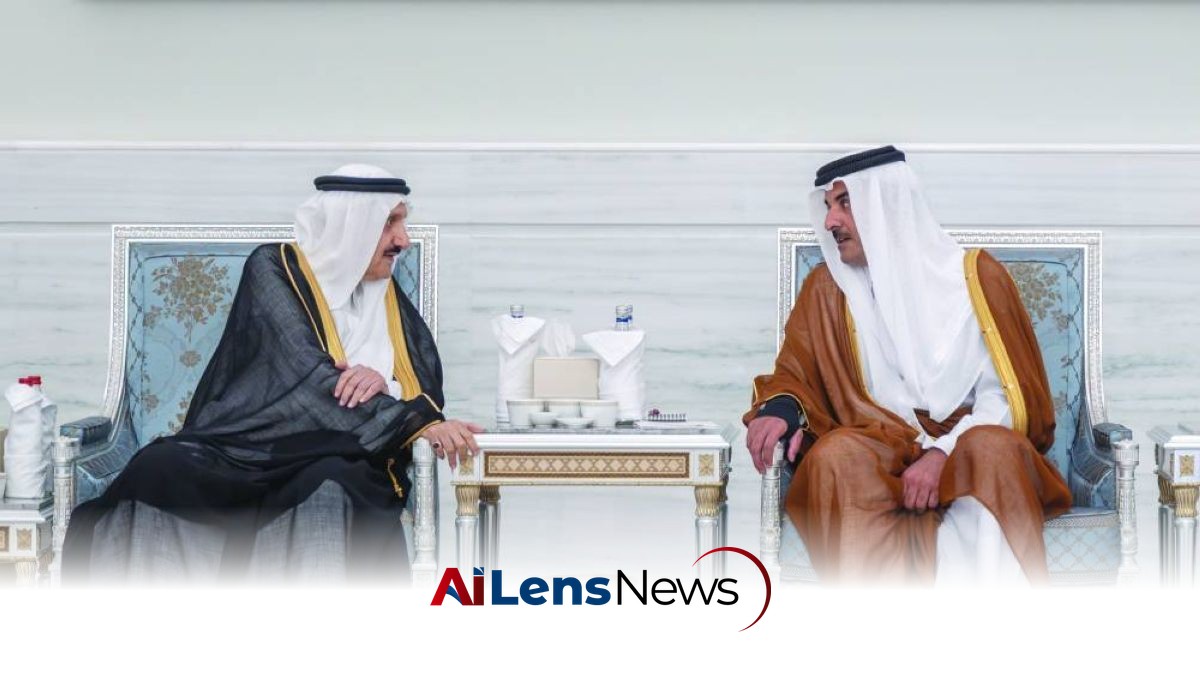


A series of dignitaries, including heads of state and crown princes, visited Lusail Palace to offer condolences after the passing of the late Father Amir of Qatar.
Doha, Qatar Jul 15, 2026 ALN: The recent passing of His Highness the Father Amir Sheikh Hamad bin Khalifa al-Thani has prompted an outpouring of condolences from leaders around the world, highlighting his significant impact on both regional and international affairs. The Amir Sheikh Tamim bin Hamad al-Thani received a steady stream of dignitaries at Lusail Palace, reflecting the late Father Amir's stature and the deep respect he commanded on the global stage. This event not only served as a moment of mourning but also as a reaffirmation of the relationships that Sheikh Hamad cultivated during his reign.
Sheikh Hamad bin Khalifa al-Thani ruled Qatar from 1995 until his abdication in 2013, making him one of the longest-serving leaders in the Gulf region. His tenure was marked by transformative changes that propelled Qatar into a prominent position in global politics and economics. Under his leadership, Qatar diversified its economy, invested heavily in education and health, and established itself as a major player in international diplomacy, particularly through its media outlet, Al Jazeera, and its involvement in various peace negotiations.
The procession of world leaders visiting Lusail Palace serves as a testament to Sheikh Hamad's legacy. Each visiting dignitary observed a protocol of respect, meeting the Amir personally to extend condolences on behalf of their respective governments and peoples. This practice not only demonstrates the personal connections that Sheikh Hamad fostered but also highlights the importance of such gestures in diplomatic relations. The presence of high-ranking officials from various countries underscores the widespread recognition of Sheikh Hamad's contributions to regional stability and development.
Among the notable visitors was President Recep Tayyip Erdogan of Turkiye, who emphasized the strong, historical ties between Turkey and Qatar. These ties have been reinforced through various military and diplomatic collaborations, particularly in recent years as both nations navigated complex regional dynamics. Erdogan’s visit is indicative of the strategic partnership that has developed, showcasing the mutual respect and shared interests between the two leaders. This partnership has been particularly significant in the context of regional conflicts, where both nations have often found themselves aligned on key issues.
Saudi Arabia, a key player in the Gulf Cooperation Council (GCC), was represented by Prince Mansour bin Miteb bin Abdulaziz al-Saud, who brought with him one of the largest delegations of the day. This visit is particularly significant given the recent thawing of relations between Qatar and Saudi Arabia after years of diplomatic rifts. The presence of such a substantial delegation signals a desire to strengthen ties and honor the legacy of Sheikh Hamad, who played a critical role in fostering cooperation among Gulf states. The reconciliation process between the two nations has been a focal point in regional politics, with Sheikh Hamad's vision of unity serving as a guiding principle for future collaborations.
Egyptian President Abdel Fattah el-Sisi's remarks about Sheikh Hamad as a visionary leader reflect the broader sentiment among Arab leaders regarding his contributions to regional unity and development. Sheikh Hamad's initiatives in education, healthcare, and infrastructure have had lasting impacts not only in Qatar but across the Arab world, making his legacy one of progressive leadership. His focus on education, in particular, has transformed Qatar into a regional hub for learning and innovation, attracting students and scholars from around the globe.
Italian Prime Minister Georgia Meloni's visit further illustrates the global recognition of Sheikh Hamad's influence. By praising his legacy of transformative change, Meloni acknowledges the significant role Qatar has played in international affairs, including its investments in various sectors abroad and its active participation in global dialogues. This recognition is critical as it underscores the importance of Qatar's soft power in shaping international perceptions and fostering cooperative relationships across continents.
Other leaders, such as Crown Prince al-Hussein bin Abdullah II of Jordan, President Hassan Sheikh Mohamud of Somalia, and President Shavkat Mirziyoyev of Uzbekistan, also conveyed their condolences, highlighting the breadth of Sheikh Hamad's influence across different regions. Each of these leaders represents a unique relationship with Qatar, whether through economic partnerships, cultural exchanges, or collaborative efforts in addressing common challenges. This diversity of visitors reflects Sheikh Hamad's ability to engage with a wide array of nations, fostering ties that transcend geographical and political boundaries.
The visit by Vice-President Sheikh Mansour bin Zayed al-Nahyan and his accompanying delegation from the UAE is another significant aspect of the day's events. The UAE and Qatar have historically maintained a complex relationship, but their cooperation in various fields has been growing. This visit serves as a reminder of the importance of unity among Gulf states, especially in times of mourning and reflection. The evolving dynamics between the UAE and Qatar are indicative of a broader trend in the Gulf region, where nations are increasingly recognizing the value of collaboration over competition.
General Abdel Fattah al-Burhan from Sudan's Transitional Sovereignty Council also extended his condolences, underscoring Qatar's role in humanitarian efforts and mediation in Sudan. Qatar has been active in facilitating dialogue and providing aid in conflict-affected areas, further solidifying its position as a mediator in regional crises. This role has been particularly crucial in Sudan, where Qatar has worked tirelessly to support peace initiatives and humanitarian efforts, showcasing its commitment to regional stability.
Lastly, the presence of President Vahagn Khachaturyan of Armenia at the Lusail Palace illustrates Qatar's expanding diplomatic footprint, reaching into areas that may have been overlooked in previous decades. This growing relationship with Armenia is part of Qatar's broader strategy to engage with diverse nations and foster partnerships that can lead to mutual benefits. As Qatar continues to expand its diplomatic horizons, the importance of such visits cannot be overstated, as they pave the way for future collaborations and understanding.
In conclusion, the series of condolence visits at Lusail Palace following the death of Sheikh Hamad bin Khalifa al-Thani not only reflects the deep respect held for the late Father Amir but also highlights the enduring relationships he built throughout his reign. As world leaders gathered to pay their respects, they reaffirmed their commitment to honoring his legacy and continuing the collaborative spirit that he championed. This moment serves as a poignant reminder of the interconnectedness of nations and the importance of leadership in shaping the future of international relations. The legacy of Sheikh Hamad will undoubtedly influence the diplomatic landscape in the years to come, as leaders seek to build upon the foundations he laid during his time in power.
To learn more about the latest developments in World News & International Affairs, stay updated with our exclusive reports and analyses on AiLensNews.

