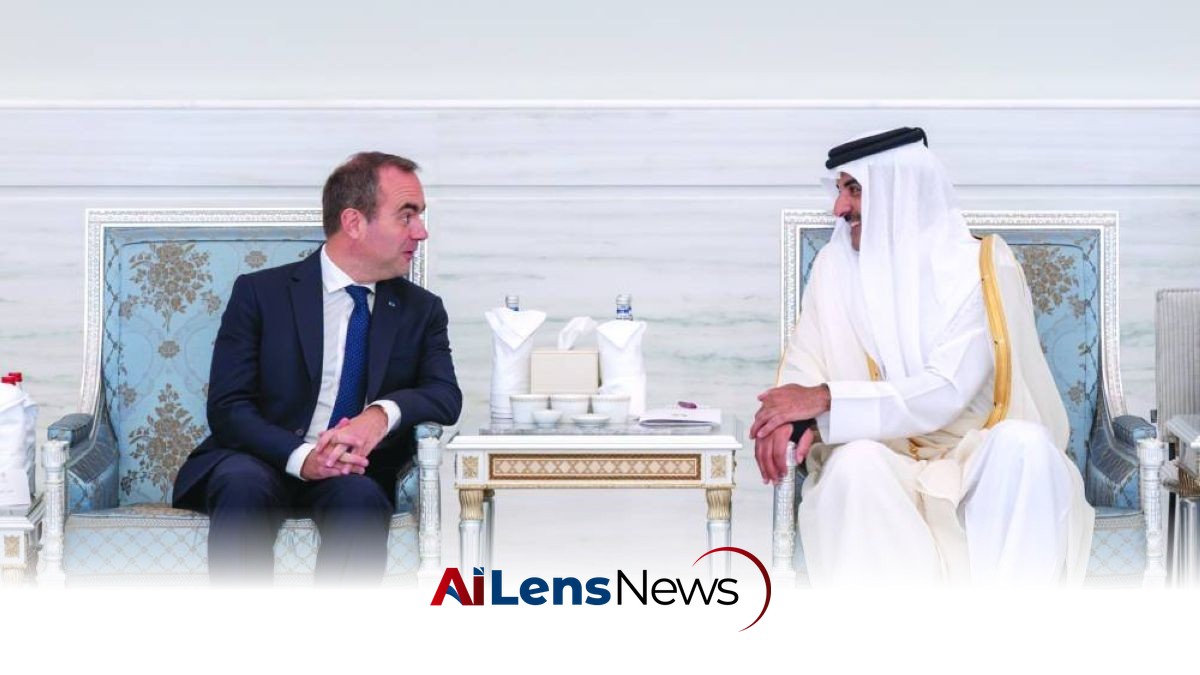


Leaders from various nations visited Qatar to express condolences following the passing of the late Father Amir Sheikh Hamad bin Khalifa al-Thani.
Doha, Qatar Jul 16, 2026 ALN: The gathering of world leaders at Lusail Palace marks a significant moment of mourning and solidarity following the passing of His Highness the Father Amir Sheikh Hamad bin Khalifa al-Thani. His contributions to the State of Qatar and the broader Gulf region have left an enduring legacy, prompting leaders from various nations to pay their respects and express their condolences. Sheikh Hamad bin Khalifa al-Thani, who ruled Qatar from 1995 until his abdication in 2013, was pivotal in transforming Qatar into a prominent player on the global stage, leveraging its vast natural gas reserves and fostering a diverse economy.
His Highness the Amir Sheikh Tamim bin Hamad al-Thani welcomed a diverse group of dignitaries, including heads of state, government officials, and members of royalty, to Lusail Palace on a day dedicated to honoring the memory of the late Father Amir. This event not only highlights the deep respect held for Sheikh Hamad bin Khalifa al-Thani but also underscores the importance of international relations and diplomacy in times of national grief. The gathering serves as a reminder of the interconnectedness of nations and the role of leadership in shaping international relations.
Among the notable attendees was UAE President Sheikh Mohamed bin Zayed al-Nahyan, who was accompanied by a high-profile delegation. The presence of senior officials, including the Crown Prince of Dubai, underscores the close ties between Qatar and the United Arab Emirates, which have historically collaborated on various fronts, including economic development, security, and cultural exchange. The relationship between these two nations has evolved over the years, particularly following the Gulf Cooperation Council (GCC) crisis that began in 2017, which saw a blockade imposed on Qatar by several neighboring countries, including the UAE. The participation of UAE leaders in this solemn event signifies a potential thaw in relations and a commitment to unity in the face of loss.
The reception also included Sheikh Saud bin Saqr al-Qasimi, the Ruler of Ras Al Khaimah, who is a member of the UAE's Supreme Council. His attendance reflects the unified stance of the UAE leadership in honoring Sheikh Hamad bin Khalifa al-Thani. This gathering serves as a reminder of the intricate web of relationships among the Gulf states, which often come together during significant events, both celebratory and mournful. The Gulf region, known for its rich cultural heritage and shared history, often sees its leaders convene in times of crisis or loss, reinforcing the bonds that unite them.
King Abdullah II of Jordan, another prominent figure at the gathering, expressed his condolences through a personal meeting with Sheikh Tamim. Jordan and Qatar share a long-standing relationship, characterized by mutual support and collaboration in various regional issues, including peace efforts and economic partnerships. Jordan has often relied on Qatari support, particularly in matters related to the Palestinian cause and regional stability. The presence of King Abdullah II further emphasizes the importance of solidarity among Arab nations in times of grief.
The presence of Palestinian President Mahmoud Abbas at the reception also signifies the enduring bond between Qatar and Palestine. Qatar has been a vocal supporter of Palestinian rights and has provided significant humanitarian aid to the region. This relationship further emphasizes the role of Qatar as a mediator in Middle Eastern affairs, often stepping in to facilitate dialogues and provide support in times of need. The gathering serves as a platform for Palestinian leaders to express their gratitude for Qatar's unwavering support.
In addition to leaders from the Middle East, the reception included delegations from countries as far-reaching as Sri Lanka, France, Germany, and Yemen. Each of these nations has its own unique relationship with Qatar, often revolving around trade, investment, and cultural exchanges. The presence of these leaders at such a significant event highlights the global recognition of Sheikh Hamad bin Khalifa al-Thani's influence and contributions. Qatar's strategic investments and diplomatic initiatives have allowed it to forge partnerships with nations across different continents, enhancing its role as a global player.
Prime Minister of Sri Lanka Harini Amarasuriya's attendance represents the growing ties between Qatar and South Asian nations. Sri Lanka has benefited from Qatari investments and has engaged in various developmental projects supported by Qatar. The strengthening of these ties is indicative of Qatar's broader strategy to enhance its influence in South Asia, a region that has become increasingly important in global geopolitics.
Similarly, the participation of French Prime Minister Sebastien Lecornu and German President Frank-Walter Steinmeier indicates the strong diplomatic and economic relations that Qatar has cultivated with European nations. France and Germany have both engaged with Qatar on various fronts, including defense, trade, and cultural initiatives. The presence of European leaders at the gathering highlights the importance of Qatar as a partner in addressing regional challenges, including security and economic development.
The participation of leaders from Africa, such as President of Senegal Bassirou Diomaye Faye, adds another layer of significance to the gathering. Qatar has been increasingly active in Africa, investing in infrastructure and development projects, thereby enhancing its influence on the continent. This engagement reflects Qatar's commitment to fostering relations with African nations and supporting their development goals, which is essential for both regional stability and economic growth.
The gathering also included representatives from Central Asia, with the Deputy Prime Minister of Tajikistan, Sulaymon Ziyozoda, extending condolences. This reflects Qatar's expanding diplomatic outreach to Central Asian countries, which have been gaining importance in global geopolitics. As these nations seek to strengthen their ties with Gulf states, Qatar's role as a mediator and collaborator becomes even more critical.
The presence of Prince Edward, Duke of Edinburgh, adds a royal dimension to the proceedings, symbolizing the historical ties between Qatar and the United Kingdom. The British monarchy has long maintained a relationship with the Qatari leadership, which has been reinforced through cultural and educational exchanges. The UK and Qatar have collaborated on various initiatives, including investments in education and infrastructure, further solidifying their partnership.
As the last leader to offer condolences, Chairman of the Cabinet of Ministers of Kyrgyzstan Adylbek Aleshovich Kasymaliev's attendance underscores the significance of the event in fostering international relations. Such interactions are crucial in a world where geopolitical dynamics are constantly shifting, and maintaining open lines of communication is essential for global stability. The presence of diverse leaders from various regions also reflects the universal respect for Sheikh Hamad bin Khalifa al-Thani's contributions to peace and development.
This gathering at Lusail Palace not only serves as a tribute to the late Father Amir but also as a platform for reinforcing diplomatic ties among nations. The collective condolences expressed by these leaders reflect a shared recognition of the importance of leadership and the impact of Sheikh Hamad bin Khalifa al-Thani's policies on regional stability and development. His vision for a progressive Qatar, focused on education, health, and infrastructure, has set a benchmark for leadership in the region.
In conclusion, the gathering of world leaders at Lusail Palace is a poignant reminder of the interconnectedness of nations and the role of leaders in shaping international relations. It highlights the legacy of Sheikh Hamad bin Khalifa al-Thani, whose vision and leadership have left an indelible mark on Qatar and the region. As Qatar navigates the future, the relationships forged during such moments of solidarity will likely play a crucial role in its diplomatic and economic endeavors. The event serves as a testament to the enduring impact of Sheikh Hamad's leadership and the importance of maintaining strong international relations in an increasingly complex world.
To learn more about the latest developments in World News & International Affairs, stay updated with our exclusive reports and analyses on AiLensNews.

