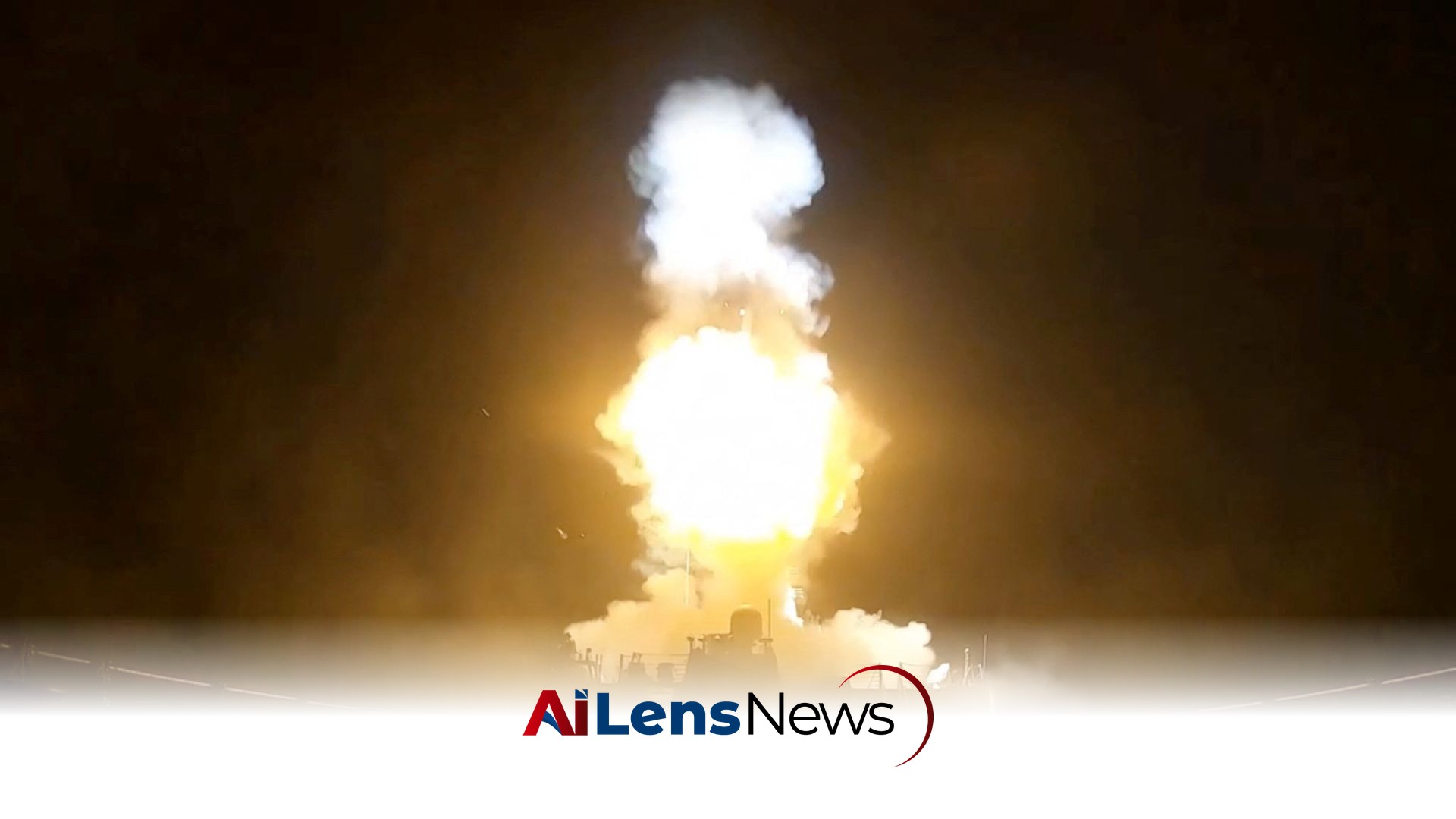


The US has escalated its military operations against Iran, targeting its capabilities to threaten shipping in the critical Strait of Hormuz.
Doha, Qatar Jul 13, 2026 ALN: The United States has launched a new wave of military strikes against Iran, aimed at crippling Tehran's ability to threaten shipping in the strategically vital Strait of Hormuz. This escalation comes amid rising tensions between the two nations, with US President Donald Trump asserting that the waterway remains open for navigation, while Iranian officials claim it is effectively closed.
The Strait of Hormuz is a crucial maritime passage for global oil shipments, with approximately 20% of the world's oil passing through it. This narrow waterway, measuring about 21 miles wide at its narrowest point, connects the Persian Gulf with the Gulf of Oman and the Arabian Sea, making it a critical chokepoint for international energy supplies. The geopolitical significance of the Strait has made it a focal point in US-Iran relations, particularly since the US withdrawal from the Iran nuclear deal in 2018, which had aimed to curb Tehran's nuclear ambitions in exchange for the lifting of economic sanctions.
The ongoing standoff has raised concerns over potential disruptions to international trade and energy supplies. In recent years, Iran has threatened to block the Strait as a form of retaliation against US sanctions and military presence in the region. Such threats have been met with stern warnings from the US and its allies, who view any attempt to close the Strait as a direct threat to global economic stability.
The recent strikes are part of a broader strategy by the US to deter Iranian aggression in the region. Pentagon officials have stated that the operations specifically target military installations and assets that Iran uses to threaten shipping lanes. This includes missile launch sites, naval bases, and other military infrastructure that could be utilized to disrupt maritime traffic. The strikes are said to have been conducted with precision to minimize collateral damage and civilian casualties, although the potential for escalation remains a significant concern.
In addition to the military strikes, the US has increased its naval presence in the region, deploying additional aircraft carriers and support vessels to ensure the safety of commercial shipping. This military buildup is intended not only as a deterrent but also as a signal to allies and adversaries alike that the US is committed to maintaining freedom of navigation in the Strait.
President Trump has emphasized the importance of keeping the Strait open, stating,
"We will not allow Iran to close this vital waterway."This statement underscores the administration's commitment to a hardline approach against Iran, which it views as a destabilizing force in the Middle East. The Trump administration has repeatedly characterized Iran's actions as aggressive and provocative, justifying military action as necessary for national and international security.
In contrast, Iranian leaders have vowed to retaliate against any perceived aggression, further complicating the situation. Iranian officials have warned that any military action taken by the US would be met with a decisive response, potentially leading to broader conflict in the region. The rhetoric from Tehran highlights the delicate balance of power in the Gulf and the potential for miscalculation on either side, which could escalate the situation into a larger confrontation.
The international community is closely monitoring the developments, with several countries expressing concern over the potential for a wider conflict. European allies, who have historically sought to maintain diplomatic relations with Iran, have called for restraint from both sides. The European Union has been particularly vocal in advocating for diplomatic solutions to the tensions, emphasizing the need for dialogue and negotiation to avoid military escalation.
Countries in the region, particularly those in the Gulf Cooperation Council (GCC), have also expressed apprehension about the potential for conflict. Nations such as Saudi Arabia and the United Arab Emirates have aligned themselves with the US stance against Iran, citing security concerns and the need for collective defense against Iranian aggression. However, they are also wary of the economic repercussions that a conflict in the Strait of Hormuz could have on global oil prices and their own economies.
Diplomatic efforts are being made to de-escalate tensions, but the situation remains precarious. The United Nations has called for restraint and dialogue, urging both the US and Iran to consider the broader implications of their actions. The UN Secretary-General has emphasized that military solutions will not resolve the underlying issues and that a return to diplomatic negotiations is crucial for long-term stability in the region.
As the US continues its military operations against Iran, the risks of miscalculation and escalation remain high. The situation in the Strait of Hormuz is a critical flashpoint that could have significant implications for global security and economic stability. Disruptions in the Strait could lead to sharp increases in oil prices, affecting economies worldwide and potentially triggering broader economic instability.
Moreover, the ongoing conflict has the potential to draw in other regional players, complicating an already volatile situation. The involvement of proxy groups, such as Hezbollah in Lebanon or Houthi rebels in Yemen, could further escalate tensions and lead to a wider conflict that extends beyond the immediate area of the Strait.
In conclusion, the recent military strikes by the US against Iran represent a significant escalation in the ongoing conflict between the two nations. As both sides continue to assert their positions, the international community watches closely, hoping for a resolution that avoids further military engagement. The Strait of Hormuz remains a critical area of concern, with the potential for significant ramifications that extend far beyond the immediate region.
To learn more about the latest developments in World News & International Affairs, stay updated with our exclusive reports and analyses on AiLensNews.

