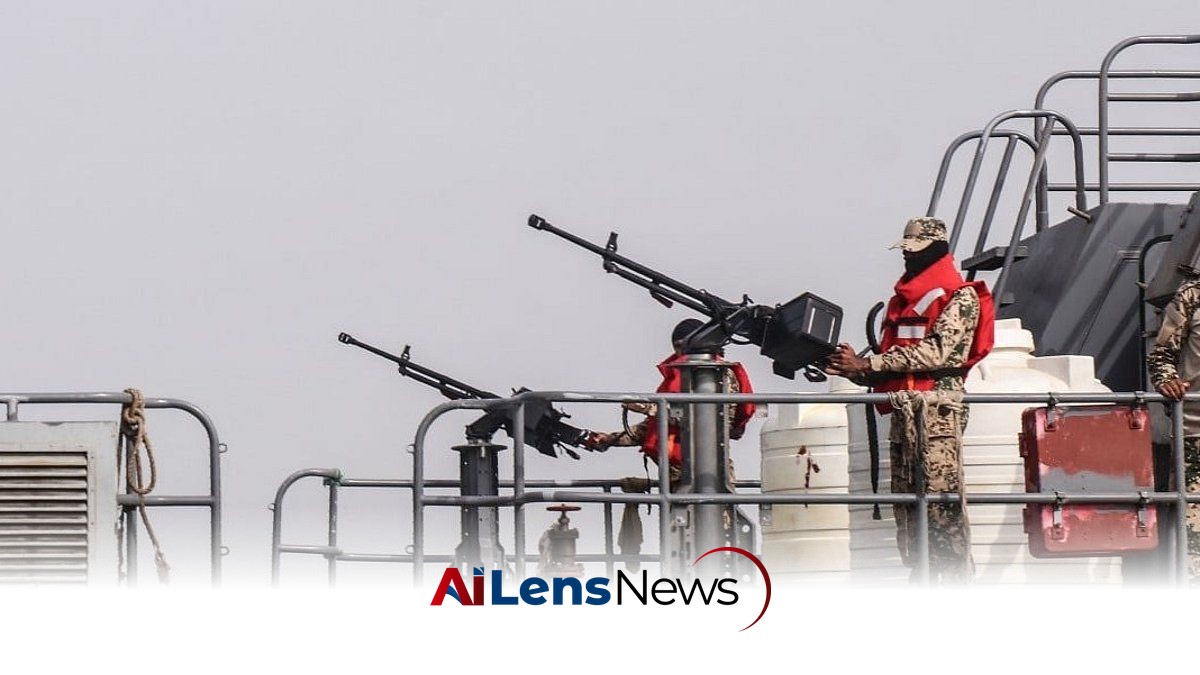


Tensions rise as Iran claims to have breached US naval blockade, while the US imposes sanctions on entities supporting Iranian operations. Saudi Arabia establishes a maritime alliance to secure Red Sea routes amid regional threats.
Doha, Qatar Jul 30, 2026 ALN: In a significant development in the ongoing tensions between the United States and Iran, Iranian state media reported that the commercial oil tanker M/T Nora successfully breached the US naval blockade imposed around Iranian waters. This claim, however, was met with immediate skepticism from the US Central Command (CentCom), which firmly rejected the assertion, stating that the tanker had not managed to breach the blockade. CentCom underscored that a formidable array of US warships, hundreds of aircraft, and thousands of American personnel remain deployed in the region, enforcing what they describe as America's "steel wall" blockade surrounding Iranian ports and coastal waters.
A successful breakout of a tanker through the blockade would not only signify a logistical achievement for Iran but would also serve as a substantial propaganda victory for the Iranian government. Such a development could challenge Washington's narrative of control over maritime access to and from Iran, potentially emboldening Tehran in its regional posture. In the past, CentCom has reported intercepting or redirecting commercial vessels suspected of attempting to reach Iranian ports, reinforcing the notion that the blockade is operational and effective.
In tandem with military developments, the US Treasury Department announced a new round of sanctions targeting six entities and individuals across multiple countries, including China, India, Russia, and Iran. These sanctions are aimed at disrupting networks that provide sales, logistics, and commercial support to Mahan Air, an Iranian airline accused of facilitating the transport of personnel and equipment for the Islamic Revolutionary Guard Corps (IRGC). The IRGC is designated by the US as a terrorist organization, which adds a layer of urgency to the US's efforts to curtail its operations.
Treasury Secretary Scott Bessent emphasized that any individuals or entities providing financial services or logistical support to the IRGC are effectively aiding a terrorist enterprise. Mahan Air, which has long sought to present itself as a civilian airline, has faced US sanctions for years due to its deep-rooted connections with the IRGC. This latest move by the Treasury aims to further isolate the IRGC financially and operationally, thereby limiting its ability to project power and influence across the region.
In response to the rising tensions and threats to maritime security, Saudi Arabia has taken a proactive step by announcing the formation of a maritime defence alliance. This coalition aims to secure navigation around the strategically vital Bab al-Mandab Strait, a crucial chokepoint for global trade and energy shipments. The establishment of this alliance comes in the wake of Yemen's Iran-backed Houthis imposing a maritime embargo on Saudi Arabia, which they justify by claiming attacks on Saudi oil tankers in the Red Sea.
The Saudi defence ministry released a joint statement on behalf of 14 countries participating in the alliance, including Bahrain, Bangladesh, Djibouti, Egypt, Jordan, Kuwait, Nigeria, Pakistan, Qatar, Saudi Arabia, Somalia, Sudan, Turkey, and Yemen. The alliance’s primary objectives are to enhance maritime security and safeguard freedom of navigation in the region, reflecting the collective concern over Iran's influence and the activities of its proxies.
The escalation of hostilities has also raised alarms regarding the United States' missile defense capabilities. Iranian forces have been conducting frequent missile and drone attacks across the Middle East since the collapse of the US-Iran ceasefire, prompting concerns about Washington's ability to intercept these threats effectively. The US military reported successfully shooting down multiple ballistic missiles fired by Tehran in an attempted surprise attack this week, following an Iranian strike on American troops stationed in Jordan.
Some US lawmakers have voiced their concerns regarding the adequacy of the US's missile defense arsenal. Senator Chris Van Hollen highlighted that the United States is depleting its interceptors at an alarming rate, raising questions about the military's preparedness in the event of further escalations or conflicts in other regions, where US interests may also be at stake.
In a disturbing trend, human rights organizations have expressed grave concern over the Iranian authorities' preparations to execute more young men accused of participating in anti-government protests. Reports indicate that the Islamic Republic has been carrying out executions almost weekly, including public hangings, which have drawn international condemnation and concern for human rights violations.
The independent Norway-based rights organization Iran Human Rights (IHR) reported that Benyamin Naghdi, a 26-year-old arrested during protests, had his death sentence upheld by Iran's supreme court. His lawyer has filed for a retrial, asserting that the charges against him were based on a forced confession—a common allegation in Iran's judicial proceedings, particularly concerning political dissenters. The situation has sparked outrage among international human rights advocates, who call for immediate action to halt these executions and to address the broader issue of political repression in Iran.
In light of the recent Iranian attacks on Jordan and Kuwait, the Gulf Cooperation Council (GCC) has issued a strong condemnation, labeling these actions as violations of state sovereignty and a direct threat to regional security. The United Arab Emirates (UAE) has also expressed solidarity with both nations, emphasizing the need for a unified response to Iranian aggression in the region.
Amid the shifting dynamics in the region, Turkey has shown interest in participating in a new security initiative aimed at stabilizing Lebanon as the UN peacekeeping mission is set to expire. Turkish President Recep Tayyip Erdogan articulated Turkey's desire to support security in the region and ensure the sovereignty of Lebanon, which has been grappling with its own internal challenges, including political instability and economic crisis. Turkey's involvement could signify a broader regional approach to security, potentially involving multiple stakeholders aiming to foster stability in Lebanon and counteract Iranian influence.
As tensions escalate, India has taken precautionary measures by announcing the evacuation of 2,557 Indian nationals from Iran. The Indian Minister of State for External Affairs confirmed that the Indian Embassy facilitated the cross-border movement of its citizens back to India, while estimates suggest that around 7,000 Indian nationals remain in Iran. The evacuation reflects the Indian government's commitment to ensuring the safety of its citizens amid rising hostilities and serves as a reminder of the broader implications of the US-Iran conflict on regional populations.
The ongoing US-Iran conflict continues to escalate, with significant regional implications affecting maritime security, international relations, and humanitarian concerns. As tensions rise, the global community watches closely, hoping for a resolution that ensures stability in the region. The interplay of military maneuvers, economic sanctions, and diplomatic efforts will be crucial in shaping the future of US-Iran relations and the broader geopolitical landscape in the Middle East. The situation remains fluid, with each new development potentially altering the trajectory of regional security and international diplomacy.
To learn more about the latest developments in Crime & Law, stay updated with our exclusive reports and analyses on AiLensNews.

