

More
Checking your session
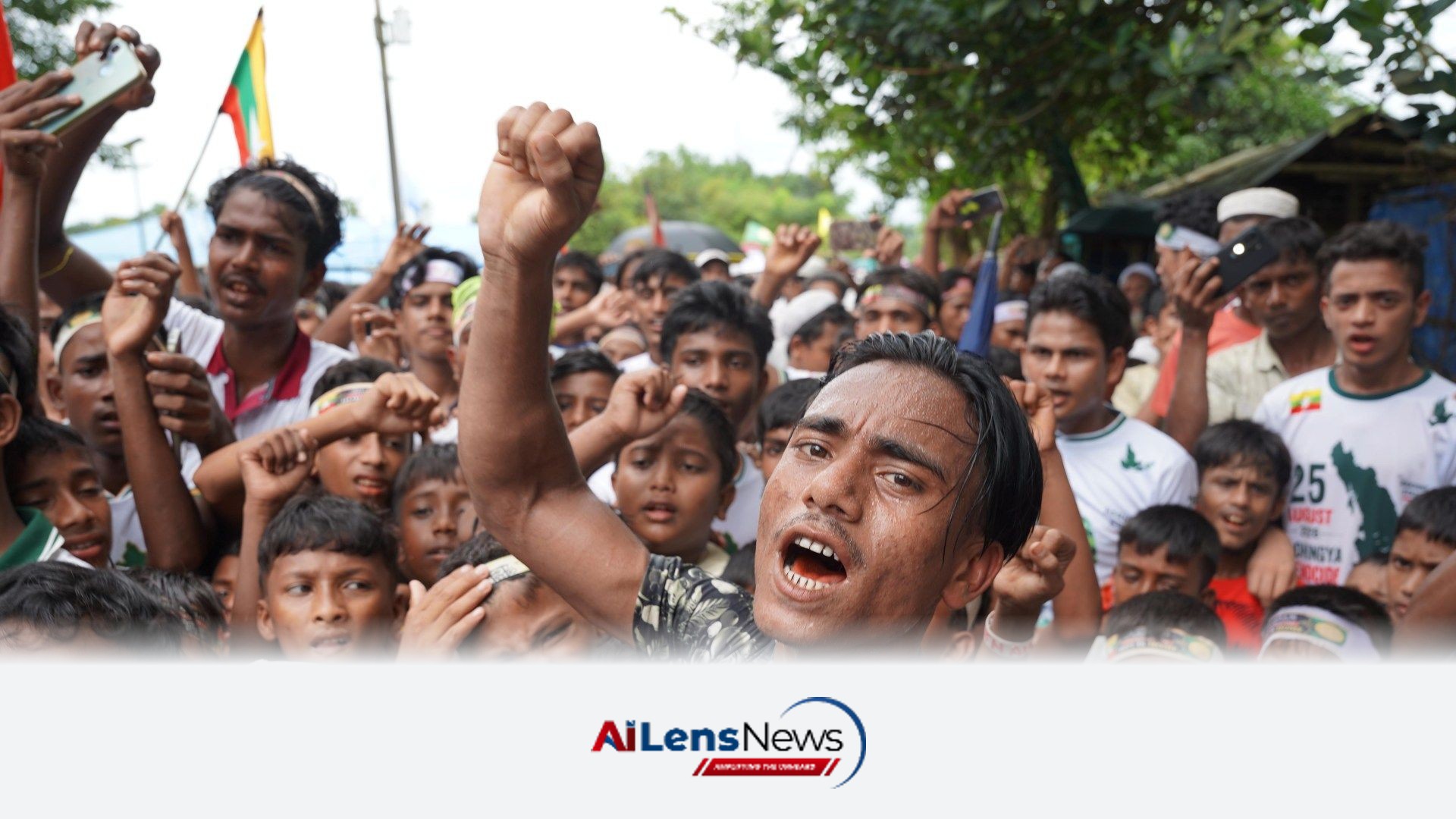



A recent UN report reveals a drastic decline in human rights in Myanmar, particularly affecting the Rohingya minority amid ongoing military violence and exploitation.
Doha, Qatar Aug 26, 2026 ALN: The human rights situation in Myanmar has “plummeted to a new low,” according to a recent report from the United Nations. The report highlights the ongoing brutal abuse of the Rohingya minority and the devastating impact of illicit economies, including illegal mining for rare earths. This alarming assessment comes in the wake of the military coup that took place in February 2021, which led to the ousting of the democratically elected government and plunged the country into a state of turmoil.
Published on Tuesday, the UN’s human rights office stated that the military's quest for control and legitimacy, following its coup in 2021, has exacerbated the suffering of civilians across the nation. The military, known as the Tatmadaw, has been engaged in violent crackdowns against dissent, targeting not only political opponents but also ethnic minorities and civilians caught in the crossfire. This has raised significant concerns among international observers regarding the military's disregard for human rights and the rule of law.
The military has employed tactics such as airstrikes, arson attacks, and the denial of assistance to civilians as it battles ethnic armed groups and militias for dominance in the resource-rich country. The report indicates that approximately 8,075 civilians, including 1,074 children, have been killed since the coup, with at least 1,241 fatalities occurring in the past year alone. The ongoing violence has not only resulted in loss of life but has also created a humanitarian crisis of unprecedented proportions.
However, the actual toll may be higher, with open sources suggesting that as many as 15,731 civilians could have died since the coup, including 3,102 in the last year. This discrepancy highlights the challenges in obtaining accurate data in a conflict zone where access is often restricted. The violence has also led to a significant increase in the number of internally displaced persons, now at 3.6 million. This figure underscores the scale of the crisis, as families are forced to flee their homes to escape violence and persecution.
Additionally, around 12.4 million people are facing acute hunger, with 400,000 young children and mothers suffering from severe malnutrition. The combination of conflict and economic collapse has left many without access to basic necessities, including food, healthcare, and sanitation. The situation is dire, with humanitarian organizations warning that without immediate international intervention, the consequences could be catastrophic.
In western Rakhine State, the military and the Arakan Army, an ethnic armed group, have continued to perpetrate widespread violations against the predominantly Muslim Rohingya community. This ongoing violence comes nine years after a brutal crackdown that forced approximately 700,000 Rohingya to flee to Bangladesh, leading to renewed displacement. The Rohingya have faced systematic discrimination and violence for decades, and the current situation only exacerbates their suffering.
The report accuses the Arakan Army of committing arbitrary arrests, torture, sexual and gender-based violence, forced labor, and the destruction of villages and religious sites. Rohingya attempting to escape forced recruitment face detention and are often subjected to ill-treatment, including beatings and torture. The international community has condemned these actions, calling for accountability and justice for the Rohingya people, but tangible action has been limited.
The UN human rights office noted that the absence of the rule of law in Myanmar has fostered a booming illicit economy, particularly in illegal rare earth mining in northern Kachin and northeastern Shan states. Satellite imagery has confirmed Kachin state as the primary area for rare-earth mining, with a 149 percent increase in mining sites since 2021. This rapid expansion of mining activities has raised alarms about the environmental degradation and health risks associated with such operations.
This mining runoff has caused significant environmental contamination, adversely affecting maternal and reproductive health, with reported increases in miscarriages and other pregnancy complications linked to heavy metal exposure. The environmental consequences of illegal mining extend beyond immediate health risks, threatening the livelihoods of local communities that depend on clean water and fertile land for agriculture and sustenance.
UN High Commissioner for Human Rights Volker Turk described the findings as deeply troubling. He stated, “This report depicts a picture of suffering, misery, and cruelty on multiple levels and across the country that is heartbreaking.” Turk urged states, companies, and investors to reconsider their involvement with the Myanmar state, emphasizing the need for ethical reflection on their actions and inactions. The call for action is a recognition that the international community must play a proactive role in addressing the crisis.
“I call on all states, companies, and investors to undertake serious soul-searching with respect to their actions – or inaction; to ask: is this fair and just for the people of Myanmar?” This statement encapsulates the urgent need for a reassessment of international policies and practices in relation to Myanmar. The implications of continued inaction could lead to further deterioration of the human rights situation, as well as a potential spillover of instability into neighboring countries.
In conclusion, the UN report serves as a stark reminder of the ongoing human rights abuses in Myanmar, highlighting the urgent need for international attention and intervention. As the situation continues to evolve, the global community must remain vigilant and responsive, advocating for the rights and dignity of those affected by the ongoing crisis.
To learn more about the latest developments in World News & International Affairs, stay updated with our exclusive reports and analyses on AILensNews.