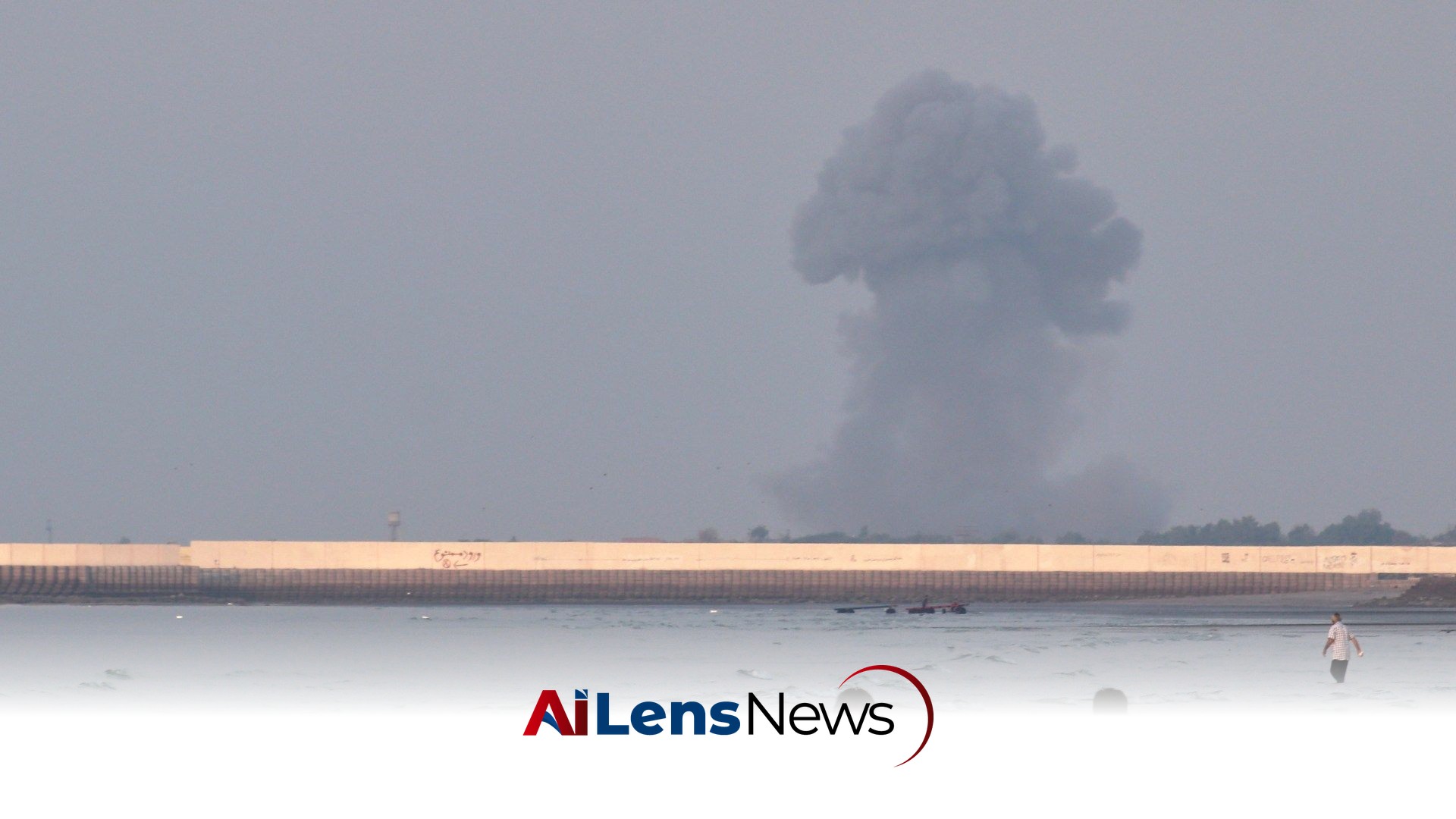


As tensions escalate, Trump contemplates a significant military response to Iran, while Iranian officials warn against aggression.
Doha, Qatar Jul 24, 2026 ALN: In a significant escalation of rhetoric, former President Donald Trump has indicated that he is contemplating a "massive attack" on Iran. This statement comes amid rising tensions between the United States and Iran, following a series of confrontations and diplomatic failures that have characterized their relationship over the past few years. The prospect of military action against Iran raises profound questions about U.S. foreign policy, regional stability, and the potential for a broader conflict that could engulf the Middle East.
Trump's comments were made during a recent interview, where he expressed frustration with Iran's actions and the perceived lack of progress in negotiations. He stated, "We cannot allow Iran to continue its aggressive behavior. A massive attack is something I'm seriously considering." This statement has raised alarms among international observers, who fear that such an action could lead to a broader conflict in the region, further destabilizing an already volatile area. The rhetoric surrounding military action has historically been a precursor to actual conflict, and Trump's comments are being scrutinized for their implications.
In response, Iranian Deputy Foreign Minister Abbas Araghchi condemned Trump's remarks, asserting that "mindless aggression" would not facilitate a resolution to the ongoing tensions. He emphasized the importance of diplomatic engagement over military threats, stating, "War is not a solution; it will only lead to more suffering and instability." Araghchi's comments reflect Iran's longstanding position that dialogue is essential for resolving disputes, a sentiment that has been echoed by various international leaders and organizations. The Iranian government has consistently advocated for negotiations as a means to address grievances, and Araghchi's remarks highlight a commitment to diplomacy in the face of escalating threats.
The current tensions between the U.S. and Iran have been exacerbated by various factors, including Iran's nuclear program, its support for proxy groups in the region, and the U.S.'s withdrawal from the nuclear deal in 2018. The Joint Comprehensive Plan of Action (JCPOA), signed in 2015, aimed to limit Iran's nuclear capabilities in exchange for relief from economic sanctions. However, after the U.S. withdrew from the agreement, Iran began to resume its nuclear activities, leading to increased tensions and a series of confrontations.
Since the withdrawal, both nations have engaged in a tit-for-tat exchange of sanctions and military posturing. The U.S. has imposed stringent sanctions on Iran's economy, targeting its oil exports and banking sector, while Iran has responded by escalating its nuclear program and increasing its support for militant groups in the region, such as Hezbollah in Lebanon and various Shiite militias in Iraq. This cycle of sanctions and retaliatory actions has created an environment of mistrust and hostility, making diplomatic resolutions increasingly difficult.
Additionally, incidents such as attacks on oil tankers in the Persian Gulf and drone strikes on Saudi oil facilities have further heightened fears of a military confrontation. These events have led to a cycle of retaliation, with both sides accusing each other of aggression and destabilizing actions. The strategic importance of the Persian Gulf, a vital route for global oil transportation, adds another layer of complexity to the situation, as any military escalation could disrupt oil supplies and have global economic repercussions.
Experts warn that a military strike against Iran could have catastrophic consequences, not only for the U.S. and Iran but for the entire Middle East. Such an action could provoke retaliatory strikes from Iranian forces and their allies, potentially leading to a wider regional conflict that could involve multiple countries. The ramifications could be severe, including increased violence, a humanitarian crisis, and a significant disruption of global oil supplies. The interconnectedness of the global economy means that instability in the Middle East could have repercussions felt far beyond the region.
Moreover, a military confrontation could undermine U.S. interests in the region, alienating allies and emboldening adversaries. Countries such as Iraq and Afghanistan, which have been impacted by U.S. military actions in the past, could see renewed instability and violence as a result of any escalation with Iran. Additionally, the potential for a resurgence of terrorist groups that thrive in chaotic environments could pose a significant threat to global security. The rise of extremist groups in the aftermath of military interventions in the region has been a concern for international security, and any new conflict could exacerbate those risks.
International reactions to Trump's comments have been mixed. Some allies have expressed concern over the potential for escalation, urging both sides to pursue diplomatic avenues. European leaders, in particular, have reiterated their commitment to the JCPOA and have called for a return to negotiations to resolve the nuclear issue peacefully. They fear that military action could derail any hope for a diplomatic resolution and lead to a cycle of violence that would be difficult to contain. The European Union has historically played a mediating role in U.S.-Iran relations, and its leaders are keen to avoid a repeat of past conflicts.
Meanwhile, others view Trump's threats as a continuation of a pattern of aggressive U.S. foreign policy in the region, which has often prioritized military solutions over diplomatic engagement. Critics argue that such an approach has historically led to prolonged conflicts and instability in the Middle East, suggesting that a shift towards diplomacy and dialogue is essential for long-term peace. The legacy of U.S. military interventions in Iraq and Afghanistan serves as a cautionary tale for policymakers considering military action against Iran.
Furthermore, countries like Russia and China, who have strategic interests in the region, have also voiced their opposition to U.S. military action, warning that it could lead to dire consequences not only for Iran but for regional security as a whole. Both nations have called for a multilateral approach to address the tensions, emphasizing the need for cooperation rather than confrontation. The involvement of global powers like Russia and China complicates the situation further, as their interests often diverge from those of the U.S., leading to a potential geopolitical standoff.
As the situation develops, the world watches closely. The possibility of a military confrontation looms large, and the need for diplomatic solutions has never been more urgent. Both Trump and Iranian officials will need to navigate these treacherous waters carefully to avoid a conflict that could have far-reaching implications. The stakes are high, and the consequences of failure could be felt far beyond the borders of Iran and the United States.
In this context, the role of international mediators and organizations may become increasingly important. Engaging in dialogue and fostering understanding between the U.S. and Iran could help de-escalate tensions and pave the way for a more stable and peaceful future. The international community has a vested interest in preventing conflict, as the repercussions of war in the Middle East could destabilize not only the region but also the global order. The ongoing situation underscores the importance of diplomacy and the need for a concerted effort to find common ground, emphasizing that the path to peace often requires patience, understanding, and compromise.
To learn more about the latest developments in Crime & Law, stay updated with our exclusive reports and analyses on AiLensNews.

