

More
Checking your session
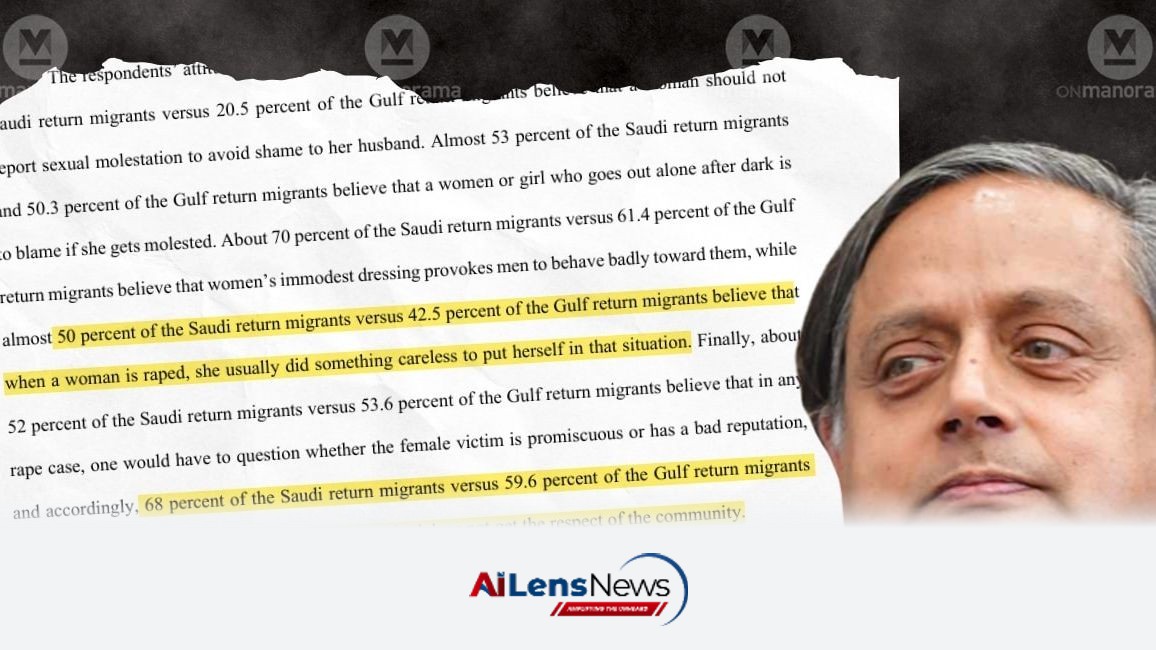



Shashi Tharoor expresses concern over a World Bank report linking Gulf returnees to conservative gender norms in Kerala, prompting a response from co-author Irudaya Rajan.
Doha, Qatar Aug 25, 2026 ALN: The recent World Bank study, titled "Beyond Money: Does Migration Experience Transfer Gender Norms?", has ignited a significant conversation regarding the influence of return migration from Gulf countries, particularly Saudi Arabia, on gender norms in Kerala. This study highlights a concerning trend: returning migrants from these regions are reportedly bringing back conservative values that contribute to gender-based violence and reinforce extreme attitudes toward women's roles in society. The findings have prompted criticism from political figures, most notably Shashi Tharoor, a prominent Congress Member of Parliament representing Thiruvananthapuram.
Shashi Tharoor's reaction reflects a broader concern about the implications of these findings for Kerala, a state that has long prided itself on its progressive social policies, particularly in the realm of gender equality. In his post on the social media platform X, Tharoor expressed his dismay, stating that the importation of conservative attitudes from abroad contradicts Kerala's longstanding commitment to gender equality and women's empowerment. He emphasized the state's achievements in educating Muslim girls and women to levels comparable to their male counterparts, highlighting a stark contrast between these educational advancements and the regressive attitudes noted in the World Bank study.
The World Bank study, which has gained traction since its release, raises critical questions about the intersection of migration, culture, and gender norms. The issue of return migration is particularly pertinent in Kerala, where many men have sought employment in the Gulf states, often sending remittances back home that bolster the local economy. However, the social implications of this migration have been complex and multifaceted. As Tharoor pointed out, the attitudes and customs brought back by returning migrants can undermine the progress made in women's education and empowerment.
In response to Tharoor's critique, Irudaya Rajan, Chair of the International Institute for Migration and Development and a co-author of the study, offered a nuanced perspective. He argued that while the influence of Gulf nations on gender norms is an important aspect of the discussion, the focus should also include the broader context of women's empowerment in Kerala. Rajan pointed out that despite Kerala's impressive literacy rates, the state struggles with low Female Labour Force Participation (FLFP), indicating that education alone does not equate to empowerment.
This paradox of high literacy but low workforce participation underscores the need for a deeper examination of societal attitudes toward women in Kerala. Rajan noted that the existing conservative mindset regarding women's roles within families constrains the potential for true gender equality. He suggested that the negative influences that return migrants bring back are exacerbated by Kerala's own cultural and social dynamics, which can be described as fertile ground for conservative ideologies to take root.
Moreover, Rajan's observations about the empowerment of women while their husbands are abroad, contrasted with their disempowerment upon their return, highlight a critical aspect of the migration experience. This cyclical pattern raises important questions about the sustainability of women's empowerment in Kerala and suggests that the state's social fabric may need to evolve to support lasting change. If true empowerment were achieved, Rajan argues, it would not be so easily disrupted by the return of male migrants.
The implications of this study and the subsequent debate extend beyond academic discourse; they touch on the very fabric of Kerala's society and its future trajectory. The findings may provide insight into why many young people in Kerala are seeking opportunities outside the state, as they may perceive a lack of progressive values and opportunities for growth within their own environment. Rajan's assertion that both positive and negative influences are imported through migration suggests that Kerala's social climate must adapt to foster a more inclusive and progressive atmosphere.
As Kerala navigates these complex issues, the discourse surrounding gender norms, migration, and empowerment will likely continue to evolve. The World Bank study serves as a catalyst for crucial conversations about the future of gender equality in Kerala, urging stakeholders to reflect on the interplay of cultural influences and the importance of fostering an environment that supports women’s rights and opportunities. The call for introspection and dialogue, especially within the Muslim community as noted by Tharoor, may be a vital step toward addressing these challenges and ensuring that the state’s achievements in gender equality are not undermined by regressive attitudes.
In conclusion, the debate surrounding the World Bank study is emblematic of the broader struggles faced by Kerala as it grapples with the consequences of migration, cultural exchange, and the persistent issues of gender inequality. As the state continues to evolve, it will be essential for policymakers, community leaders, and citizens to engage in meaningful discussions that promote a more equitable society for all, ensuring that the legacy of Kerala as a progressive state is upheld and advanced in the years to come.
To learn more about the latest developments in World News & International Affairs, stay updated with our exclusive reports and analyses on AILensNews.

A new roadmap has been established through international mediation to implement …

Tim Cook announces Apple's donation to aid flood relief and rebuilding efforts i…

The death toll from the devastating floods in Nepal and Tibet has risen to over …

Rescue efforts in Nepal are on hold as officials report rising water levels in a…

Qatar has welcomed the inaugural field verification mission of the Expanded Join…