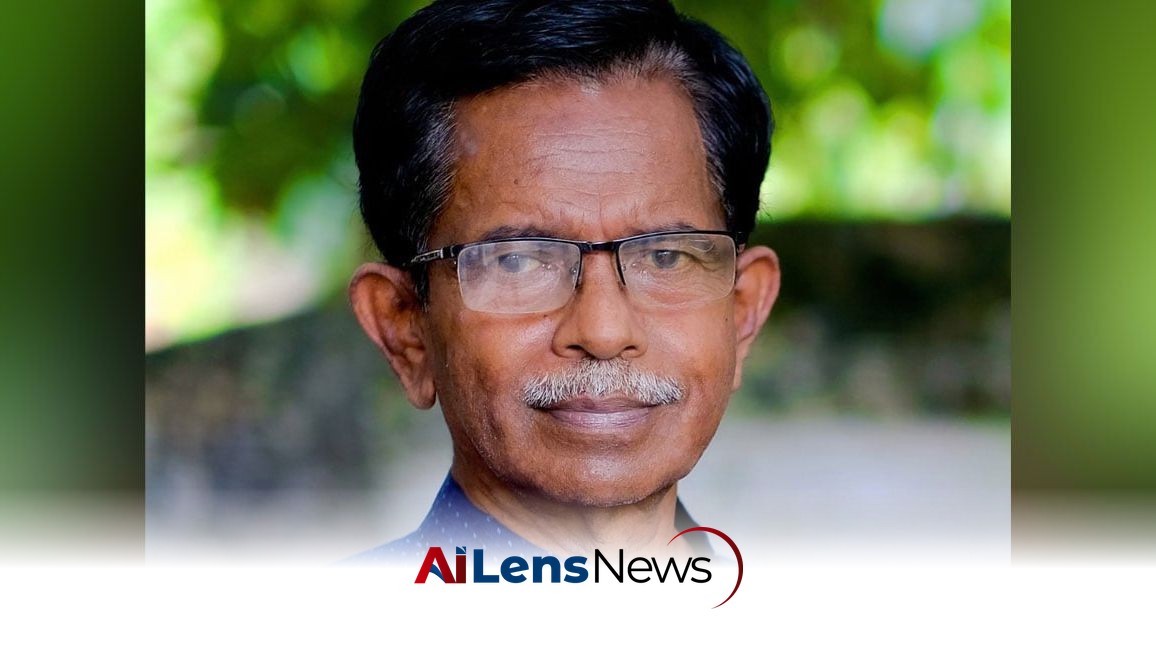


T.G. Mohandas, an RSS ideologue, has been booked by Thiruvananthapuram cyber police for allegedly inciting violence against student protesters in Delhi.
Doha, Qatar Jul 29, 2026 ALN: Thiruvananthapuram: The city cyber police have registered a case against RSS ideologue and political commentator T.G. Mohandas over alleged hate speech targeting students who staged a protest at Delhi's Jantar Mantar. This incident has ignited widespread discussions about the boundaries of free speech, the responsibilities of public figures, and the implications of inciting violence in a democratic society.
The protest at Jantar Mantar, where students gathered to voice their concerns, was part of a larger movement advocating for various social and political issues that resonate with the youth of India. Protests have historically played a crucial role in Indian democracy, allowing citizens to express dissent and demand accountability from their leaders. However, the response to such protests can often polarize public opinion, especially when comments from influential figures like Mohandas are perceived as inciting violence.
According to the police, Mohandas made the remarks in videos uploaded on his YouTube channel, where he allegedly said students protesting peacefully at Jantar Mantar should be shot dead. The gravity of such statements cannot be overstated, as they not only threaten the safety of individuals involved in the protests but also undermine the fundamental principles of democracy, which include the right to peaceful assembly and expression.
In his statements, Mohandas suggested that a curfew should be imposed within a four-kilometre radius of the protest venue and that authorities should open fire after asking the protesters to disperse three times. Such language raises serious concerns about the potential for violence and the role of law enforcement in managing civil unrest. The idea of using lethal force against unarmed protesters contradicts international human rights standards, which emphasize the importance of protecting the right to protest and the necessity of proportional responses by security forces.
Moreover, Mohandas further stated that several protesters should be killed or dismembered and their bodies taken to hospitals. This extreme rhetoric has sparked outrage among various sections of society, with critics highlighting the dangerous precedent it sets for public discourse in India. The call for violence against protesters not only dehumanizes those who are exercising their democratic rights but also reflects a growing trend of intolerance towards dissenting voices in the country.
Police have registered the case under relevant provisions of the Bharatiya Nyaya Sanhita (BNS), the Information Technology Act, and the Kerala Police Act, invoking sections related to promoting enmity, cyber offences, and causing public nuisance. The legal framework surrounding hate speech in India is complex and often contentious, balancing the right to free speech with the need to prevent incitement to violence and hatred. The implications of this case could resonate beyond Mohandas, potentially affecting how political commentary is perceived and regulated in the digital age.
According to the police, the accused made the remarks with the intention and knowledge of disturbing public peace and public order and inciting unrest among the public. This assertion raises important questions about accountability for public figures and the impact of their words on societal harmony. In an era where social media amplifies voices, the responsibility of individuals who hold influence becomes even more critical.
The FIR states that videos uploaded on July 24 and July 25 also contained derogatory remarks against the protesters. Investigators allege that the content was intended to create fear and panic among those participating in the protest and disturb public peace and tranquillity. The role of social media in shaping public opinion and mobilizing protests cannot be underestimated, and the potential for misuse of these platforms to spread hate speech or incite violence poses significant challenges for both law enforcement and civil society.
The case was registered following a complaint filed by the Students' Federation of India (SFI) with the Kerala Home Minister and the Director General of Police (DGP). In its complaint, the SFI argued that Mohandas' remarks could not be dismissed as political commentary, alleging that they incited violence, undermined the value of human life, created fear among the public, and threatened the democratic right to peaceful protest. The SFI's action underscores the importance of holding public figures accountable for their statements, particularly when those statements can lead to real-world consequences for individuals and communities.
In the backdrop of this incident, it is essential to consider the broader implications of hate speech and incitement to violence in India. The country has witnessed a rise in communal tensions and violence in recent years, often exacerbated by inflammatory rhetoric from political leaders and commentators. This trend raises concerns about the erosion of democratic values and the potential for increased polarization within society.
The RSS has distanced itself from Mohandas's remarks. RSS functionary K.B. Sreekumar has condemned the statements and said the organisation doesn't support Mohandas's views, terming the remarks as his personal thoughts. This distancing reflects a recognition of the potential backlash that can arise from association with incendiary rhetoric. However, it also raises questions about the internal mechanisms within political organizations to address and mitigate extreme viewpoints among their members.
The situation surrounding T.G. Mohandas's comments is emblematic of the ongoing struggle in India to balance free speech with the need to maintain public order and protect the rights of individuals. As the legal proceedings unfold, it will be crucial to monitor how this case influences public discourse and the treatment of dissent in the country. The outcome may set important precedents for how hate speech is defined and prosecuted, as well as the responsibilities of those who engage in public commentary in an increasingly digital and interconnected world.
In conclusion, the case against T.G. Mohandas serves as a reminder of the delicate balance between freedom of expression and the potential for harm that can arise from inflammatory speech. As India continues to navigate its democratic landscape, the implications of this case will likely resonate far beyond the immediate context, shaping the future of political discourse and civil rights in the country.
To learn more about the latest developments in Crime & Law, stay updated with our exclusive reports and analyses on AiLensNews.

